Virginia Woolf’s Mrs Dalloway is often introduced as “a one-day London novel,” but that summary misses its most durable invention. The book is not simply narrating a day; it is staging a conflict between public time and lived time. Public time arrives as bells, appointments, motor traffic, class ritual, and official institutions. Lived time arrives as memory shocks, grief loops, erotic afterimages, bodily fragility, and sudden moral recognitions that have no timetable.
Woolf’s technical wager is that modern life is governed by clocks while consciousness is governed by returns. Once you read the novel through that lens, Clarissa Dalloway’s party and Septimus Warren Smith’s collapse stop looking like separate plots. They become two outcomes produced by the same temporal order.
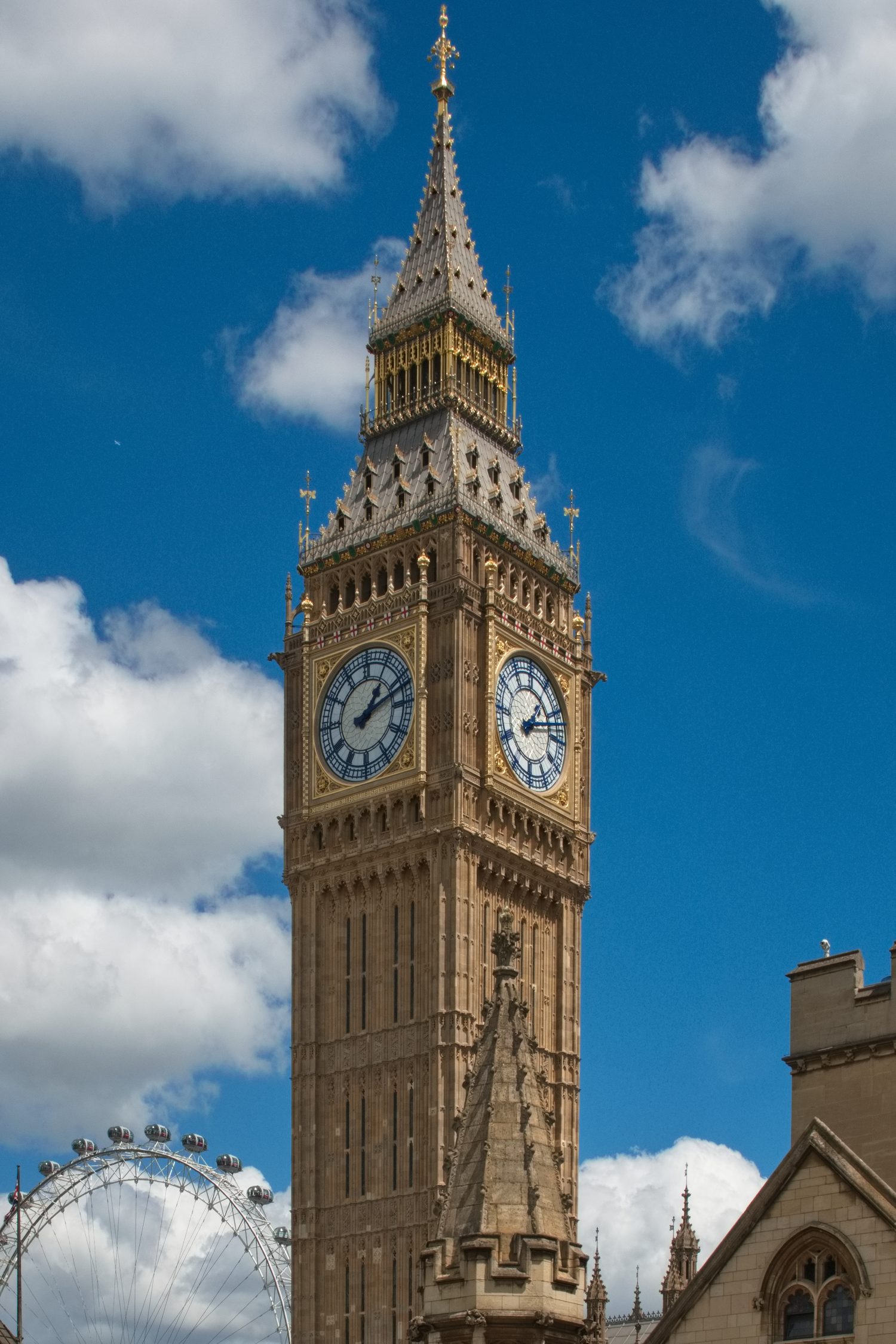
1) Big Ben is not scenery; it is the novel’s public metronome
Early in the novel, Woolf lets Clarissa feel the city pause before the bell: “There! Out it boomed. First a warning, musical; then the hour, irrevocable.”[1] That sentence does more than set atmosphere. It defines the governing power in the book. The hour is “irrevocable”: once struck, it becomes social fact, and everyone must organize around it.
This is where Woolf’s modernist method becomes philosophical rather than decorative. The bells do not merely mark time passing. They create a common, external framework inside which radically different inner lives are forced to coexist.[2][3] Clarissa, Peter, Septimus, Rezia, and the passersby in Westminster all inhabit the same clock-time city, yet each carries a distinct psychological duration that cannot be fully shared.
The result is a novel that feels both unified and fractured. Unified by public rhythm; fractured by private temporality.
2) Clarissa’s party is an attempt to convert social form into existential repair
A shallow reading treats Clarissa’s evening party as upper-class performance. Woolf certainly allows that satirical layer, but she gives the party a deeper function: it is Clarissa’s practical answer to modern isolation.
Clarissa keeps trying to assemble people into one room, one sequence, one evening arc. In temporal terms, she is trying to build a human synchronization event. If the city cannot guarantee shared meaning, perhaps a host can temporarily produce it through hospitality, choreography, and attention.
This is why Woolf opens with action (“Mrs Dalloway said she would buy the flowers herself”) rather than theory.[1] Clarissa does not begin with abstraction; she begins by doing. The ordinary errand is the first move in a larger existential procedure: making a social space where scattered lives might briefly align.
In this frame, Clarissa’s social labor looks less trivial and more tragicomic. She is not naive about mortality, class rigidity, or emotional distance. She simply refuses to surrender the possibility that form—good form, tactful form, intentional form—can still hold people together for a few hours.
3) Septimus is what happens when public time keeps running but inner time cannot rejoin it
If Clarissa represents social synchronization under pressure, Septimus represents temporal desynchronization taken to breaking point. His war trauma does not behave like a past event that stays in the past; it re-enters the present as hallucination, dread, and interpretive overload.[2][4]
That is why Woolf pairs him with doctors who speak institutional time: rest cures, transfer, regimen, discipline, proportion. Their language assumes that damaged inner life can be reinserted into schedule by authority. Woolf’s counterclaim is stark: there are wounds for which clock-governed normality feels like erasure rather than treatment.
The shell-shock context matters here. Post-1918 Britain had to absorb veterans whose psychic injury challenged prewar ideals of masculine composure and imperial confidence.[4][5] Woolf turns that historical fracture into narrative structure. Septimus is not a symbolic add-on to Clarissa’s society novel; he is the suppressed truth of that society’s temporal confidence.
When Septimus dies, the novel does not present a detached subplot resolution. It sends the shock-wave into Clarissa’s party, forcing her social world to register what it usually screens out.
4) Memory in Mrs Dalloway is not flashback; it is active pressure
Readers often call Woolf’s movement through past moments “flashback,” but that term is too cinematic and too clean. In Mrs Dalloway, memory is active pressure on present action.
Clarissa’s Bourton past, Peter’s unresolved attachment, Sally’s earlier intensity, Septimus’s war images—none of these are decorative background. They are competing time-streams that enter present perception and alter choice in real time.[1][2]
This is where Woolf’s stream-of-consciousness technique does its hardest work. She does not replace plot with interiority; she redefines plot as the collision pattern between external schedule and internal recurrence. The novel moves forward because minds keep being pulled sideways.
Seen this way, Woolf’s famous fluidity is actually a rigor. The book keeps asking one question under many forms: how does a person act “now” when the mind is temporally plural?
5) The philosophical core: modernity multiplies connection while deepening ontological privacy
Mrs Dalloway is dense with contact—streets, shops, cars, bells, servants, callers, letters, invitations, parties. Yet the novel repeatedly insists that personhood remains finally unmerged. Clarissa can perceive, host, infer, remember, and care, but she cannot directly inhabit another consciousness.
That is the philosophical ache at the center of the book. Modern metropolitan life increases encounters while leaving the boundary of self intact. Communication expands; metaphysical access does not.
Woolf refuses simple pessimism, though. She also shows that this boundary is not the end of ethics. It is its beginning. Because complete fusion is impossible, attention becomes morally decisive: how one listens, hosts, interprets, and refrains from reducing others to type.
Clarissa’s late response to news of Septimus’s death matters for this reason. She does not “solve” his suffering. She does not claim equivalence. But she grants significance to a life she never met, and that act—small, interior, unspectacular—is Woolf’s alternative to both social indifference and sentimental appropriation.
6) Why this still reads as contemporary in 2026
The novel’s historical setting is 1923 London, yet its temporal argument feels structurally current. Today’s notifications, dashboards, productivity systems, and logistics clocks are new interfaces for an old pressure: external time becomes more measurable, while inner time remains nonlinear and frequently resistant.
That is why Mrs Dalloway stays operational for modern readers. It offers a model of urban life where the question is not “tradition vs modernity” in the abstract, but something more practical and difficult:
- How much of yourself can you schedule without hollowing out experience?
- What forms of social ritual still generate real contact?
- What happens to people whose psychic time no longer matches institutional tempo?
Woolf does not give a policy answer. She gives a form answer. Build narrative space wide enough for multiple temporalities, and moral perception becomes possible again.
A practical reading key for first-time or returning readers
If you want to read Mrs Dalloway with high signal, track three recurring systems on one pass:
- Clock strikes and public cues (bells, appointments, official movement)
- Memory intrusions (moments where the present is structurally bent by return)
- Contact rituals (visits, invitations, hosting, moments of recognition)
Then ask where these systems harmonize, and where they fail to synchronize. That map will reveal the novel’s architecture faster than character-summary reading.
Woolf’s achievement is that she makes this architecture emotionally legible without flattening complexity. Mrs Dalloway remains one of the strongest demonstrations in modern fiction that social order and private reality can share a city, share an hour, share a bell—and still fail to share a world.
Sources
- Virginia Woolf, Mrs Dalloway (Project Gutenberg Australia text)
- Wikipedia, “Mrs Dalloway” (publication context, structure, major characters)
- British Library, “Virginia Woolf’s Mrs Dalloway” (overview and thematic framing)
- Wikipedia, “Shell shock” (historical framing of war-neurosis terminology and context)
- SparkNotes, “Mrs. Dalloway: Themes” (postwar social interpretation and communication/privacy framing)
- Image source (Wikimedia Commons, Elizabeth Tower, June 2022)