The sunset is doing some of Willoughby’s thinking for him. On holiday from his London bank, he meets Esther Stables beside a country stile. Light catches her hair; the wooded landscape supplies a background. For a moment, everything looks composed. Ella D’Arcy slips a qualification into the description: Esther makes an agreeable picture “at this moment.” The phrase, on page 90 of Irremediable, puts an expiry date on the view.[1]
Willoughby notices beauty and supplies a character to go with it. By the story’s end, he will be watching Esther just as closely, with an entirely different feeling. D’Arcy’s unsettling achievement is to make that change occur without allowing the reader to equate close attention with understanding.
The story appeared in the first volume of The Yellow Book, in April 1894. This was a magazine that invited scrutiny of its own appearance: its conspicuous cover and lavish publicity helped make the inaugural issue a sensation. Inside it, D’Arcy offered a small, bitter examination of what happens when someone trusts an attractive impression too much.[3] Heather Marcovitch’s biographical account notes that Blackwood’s had previously rejected the story over its treatment of marriage.[2]
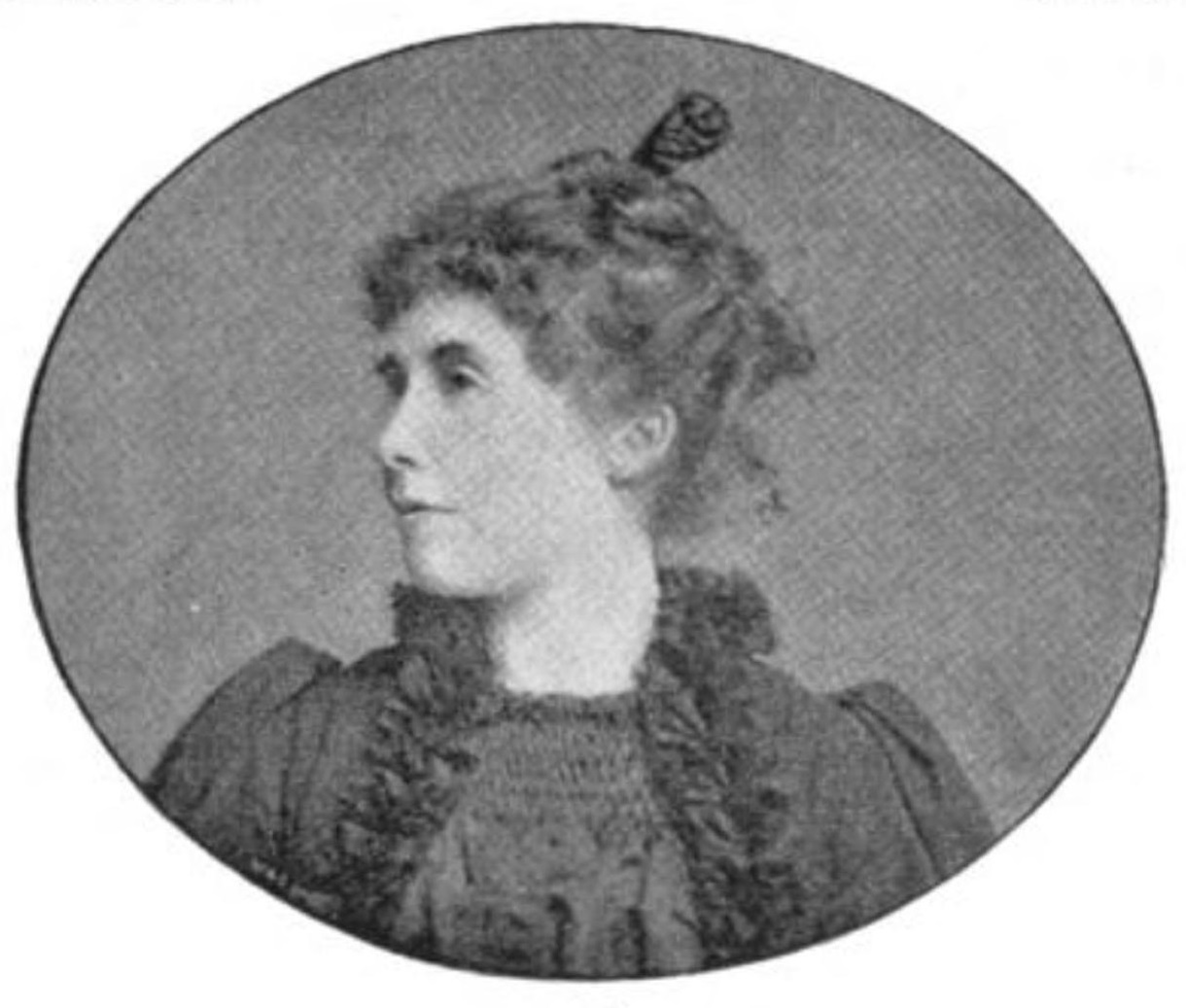
A picture with somebody missing
Before Esther has said much, Willoughby has decided that her social position recommends her. A more privileged woman hurt him earlier; he therefore welcomes someone who seems free of the manners associated with that disappointment. His sympathy already contains a comparison Esther has had no opportunity to challenge (pp. 88–89).[1]
Her own account is less picturesque. She is a London tailoress recovering from exhausting work in hot rooms. Her fingertips carry the marks of needles. These details give her a working life outside the pleasant landscape in which he has encountered her. She has come to the country because she needs relief; he can enjoy the country because his holiday temporarily releases him from the bank.[1]
They might recognize something shared in that exhaustion. Instead, each studies the other’s hand and sees a different promise. Esther takes his unscarred fingers as evidence of a gentleman’s easy existence. Willoughby finds her longing for fine clothes and freedom from work childlike. The misunderstanding is mutual, but the narration gives his indulgence a special edge: her ignorance flatters him.
A little later, she tells him about her difficult family and her boredom. He comes away chiefly pleased by how easy she is to talk to. D’Arcy places the information he receives beside the impression he retains. We can watch the losses in that conversion. Esther’s troubles become part of a pleasant encounter for the man listening to them (pp. 90–91).[1]
The prose lets us enjoy the scene while questioning his use of it. Golden hair, evening moths and the wooded view have their own attraction. The trap is to imagine that the pleasure of looking has supplied everything necessary to know.
The kiss that settles nothing
D’Arcy repeatedly gives Willoughby a chance to stop. After one meeting, he decides against another, reverses himself, decides against it again, then hurries out. His changing intentions can be funny in the space of a paragraph. Their consequences accumulate outside it (p. 94).[1]
The signet-ring episode makes the difference tangible. Esther laughs at his account of the family emblem and pretends she might keep the ring. He takes offence. When she asks what she has done wrong, her distress restores his good humour, and he kisses her. The gesture repairs his feeling about the encounter without resolving what either person expects from it (pp. 94–95).[1]
Later, faced with her tears and her account of violence at home, he kisses her again and proposes marriage. His compassion is real enough to move him. It also lets him imagine himself in a satisfying role: the man who can rescue her. Esther, meanwhile, pictures something marriage will let her buy. They can agree to the same event while inhabiting quite different futures (pp. 97–99).[1]
The disturbing part is how closely marriage repeats the courtship. In the London rooms, Esther becomes angry, cries, accepts consolation and demands reassurance. Willoughby kisses her and says he loves her to obtain some peace. The earlier sequence returns with its sweetness exhausted. A familiar gesture keeps ending the argument while leaving the disagreement alive (pp. 102–104).[1]
That repetition makes the story harsher than a revelation that somebody changed after the wedding. D’Arcy has shown us the conduct before it hardened into a routine. Marriage gives it more occasions to recur.
Under the gaslight
The second half initially offers the language of romantic absorption. Willoughby’s dinner companion teases him about wanting to get home to his wife. Walking back, he thinks constantly of Esther. A reader could momentarily mistake this preoccupation for happiness, although the narrator’s early warning of ruin has already made that reading uneasy (pp. 88, 99–100).[1]
Then the light changes. Through broken blind slats he sees the yellow gaslight of their room. Inside are crumbs, muddy boots, crooked furniture and an eggshell Esther has crushed on her plate. His sensitivity now collects irritations as eagerly as it once collected charms (pp. 101–102).[1]
The details can tempt us to adopt his verdict wholesale. D’Arcy makes that uncomfortable. On page 107 he acknowledges that even habits “unblameworthy in themselves” provoke him. Standing, walking and folding her hands become offences because they are hers. His eye is registering a feeling as well as a room.[1]
Nor is his wish to improve her an innocent solution. He has hoped that his instruction will make her conform to his tastes. She refuses. Esther’s possessiveness and hostility to his reading are damaging; his assumption that affection makes another person available for reconstruction is damaging too (pp. 106–107).[1]
Jane Spirit’s discussion of the story preserves this double response: the reader can recognize Willoughby’s vanity and still feel the force of his suffering. Her account also stresses how the final domestic scene is filtered through his perspective.[4] That qualification matters. We are close enough to feel his disgust without having to make every object of it guilty.
Attention keeps the same shape
Near the end, D’Arcy uses “Like a lover” twice in succession. Willoughby senses Esther nearby; his eyes follow her movements and his ears track her voice. The bodily habits of devotion remain intact. What has changed is the feeling they carry (p. 107).[1]
The final recognition names that feeling as hatred. The word does more than darken a failed romance. It sends us back through sentences in which Esther occupied his thoughts, through the friend’s congratulatory joke, and through the holiday scenes in which he looked so intently and understood so selectively.
Willoughby wants his misery to become legible, and finally it does. The reader has a further task: to notice how much remained visible before he could name it. Esther’s exhaustion, hopes, anger and independence were present while the sunset was still flattering. The light has changed. The woman was never only the picture.
Sources
- Ella D’Arcy, “Irremediable,” The Yellow Book, volume 1 (April 1894), pp. 87–108; facsimile of the original story, preserved by Yellow Nineties 2.0. All story quotations and page references follow this scan.
- Heather Marcovitch, “Ella D’Arcy (1857–1937),” Y90s Biographies, Yellow Nineties 2.0 (2023); editorial career, rejection history and archival photograph reproduced from The Bookman, December 1895.
- Lorraine Janzen Kooistra and Dennis Denisoff, “Critical Introduction to The Yellow Book Volume 1 (April 1894),” Yellow Nineties 2.0; publication, publicity, material appearance and reception of the inaugural issue.
- Jane Spirit, “‘Golden threads in the sober city woof’: London and the First Women Writers of The Yellow Book,” Volupté 7.2 (Winter 2024), pp. 94–110, especially pp. 100–101; Willoughby’s perspective, compromised authority and continuing claim on readers’ sympathy.