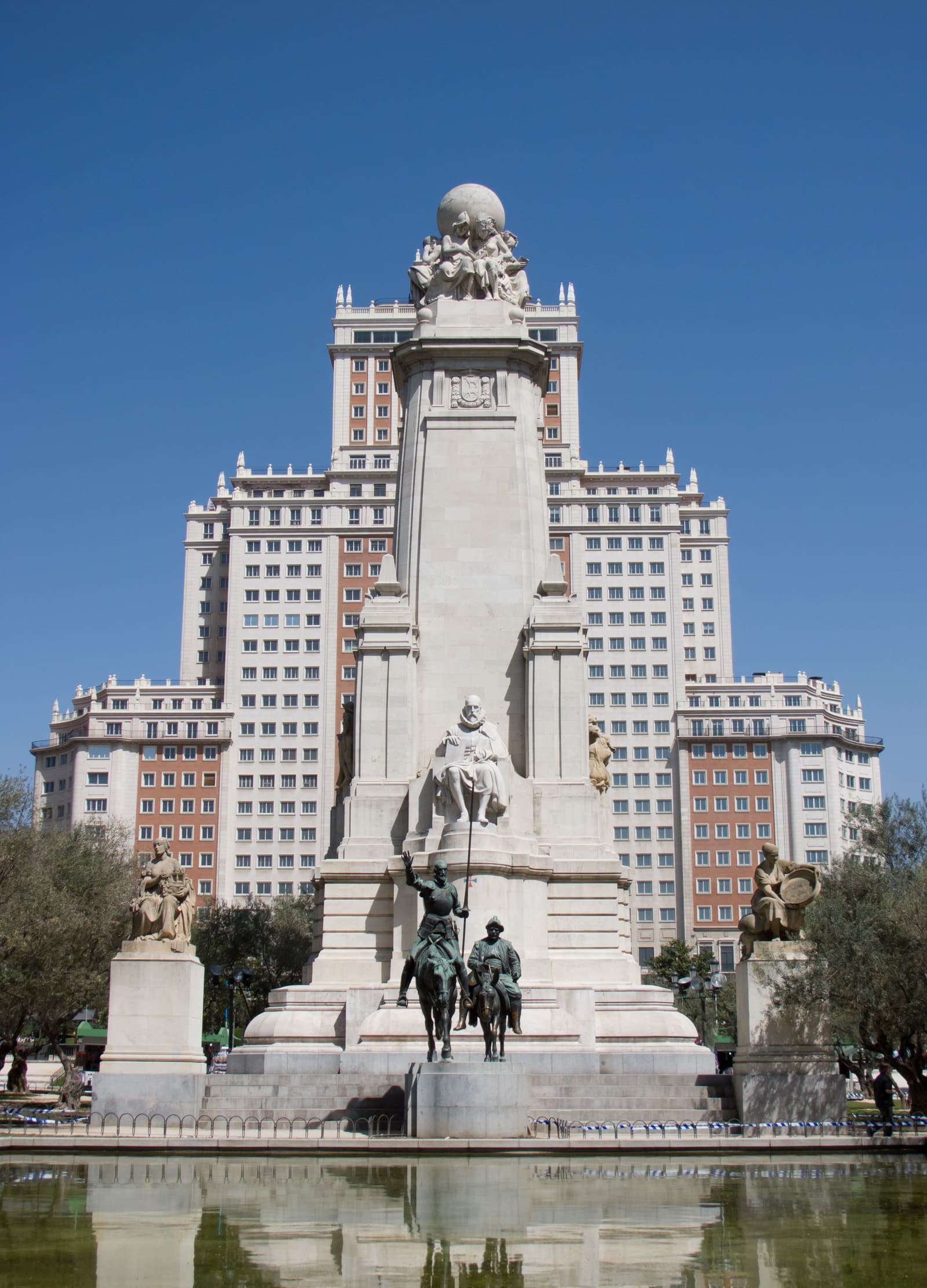
Most people do not bounce off Don Quixote because it is too old; they bounce because they enter through the wrong door. If you open it as a duty-classic, it can feel long and episodic. If you open it as a machine for testing reality, performance, and friendship, it becomes very hard to put down.
The right way in is to choose an entry route that matches your reading energy, then control pacing before momentum dies.
1) Start with the right expectation: this is a two-speed novel
Cervantes gives you slapstick velocity and slow moral intelligence in the same book. The first line already tells you that voice and framing are part of the game: “In a village of La Mancha, the name of which I have no desire to call to mind…” (Part I, Ch. 1). The narrator is not neutral background; the narrator is an active instrument.
If you expect only plot, the digressions feel like friction. If you expect a live argument about fiction versus lived life, those same detours become signal.
2) Pick one of three entry routes (and commit for 100 pages)
Route A — Adventure-first (best for tired brains)
Read for comic velocity first: challenge scenes, inns, beatings, misrecognitions, Sancho’s practical corrections. Ignore interpretation anxiety for the first 8–10 chapters.
Use this route if you want momentum before analysis.
Route B — Ideas-first (best for philosophy readers)
Read with one question in mind: what happens when a person insists that narrative ideals are more real than social facts?
Track three recurring tensions:
- appearance vs. judgment,
- naming vs. being,
- dignity vs. ridicule.
Use this route if you enjoy argument and ambiguity more than linear plot.
Route C — Form-first (best for craft readers)
Treat the book as a workshop in narrative layering: shifting narrators, “found manuscript” framing, inserted novellas, and self-reference that later writers would call metafiction.
Use this route if you care how novels are built.
3) A practical pacing plan that prevents dropout
For first-time readers, a sustainable cadence beats heroic sprints:
- Week 1: Part I, Chapters 1–8 (lock voice and comic contract)
- Week 2: Part I, Chapters 9–22 (watch how Sancho stabilizes the book’s realism)
- Week 3: continue in 2–3 chapter blocks, with one short stop-note per block
- Before Part II: write a 5-line memo: what Don Quixote thinks he is doing vs. what the world thinks he is doing
Do not force chapter quotas during dense digressions. Keep time constant, not pages constant.
4) What to annotate so the book opens up
Use a minimal annotation key:
- [N] Naming events (who calls whom by what title, and why)
- [R] Reality collisions (moments when social fact defeats narrative self-image)
- [S] Sancho corrections (earthy logic, appetite, money, sleep, weather)
- [M] Mercy moments (where ridicule softens into recognition)
This keeps you inside the text instead of outsourcing interpretation to secondary summaries.
5) One line that reframes the whole project
When Don Quixote says, “I know who I am … and I know that I may be not only those I have named…” (Part I, Ch. 5), the line is comic bravado on the surface, but structurally it is the novel’s core device: identity as an act of narrative selection.
Read the rest of the book as repeated stress-tests of that claim.
6) Reception context: why this keeps renewing
Published in 1605 and 1615, Don Quixote is often treated as a foundational modern novel because it keeps two contrary readings alive at once: anti-romance parody and profound defense of imaginative agency. Later centuries did not “solve” this contradiction; they kept re-staging it.
That is why the book survives translation eras and adaptation cycles. It does not ask readers to choose between laughter and seriousness. It asks whether those two modes can occupy the same moral space.
7) Where readers usually stall — and the reset move
Most stalls happen in mid-Part I when episodic energy outruns a reader’s sense of destination. The reset is simple:
- Pause and write three sentences on Don Quixote’s goal this week.
- Write three sentences on Sancho’s goal this week.
- Resume with the question: whose model of reality is currently winning, and at what cost?
This turns drift into inquiry.
Bottom line
If you choose the right entry route and pace by attention instead of guilt, Don Quixote stops feeling like a monument and starts feeling like live prose: funny, bruising, self-aware, and unexpectedly tender.
Sources
- Miguel de Cervantes, Don Quixote (Project Gutenberg ebook 996, English translation text)
- Miguel de Cervantes, The History of Don Quixote, Volume 1 (Project Gutenberg ebook 5921)
- Encyclopaedia Britannica, Don Quixote overview
- Encyclopaedia Britannica, Miguel de Cervantes biography
- Instituto Cervantes, digital Don Quijote edition portal
- Wikipedia, Don Quixote (publication/reception context and references)
- Monument context image source (Wikimedia Commons, Monument to Miguel de Cervantes)