The easiest way to undersell Cane is to call it a collection. Jean Toomer's 1923 book does gather sketches, poems, prose portraits, lyric passages, and a final dramatic section, but the pieces are not simply arranged in a row. They move. The book begins in a rural Southern world of cane fields, dusk, bodies, songs, gossip, and racial danger; shifts into northern city rooms and harder modern speech; then returns, in "Kabnis," to Georgia as a broken theatrical argument with ancestry, shame, and artistic responsibility.[1][2]
That movement is the book's structure. Cane is built like a crossing, not like a miscellany. It crosses South and North, song and prose, communal voice and isolated consciousness, folk presence and modernist fracture. Library of America calls the book a boldly experimental novel mixing prose, poetry, and dramatic sketches, and that description is useful because it preserves the stress on form.[2] The book's power lies in the way each genre hands pressure to the next.
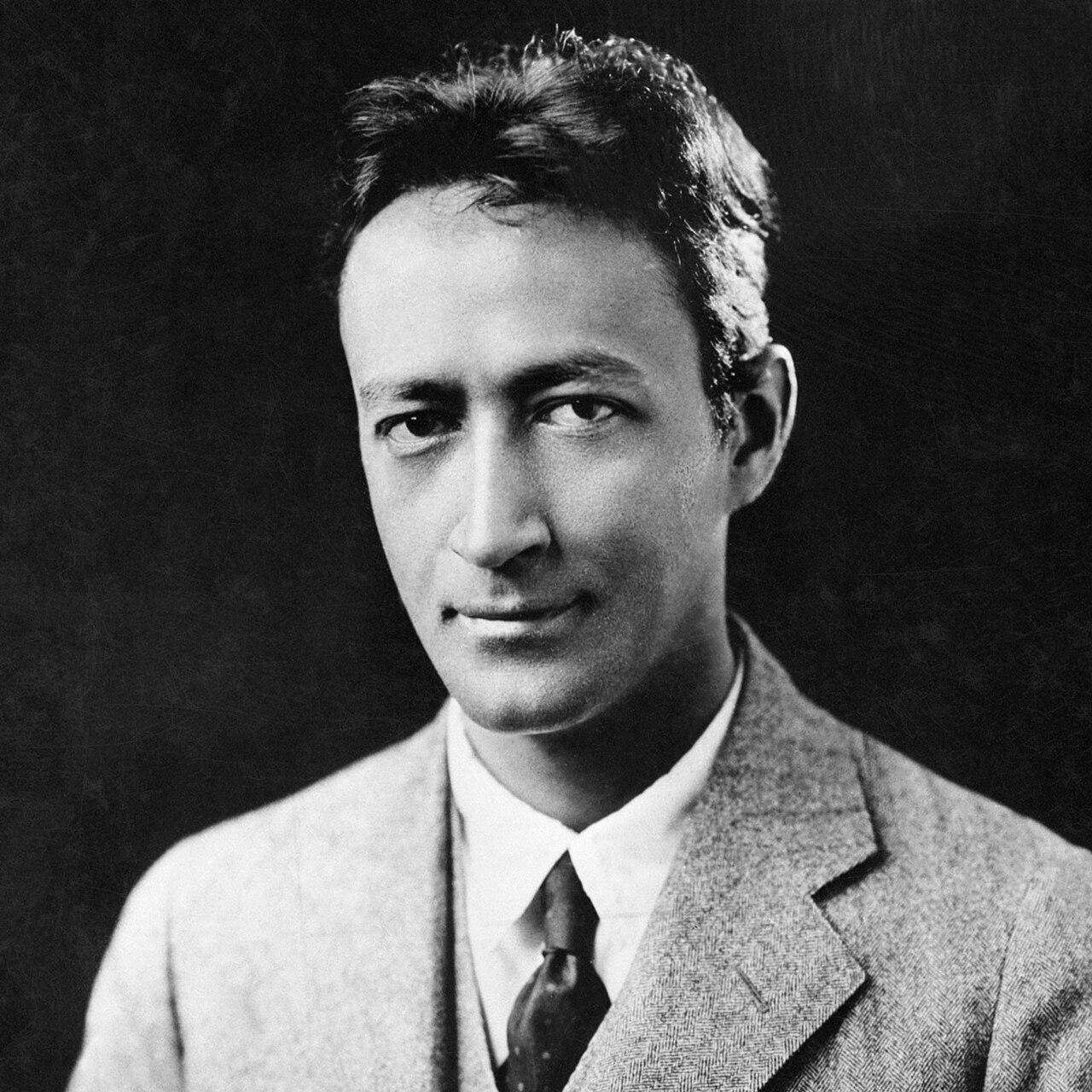
Image context: the lead image is a real archival portrait, not a generated author graphic or symbolic book collage. Toomer's composed face belongs here because the article is about control under pressure: a writer arranging volatile fragments into a deliberate literary crossing.[5]
The Georgia Opening Is Not Pastoral Rest
The first section of Cane can look, from a distance, like lyric Southern atmosphere. It is full of cane, dusk, smoke, song, pine, bodies, moonlight, and fields.[1] But the beauty is never merely decorative. The title object itself carries sweetness and cutting edge at once. In the opening invocation, cane is "deep-rooted," but the root is historical as well as botanical.[1]
Toomer's Georgia is therefore not a pastoral refuge from modernity. It is a place where beauty and violence are already tangled. The sketches around women such as Karintha, Becky, Carma, Fern, and Esther repeatedly turn desire into social pressure. A woman's body becomes town story, racial boundary, sexual myth, economic fact, and aesthetic image at the same time.[1] The danger of the section is that lyric attention can itself become a way of possessing what it praises. Toomer's form keeps that danger visible by refusing to let any one portrait become stable.
The Academy of American Poets biography helps fix the biographical hinge without reducing the book to biography. Toomer took a Georgia teaching job in the early 1920s, and that Southern stay fed the writing that became Cane.[3] But the book does not read like field notes converted into fiction. It reads like an encounter with a world Toomer felt was historically charged and already passing from view. The first section's lyric density is a preservation method and a warning signal at once.
Poems Interrupt Because Song Is One Of The Book's Archives
The poems in Cane are not interludes where prose takes a rest. They are part of the archive. A poem can compress what a sketch cannot explain without flattening: grief rhythm, labor rhythm, folk memory, erotic charge, or historical atmosphere. The short lyric bursts make the book feel sung and broken at the same time.[1]
This matters because Cane is often discussed as Harlem Renaissance literature and American modernism in the same breath. The Academy of American Poets places Toomer's work in both contexts, noting its importance to the Harlem Renaissance and its modernist influence.[3] The mixture is not a label problem. It is the book's method. Modernist fragmentation lets Toomer show rupture; folk song and lyric recurrence keep that rupture from becoming sterile technique.
The result is a form that keeps changing scale. A single phrase can feel local, bodily, and historical at once. A woman's name becomes a sound pattern. A dusk image becomes a whole social mood. A scene of watching becomes a test of who is allowed to look and who is turned into material for another person's art. The poems sharpen those transitions because they move faster than exposition. They do not explain the Southern section; they make its pressure audible.
The Northern Middle Changes The Air
The second section changes diction, architecture, and emotional temperature. The settings become more urban, interior, and northern. Rooms, streets, conversation, and alienated consciousness replace the first section's field density.[1] The change can feel abrupt, but the abruptness is the point. Migration is not presented as clean progress from rural danger into modern freedom. It is a change of pressure systems.
In the city pieces, people often seem less held by communal ritual and more trapped inside private calculation. The prose hardens. The social field becomes sharper, more compressed, sometimes more abstract. Where the Georgia section often moves through rumor, folk atmosphere, and collective perception, the northern middle turns toward modern loneliness, sexual negotiation, and brittle self-awareness.[1][2]
That shift prevents a sentimental reading of the South. If the first section were left alone, readers might turn Georgia into a lost organic world. If the northern section were left alone, readers might turn modernity into pure alienation. Toomer's structure refuses both simplifications. The North is not liberation without loss; the South is not beauty without injury. The book makes the reader carry both truths at once.
Kabnis Turns Return Into Trial
The final section, "Kabnis," is where the structure becomes most explicit. It is neither a simple homecoming nor a tidy synthesis. It is dramatic, jagged, talk-heavy, and unsettled.[1] Kabnis returns South not as a confident representative of art or race, but as someone divided by fear, shame, attraction, and historical burden. The section makes return feel like an interrogation.
Britannica's concise account of Toomer notes that Cane is considered his best work and identifies it as an experimental novel centered on African American life through the symbol of the title.[4] "Kabnis" is where that experiment tests its own cost. The South is no longer only evoked through lyric fragments and portraits. It becomes a room of voices. Past and present crowd each other. Ancestral memory is not safely reverent; it is difficult, bodily, and accusing.
That is why the dramatic form matters. Dialogue exposes evasions that lyric can make beautiful. Kabnis cannot simply sing his way into inheritance. He has to listen, recoil, posture, fail, and remain in the room. The section turns the whole book backward: the first part's beauty now returns as demand. What does it mean to aestheticize a world whose suffering one also fears? What does it mean to inherit a racial past without turning it into either ornament or slogan?
The Book's Shape Is Its Argument
Read structurally, Cane does not ask readers to choose whether it is poetry, fiction, drama, Harlem Renaissance text, Southern modernist text, or experimental novel. Its answer is yes, but not because categories are irrelevant. The categories matter because each one supplies a different instrument. Sketch gives social glimpse. Poem gives compression. Prose portrait gives embodied pressure. Drama gives confrontation. The book's argument happens when those instruments cannot stay apart.[1][2][3]
This is also why the book's fragments feel more composed than random. The first section gathers a disappearing or threatened Southern world in intense lyric units. The second section tests what happens when Black modern life moves into northern interiors and sharper urban forms. The third section returns South with the earlier music damaged, remembered, and argued over. The crossing is geographic, but it is also formal and ethical.
Toomer's afterlife has often been complicated by questions of racial classification, spiritual searching, and his later distance from the literary identity readers wanted for him.[3][4] Those questions matter, but Cane itself remains the strongest answer to any attempt to simplify him. It is not a single-position book. It is a crossing book: rooted and mobile, lyrical and broken, intimate and historical, beautiful and uneasy about beauty.
That unease is why it still reads as alive. Cane does not preserve the past by sealing it behind glass. It makes preservation feel risky. Every image asks who is seeing. Every song asks what has been lost. Every movement north or south asks what kind of self survives the trip. By the end, the reader has not solved the book's fragments. The reader has crossed them, and the crossing is the form.
Sources
- Jean Toomer, Cane. Project Gutenberg ebook page for the public-domain 1923 text used for close reading.
- Library of America, "Jean Toomer: Cane (LOA eBook Classic)" - overview of the book's experimental mixture of prose, poetry, dramatic sketches, Harlem Renaissance significance, and modernist status.
- Academy of American Poets, "Jean Toomer" - biographical account of Toomer's Georgia teaching job, Cane's publication, Harlem Renaissance context, and modernist influence.
- Encyclopaedia Britannica, "Jean Toomer" - concise biography, publication context, and framing of Cane as Toomer's experimental major work.
- Wikimedia Commons, "File:Jean Toomer 1934 portrait.jpg" - ACME Newspictures archival portrait used as the article image source.