The first thing the ploughman wants the mouse to do is slow down. He has just driven a blade through her nest. She makes a great scampering noise for such a little animal, and he calls after her with a promise that must sound better at his end of the furrow. He would hate to chase her with his “murd'ring pattle!” A pattle was a small spade used to scrape earth off a plough. The man knows its everyday use. To imagine how he looks to the mouse, he has to give the tool another one.[1][2]
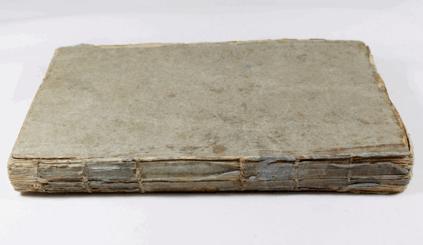
That quick change of view is one of the pleasures of Robert Burns’s “To a Mouse.” The subtitle dates the encounter to November 1785. In July of the following year, John Wilson printed the poem in Kilmarnock as part of Burns’s first collection. Many of its earliest readers were subscribers in Ayrshire. One wonders how many of them needed anybody to explain a pattle. Burns gives a reader who knows the tool well a reason to look at it again.[1][3][4]
Listen to the ploughman settling the question of grain in the third stanza. He brings up the possibility that the mouse sometimes steals. Then he asks his own brisk question, “What then?” An occasional ear out of twenty-four sheaves seems to him a reasonable allowance. He can keep the rest of the harvest and still have the pleasure of wishing a small creature well. There is real kindness here, along with a small comedy of manners. The mouse has made no request. The man supplies the charge, hears the plea and grants it, all in six lines.[1]
Grain is something he knows how to count. The nest takes him longer. Across the next three stanzas he looks at its scattered walls, considers what green stuff is left to build with this late in the year, then pictures the mouse at work before the plough came through. The little heap of leaves and stubble cost her “monie a weary nibble.” Try saying that last word after stibble, the word it rhymes with. The first sound names the stuff you can see lying about in a field. When the sound comes round again, there are teeth at work. For a moment he can reckon the cost of a house in units its builder would recognize.[1]
This is where his apology gets difficult. He can give away an ear of grain because he has others. How would he give back the succession of small bites, or the stretch of autumn in which there was still time to take them? The poem lets him go back over the accident in speech. Halfway through the fifth stanza he has the mouse snug under cover again. Then his own exclamation, “crash!”, brings the blade through a second time. Even in the version he tells her, she gets only a short line to enjoy the house.[1]
By the last stanza the ploughman has talked himself into envying her. He has memories to trouble him and guesses at misfortunes still to come. The mouse, he tells her, feels only the present. It's a curious thing for this particular man to believe. A few breaths earlier he imagined her seeing winter on its way and choosing a sheltered spot to live. He has given us a wonderfully persuasive picture of a creature making provision for December. Now he needs to imagine what it would feel like to be free of December until it arrives.[1]
Burns gives the mouse no answering speech. She has done the one thing we know she did on her own account, which was to run. The ploughman stays behind, good company for the length of the poem because he keeps thinking after the moment when another man might have gone back to work. His tenderest guess comes halfway through, when he looks down at an untidy bit of stubble and sees how long it took to put together.[1]
Sources
- Robert Burns, “To a Mouse,” text and line notes, Representative Poetry Online, University of Toronto Libraries.
- Scottish National Dictionary, “Pattle,” Dictionaries of the Scots Language.
- University of Glasgow, Corpus of Modern Scottish Writing, the Kilmarnock edition of Burns’s poems and its publication.
- “The Kilmarnock Burns and Book History,” The Bottle Imp, on the book’s wrappers, subscribers and surviving copies.