Teapot Dome survives in American memory as shorthand for corruption, but the scandal did not begin with a suitcase of cash or a courtroom sentence. It began as an argument about state capacity, naval fuel security, and who was allowed to manage federal oil reserves. That first frame matters because it explains why so many people initially treated the leases as a hard policy dispute rather than an obvious crime.[1][2][4]
What turned the story was sequence. A reserve transfer in 1921 made Albert Fall the operating figure. Secret no-bid leases in 1922 could still be defended as emergency management against "drainage" from neighboring wells. A Senate investigation looked, at first, like procedural oversight. Then Thomas Walsh kept asking the one question that policy language could not neutralize: how had Fall, previously short of cash, suddenly become rich? Once suspicious payments came into view in early 1924, Teapot Dome stopped being mainly a fight over executive discretion and became a money-trail scandal that courts could finish.[1][2][3]
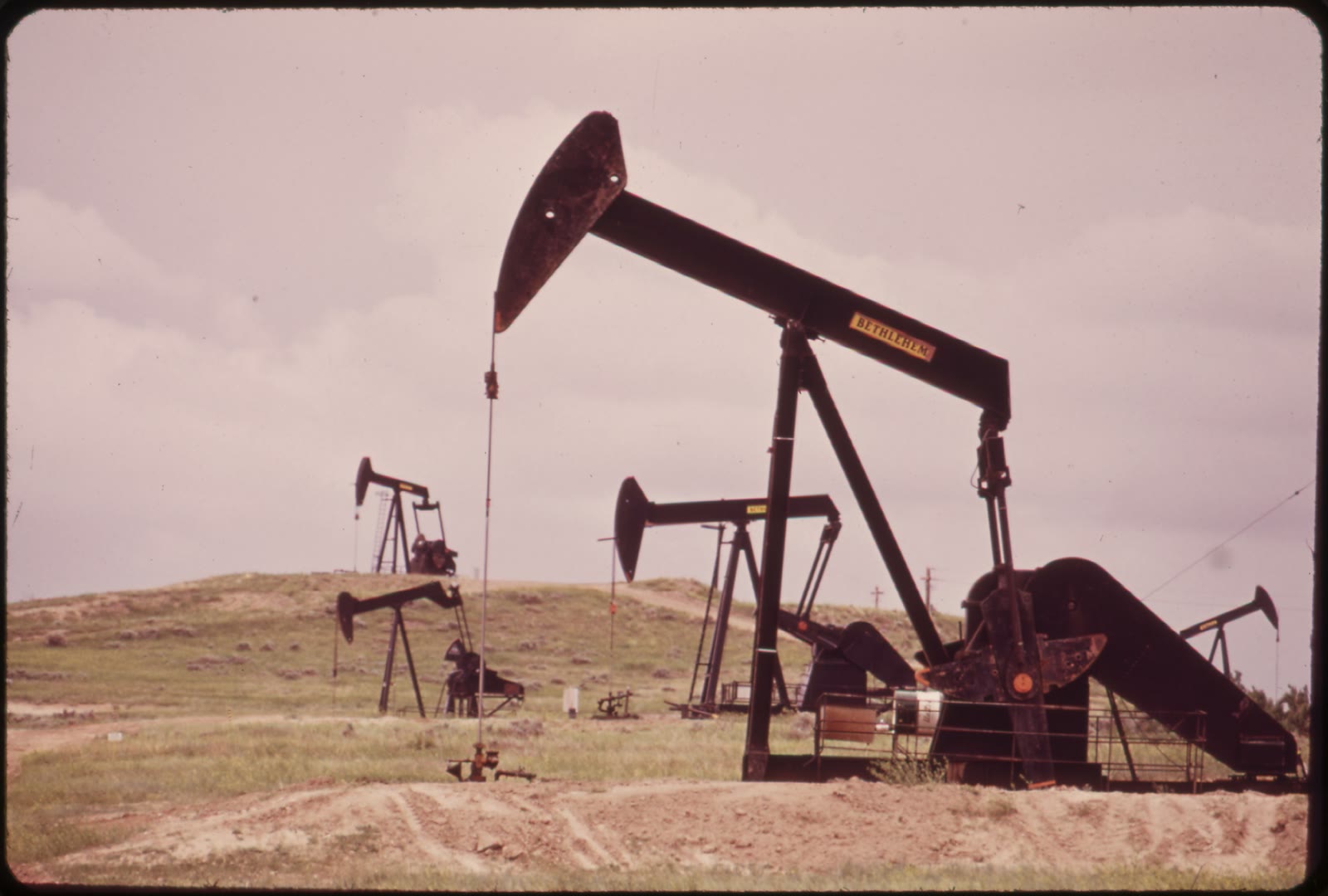
The lead photograph helps restore that first stage. It shows oil wells near Teapot Dome itself, a reminder that the scandal started with a physical reserve, not with an abstract metaphor. The public meaning of the affair later migrated to bribery and cover-up, but the chronology begins in the ground.[3][4]
Timeline anchors
- April 30, 1915: Naval Petroleum Reserve No. 3, the tract commonly known as Teapot Dome in Wyoming, is formally created.[4]
- May 31, 1921: President Warren G. Harding orders administration of the naval reserves transferred to the secretary of the interior, Albert Fall, subject to presidential supervision.[4]
- April 7, 1922: Fall signs the Teapot Dome lease with Harry Sinclair's Mammoth Oil Company.[4]
- April 15 to June 5, 1922: the Senate opens its inquiry and then expands it with subpoena power.[1][6]
- October 23, 1923: public hearings begin in earnest, with Walsh leading much of the questioning.[2]
- January 1924: Walsh uncovers the Doheny "loan" and Sinclair payments to Fall, then pushes for special counsel and civil suits.[2]
- January 17, 1927: McGrain v. Daugherty confirms Congress's authority to compel testimony in investigations tied to legislative purposes.[1][5]
- October 10, 1927: Mammoth Oil Co. v. United States sustains the cancellation of the Teapot Dome lease.[4]
- 1929: Fall goes to prison, and the legal consequences of the investigation continue to shape doctrine through cases such as Sinclair v. United States.[1][3][6]
At first, Teapot Dome could still be narrated as reserve management
That early ambiguity is the real opening act. In the legal record, the reserve itself sat inside a broader federal structure built to conserve oil for naval use. The Supreme Court's later summary in Mammoth Oil is useful here because it reconstructs the administrative path in plain sequence: Reserve No. 3 already existed; Harding shifted administration in 1921; Fall and Navy Secretary Edwin Denby then signed the lease; and the preamble justified the arrangement as a way to protect fuel supply, handle royalty oil, and respond to losses from nearby drilling.[4]
Those details explain why the scandal could move slowly at first. If one accepted the premise that the government faced a technical resource problem, the lease could be dressed up as decisive executive action. The Senate's 2024 historical reconstruction shows the same logic at the 1923 hearings: Fall argued that quick, secret leasing was necessary to prevent drainage by adjacent operators, while Walsh challenged both the legality of Harding's transfer and the factual premise that the reserve faced imminent depletion.[2]
This is where Teapot Dome became politically dangerous. The facts were never just about petroleum engineering. They were also about secrecy, discretion, and competition. The Senate's own short history reduces the opening scandal to one essential line: the reserve had been leased without competitive bidding and in secret.[1] That is why Teapot Dome held together as public drama. It combined a highly technical subject with a procedural odor that ordinary readers could grasp immediately.
Walsh changed the question from authority to enrichment
The reason Thomas Walsh matters so much is not simply that he chaired questioning. It is that he changed the article of proof. A weak investigator could have stayed trapped in the executive-branch argument: could the president reassign reserve management, were outside wells draining the field, and were emergency leases prudent? Walsh kept those issues alive, but he also followed the personal finances.[1][2]
That shift sounds obvious in retrospect. It was not obvious at the time. The Senate's brief history notes that Republican leaders expected the inquiry to be tedious and let Walsh, the junior minority member, take it on.[1] The later Senate centennial account makes clear how patient the transition was. Walsh worked through 1922, suspected misconduct by early 1923, and when hearings opened on October 23, 1923, the formal issue was still whether Fall had been justified in secretly leasing the reserves without bids.[2]
A narrower investigator might have accepted that frame. Walsh widened it. Journalists and local witnesses had already pointed to Fall's changed finances. By late 1923 and early 1924, that line of inquiry made the policy defense less important than the unexplained wealth sitting beside it.[2] Teapot Dome became legible to the broader public at exactly that moment. Drainage theory required experts; sudden prosperity did not.
January 1924 turned a bad-looking lease into a bribery story
The key month is January 1924 because that is when the scandal became narratively irreversible. The Senate's centennial account records two details that did the heavy work. Edward Doheny testified that he had arranged a $100,000 cash "loan" to Fall, delivered in a "little brown satchel." Harry Sinclair, meanwhile, had given Fall $269,000 in Liberty Bonds and cash a month after signing the Teapot Dome lease.[2]
At that point the meaning of the earlier secrecy changed. A secret lease can be defended as high-handed policy. A secret lease next to hidden money becomes evidence of favoritism and corruption. Walsh understood that the committee no longer needed only more hearings. It needed machinery outside the committee room. He moved toward a resolution pressing President Calvin Coolidge to appoint special counsel, bring civil suits to cancel the leases, and pursue criminal charges tied to the transactions.[2][3]
That move is what makes Teapot Dome more than a cabinet scandal. The Senate did not simply expose wrongdoing and stop. It converted exposure into institutional handoff. The inquiry passed material to courts, special prosecutors, and a legal process that would take years to finish the work.[2][3]
The courts made the scandal durable
The legal aftermath is what turned Teapot Dome from a notorious episode into a constitutional landmark. In Mammoth Oil Co. v. United States, the Supreme Court upheld cancellation of the Teapot Dome lease after recounting the lease's secret negotiation, lack of competition, and the government's claim that the arrangement had been made in fraud and corruption.[4] That mattered for the scandal's public memory. The reserve was not merely embarrassing. The lease itself was unwound.
At the same time, related investigation battles produced doctrine about congressional power. The Senate's own history points to McGrain v. Daugherty as the case that explicitly established Congress's power to compel witnesses before its committees.[1] Reading the case alongside the scandal shows why the principle emerged there. Teapot Dome had pushed the Senate past polite requests for information; the investigation needed subpoenas, records, and resistant witnesses. The Court's 1927 decision gave that investigative practice firmer constitutional footing.[5]
Sinclair v. United States shows the same pattern from another angle. The Court reviewed the Senate resolutions authorizing the reserve inquiry and treated the investigation as tied to legislation, natural-resource protection, and the government's rights in the leases.[6] Teapot Dome therefore left behind two kinds of precedent at once: corruption could void a lease, and a serious Senate investigation could demand evidence with real force.
Why 1929 matters more than the first headline
The scandal first broke into print in April 1922, but the better endpoint is 1929. By then the policy language had been stripped away. Fall had become the first former cabinet officer to go to prison, and Teapot Dome had ceased to look like a temporary embarrassment for the Harding administration.[1][3] It had become a case study in how corruption often survives its first public exposure because it arrives wearing the costume of administrative necessity.
That is why the chronology matters. The scandal did not spring fully formed from a single revelation. It moved from reserve policy, to Senate scrutiny, to a money trail, to civil cancellation, to criminal and constitutional consequences. Walsh's contribution was not theatrical outrage. It was patience. He kept the story alive long enough for the meaning of the leases to change.[1][2][3]
Teapot Dome still matters for the same reason. It shows how corruption can hide inside expertise for a while, especially when the subject is technical and the executive branch insists it is acting in the national interest. The scandal became visible only when the procedural questions and the personal payments were forced into the same frame. Once that happened, the rest of the system could finally see what it had in front of it.[1][2][4][5][6]
Sources
- U.S. Senate Historical Office, "Senate Investigates the 'Teapot Dome' Scandal" - April 1922 opening of the inquiry, Walsh's role, and the link to Fall's imprisonment and later subpoena-power doctrine.
- U.S. Senate Historical Office, "100 Years Since Teapot Dome" - the 1923 hearings, drainage dispute, Doheny's $100,000 "loan," Sinclair's payments, and Walsh's push for special counsel.
- Federal Judicial Center, "U.S. v. Albert B. Fall: The Teapot Dome Scandal" - overview of the civil and criminal cases that grew out of the reserve leases.
- Legal Information Institute, Mammoth Oil Co. et al. v. United States, 275 U.S. 13 (1927) - creation of Reserve No. 3, the 1921 transfer, the April 7, 1922 lease, and the cancellation ruling.
- Legal Information Institute, McGrain v. Daugherty, 273 U.S. 135 (1927) - the decision recognizing Congress's power to compel testimony in investigations tied to legislative work.
- Legal Information Institute, Sinclair v. United States, 279 U.S. 263 (1929) - Senate Resolution 282, expanded subpoena authority, and the investigation's legislative footing.