The 1968 Memphis sanitation strike is often remembered through the final week of Martin Luther King's life.[1][2] That memory is unavoidable, but it is too short to explain why the strike actually worked. By the time King arrived in Memphis in March 1968, the workers had already built a mechanism that was hard for City Hall to reverse. A deadly truck accident, everyday indignities on the job, a showdown over union recognition, visible interruption of city routine, and a disciplined support network rooted in Black churches had already fused into one public crisis.[1][2][3][4]
The sharp historical question is therefore not simply why the strike drew national attention. It is why this labor dispute became harder and harder for Mayor Henry Loeb to contain inside the old municipal script, where Black workers could be treated as separate employees with private grievances.[1][2][3] The best answer the sources support is structural. The strike became unstoppable when the workers linked three things the city wanted to keep apart: bodily risk at work, collective bargaining power, and the public functioning of Memphis itself.[1][2][3][4][6]
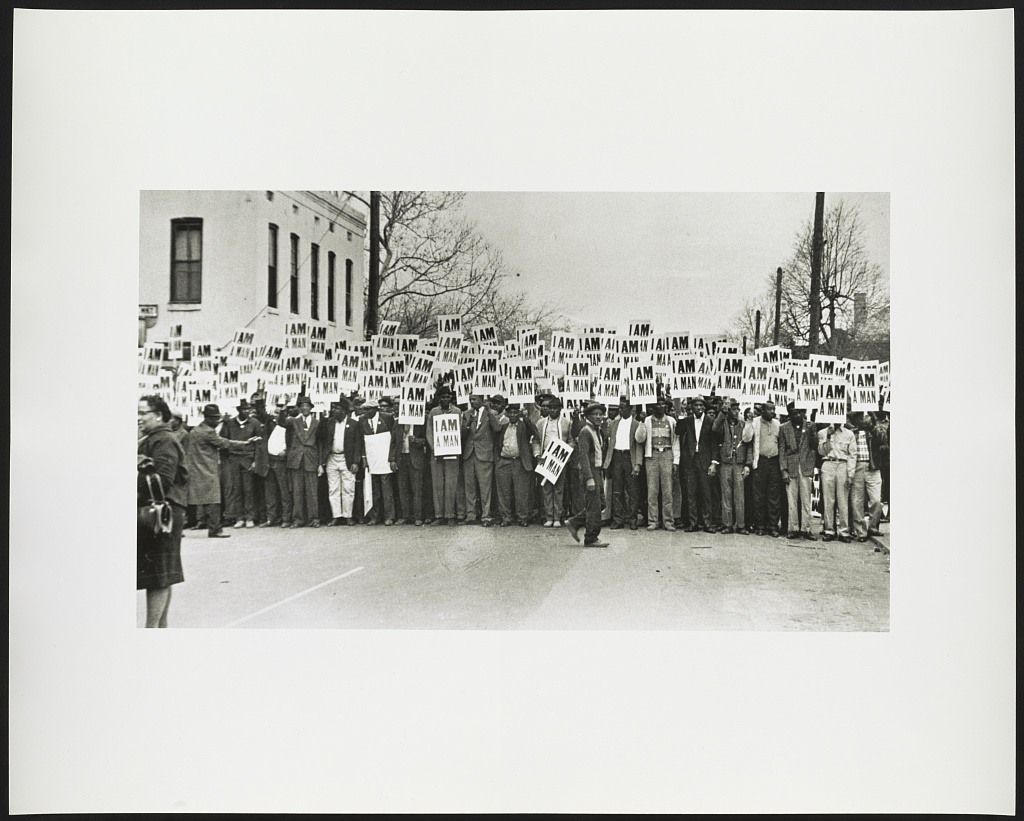
Image context: Ernest Withers's photograph of men carrying "I AM A MAN" placards is the right cover here because the article's argument is about conversion.[5] The strike succeeded by turning a sanitation department dispute into a visible claim about who counted as a civic subject in Memphis.
Timeline anchors
- February 1, 1968: sanitation workers Echol Cole and Robert Walker are killed by a malfunctioning garbage truck during a rainstorm; that same day 22 Black sewer workers are sent home without pay while white supervisors remain on the clock.[1][2]
- February 12, 1968: more than 1,100 sanitation workers begin the strike, demanding safer conditions, better wages and benefits, union recognition, and dues checkoff.[1][2]
- February 22-24, 1968: the City Council moves toward recognizing the union, Loeb rejects the move, police attack marchers, and Black ministers form COME to widen and discipline support for the strike.[2][3]
- March 18-28, 1968: mass rallies, a downtown boycott, and daily marches increase pressure; King's March 28 march is met with police violence and the killing of Larry Payne.[2][3]
- April 3-16, 1968: King gives the "I've Been to the Mountaintop" speech at Mason Temple on April 3, is assassinated on April 4, federal mediation intensifies, and the strike ends with an agreement on April 16.[2][4][6]
The trigger was a truck accident inside a larger labor regime
The deaths of Cole and Walker mattered because they revealed a system that already treated Black sanitation labor as expendable.[1][2] The National Archives summary is especially useful on this point. It places the fatal compactor accident and the same-day rain incident side by side: two men are crushed to death, while 22 Black sewer workers are sent home without pay even as white supervisors keep theirs.[1] The pairing matters. The strike did not begin because one tragic event suddenly moralized an otherwise functional workplace. It began because the accident made visible a structure workers already knew from wages, scheduling, and daily humiliation.[1][4]
The National Park Service description of Mason Temple adds the conditions that made this reading credible to the workers themselves. It notes that on rainy days Black workers were sent home unpaid while white supervisors stayed on the payroll; that Black workers were given only one uniform and nowhere to change; and that the highest-paid Black worker could not expect to earn more than $70 a week.[4] The King Institute adds that wages were so low many sanitation workers relied on welfare and food stamps.[3] These are not decorative facts. Together they show that the truck deaths were interpreted through an existing pattern of disposability.[1][3][4]
That is the first mechanism. The strike gained force because the workers could narrate the accident as part of a regime rather than as a freak malfunction. Once the problem was understood that way, a small adjustment or sympathetic condolence from City Hall could not plausibly settle it.
Union recognition mattered because Loeb's whole governing style depended on avoiding it
The strike's second mechanism sat inside what can look like a technical demand. From the beginning, the workers and AFSCME Local 1733 insisted on union recognition, dues checkoff, and negotiations over grievances.[2] In the chronology preserved by AFSCME, an international union official flew in on February 13 and called for exactly that package.[2] The phrasing is revealing. Recognition and dues checkoff were not marginal bookkeeping questions tacked onto a wage fight. They were the means by which workers would stop appearing before the city as isolated individuals and start appearing as a durable collective with standing inside municipal procedure.
The sources show that Loeb understood the danger. The King Institute notes that the strike might have ended on February 22 when the City Council, under pressure from a sit-in and a packed chamber, voted to recognize the union and recommend a wage increase.[3] Loeb refused the next step, insisting that only he had authority to recognize the union and declining to do so.[3] AFSCME's chronology tracks the same resistance across the following weeks: a back-to-work ultimatum, refusal to negotiate on recognition, and later opposition even to the dues-checkoff proposal on March 7.[2]
That pattern supports a larger inference. Loeb was not blocking one demand among many. He was defending a paternal municipal order in which Black workers could be paid poorly, disciplined separately, and invited to return to work one by one.[1][2][3] Recognition would have altered the city's chain of command as much as its payroll. Dues checkoff mattered because it would have embedded the union in the ordinary administrative rhythm of the city. In that sense, the strike was a fight over whether Memphis would continue to govern sanitation workers as dependents or deal with them as organized political actors.
The strike spread because it moved from a labor stoppage into a citywide problem of routine
If the first mechanism was structural grievance and the second was institutional standing, the third was public interruption. AFSCME's chronology shows how fast the city's ordinary rhythm began to slip. By February 14, newspapers were reporting more than 10,000 tons of garbage piled up while only a fraction of trucks were running.[2] By February 20, the union and the NAACP had called for a boycott of downtown merchants.[2] By February 26, daily marches had begun.[2] This was no longer a dispute the mayor could describe as a few aggrieved workers refusing orders.
The support structure matters here as much as the trash. The National Archives account says COME established food and clothing banks in churches, collected money to cover rent and mortgages, and recruited demonstrators for frequent marches.[1] The King Institute adds that after police used mace and tear gas on demonstrators on February 23, Memphis's Black community was galvanized, ministers met in a church basement on February 24, and COME committed itself to nonviolent civil disobedience designed to fill the jails and keep attention fixed on the workers' cause.[3] At Mason Temple, a building capable of seating 7,500, sanitation workers and supporters met regularly; on March 3, an eight-hour gospel marathon raised money and displayed endurance rather than improvisation.[2][4]
This is where the strike's mechanism becomes clearest. Garbage accumulation by itself could have produced irritation without solidarity. Moral sympathy by itself could have produced speeches without leverage. What changed the balance was the combination: disrupted sanitation service, visible public marches, church logistics, and a boycott that threatened downtown commercial normality all at once.[1][2][3][4] Memphis could still call the strike illegal. It could no longer pretend the strike was socially marginal.
March 28 and April 4 did not invent the crisis; they made retreat harder
The violent collapse of the March 28 march and King's assassination on April 4 are often told as if they alone forced resolution.[2] The chronology is more precise. On March 28, the march from Clayborn Temple was interrupted by window-breaking, after which police moved in with nightsticks, mace, tear gas, and gunfire; Larry Payne, a 16-year-old, was killed; hundreds were arrested; and National Guard troops moved in under curfew.[2] The sources do not support a simple redemptive reading. Violence damaged the city, exposed the risks of further escalation, and made control look more brittle rather than more secure.[2][3]
King's return on April 3 to speak at Mason Temple matters in this article for a narrower reason than martyrdom alone.[4] By then the strike had already generated a long sequence of failed municipal maneuvers: ultimatums, injunctions, police force, and delays over recognition.[2][3] King's assassination the next day magnified national pressure, but the strike's internal machinery was already built. The AFSCME chronology records that President Lyndon B. Johnson instructed Undersecretary of Labor James Reynolds to take charge of mediation on April 5, and the Library of Congress business-history guide notes that the strike ended on April 16 with union recognition and wage increases.[2][6]
The best way to read that ending is not as a miraculous settlement produced by grief. It is as the point where Loeb's refusal strategy finally ran out of room. The city had failed to restore routine, failed to break the workers' collective stance, failed to keep the dispute local, and failed to prevent national scrutiny from entering the bargaining field.[1][2][3][6] Federal mediation arrived because the municipal script had already broken down.
What the strike actually proved
The Memphis sanitation strike became historically decisive because it linked dignity to procedure.[1][2][3][4] "I AM A MAN" was not a free-floating moral slogan attached to a labor fight after the fact.[5] It named the whole mechanism. Men whose work had been treated as dangerous, dirty, underpaid, and individually manageable demanded to be seen in public, negotiated with collectively, and supported by a community that could keep them in the streets long enough to make the city answer.[1][2][3][4]
That is why the strike should be read as more than the prelude to an assassination. It changed the scale at which Memphis had to govern. The old arrangement depended on separation: workplace risk over here, wages over there, race somewhere else, downtown business somewhere else, church life somewhere else. The strike worked by bringing those layers together until routine itself stopped cooperating. Once that happened, the city's refusal to recognize the union no longer looked like firmness. It looked like an admission that Memphis could not restore order without first changing the terms on which Black workers belonged to the city.
Sources
- National Archives, "Martin Luther King, Jr., and Memphis Sanitation Workers" - summary of the February 1 deaths, rain-day pay disparity, strike demands, community support, and court documents from the city's case against King and other leaders.
- AFSCME, "1968 AFSCME Memphis Sanitation Workers' Strike Chronology" - day-by-day timeline of demands, marches, boycott, police violence, federal mediation, and settlement.
- The Martin Luther King, Jr. Research and Education Institute, "Memphis Sanitation Workers' Strike" - overview of wages, welfare dependence, City Council recognition vote, Loeb's refusal, and the formation of COME.
- National Park Service, "Tennessee: Mason Temple Memphis" - site history describing the church's role in the strike, worker conditions, and King's April 3, 1968 speech.
- Library of Congress Prints and Photographs Division, "I am a man, sanitation workers strike, Memphis, Tennessee" - Ernest Withers photograph used as the article image, with catalog metadata and date.
- Library of Congress, "Memphis Sanitation Workers Went on Strike" - business-history overview of the 64-day strike, leadership, and the April 16 settlement.