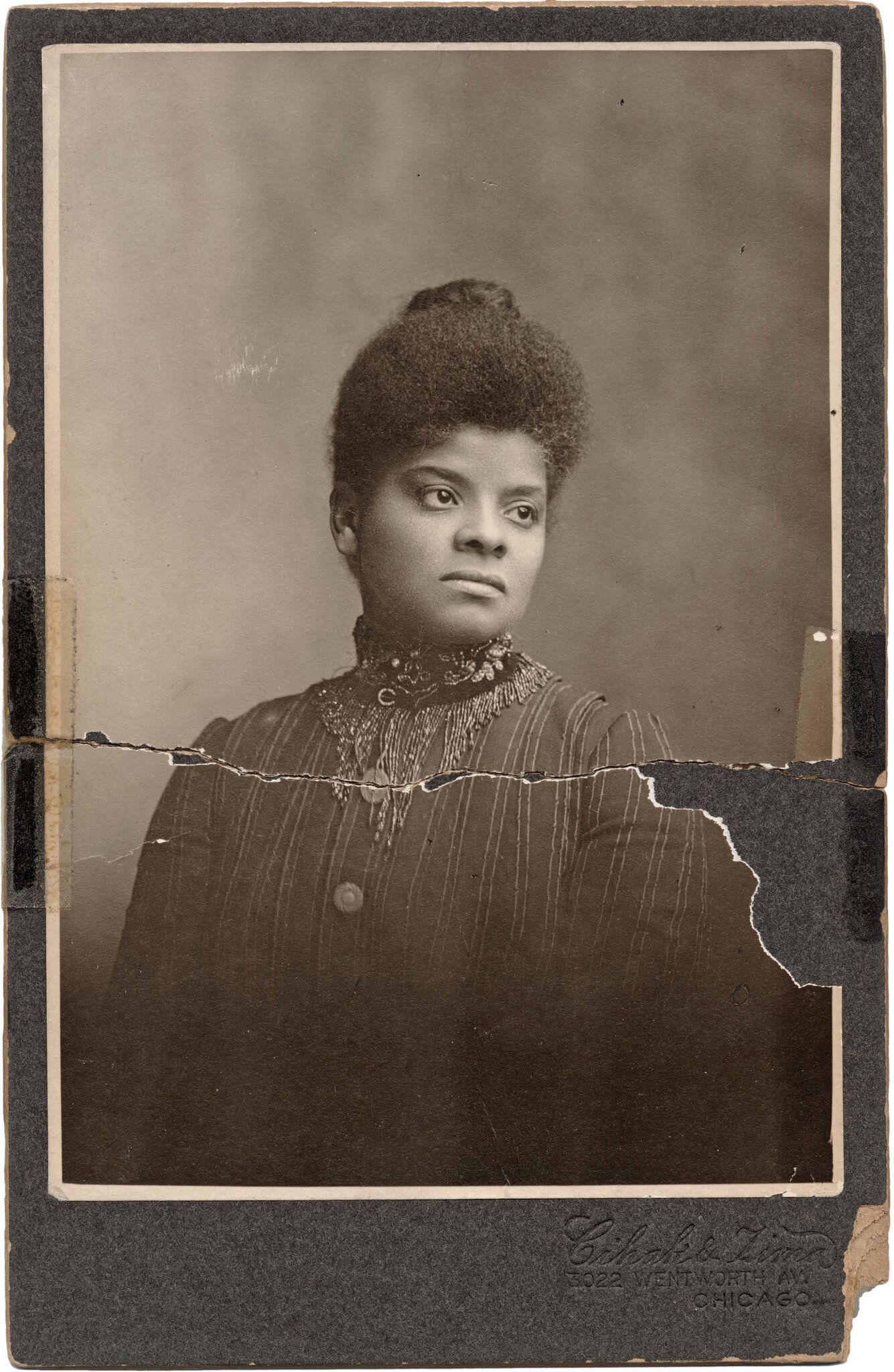
The sharp historical question is not whether Ida B. Wells was courageous. That part is obvious. The harder question is methodological: how did one journalist in 1892 convert local racial terror into a national evidence problem that institutions could no longer dismiss as rumor?
Between March 1892 and the late 1890s, Wells built a reproducible workflow: document an incident, challenge the official justification, aggregate patterns across cases, then move the findings across audiences (Black press, white press, public lectures, transatlantic networks, and national politics). Read as a microhistory, her significance sits in this sequence, not only in biography.
Timeline anchors: where the method formed
- March 9, 1892 (Memphis): Wells later described the lynching of Thomas Moss, Calvin McDowell, and Will Stewart, owners/employees of the People’s Grocery, as the rupture point that changed her work from local editorial activism to anti-lynching investigation.[3][4]
- May 21, 1892 (Free Speech editorial): she attacked the standard rape-justification narrative; a white mob destroyed the press days later and threatened her life, forcing exile from Memphis.[1][2][6]
- Late 1892 (Southern Horrors): she published a source-led pamphlet that shifted from outrage to documented counter-argument.[1]
- February 13, 1893 (speech, "Lynch Law in All Its Phases"): she reframed lynching as a constitutional and institutional problem, not just sectional cruelty.[3]
- 1895 (The Red Record): she formalized the statistical layer, explicitly grounding claims in compilations such as the Chicago Tribune’s annual tabulations.[4]
Those markers show the pivot: event shock -> editorial intervention -> retaliation -> forced relocation -> method scaling.
Step 1: turn a local shock into a falsifiable claim
In Southern Horrors, Wells reproduced the May 21 editorial that triggered the attack on the Free Speech office, including the line:
"Nobody in this section of the country believes the old thread-bare lie that Negro men rape white women." (Free Speech editorial reprinted in Wells, 1892)[1]
The crucial move was not rhetorical boldness alone. She made a falsifiable claim: if lynching was truly a narrow response to rape, case records should show that pattern consistently. If records did not, the official explanation collapsed.
That move matters because it changed debate format. Opponents now had to defend a dataset, not only a myth.
Step 2: convert narrative into a counting system
In The Red Record (1895), Wells made the data method explicit:
"Out of their own mouths shall the murderers be condemned."[4]
She relied on mainstream white-press compilations (especially Chicago Tribune tallies) to preempt the charge that Black witnesses were inventing numbers.[4] In her 1892 table, she reports 241 lynchings, of which 160 victims were Black, while alleged causes spread far beyond rape allegations.[4]
This is where her microhistory becomes procedural history. She did not just collect atrocities; she changed burden-of-proof logic:
- Use the dominant press record as input,
- Reclassify by alleged cause,
- Compare public justification vs observed distribution,
- Show systematic mismatch.
In modern terms, she moved from anecdote to structured audit.
Step 3: port evidence across audiences
Wells understood that evidence without circulation dies locally. Her 1893 speech text and later organizing work show deliberate audience transfer: local Black readership -> U.S. lecture circuits -> British reform audiences -> federal pressure campaigns.[3][7][8]
This audience transfer solved a core failure mode of Reconstruction-era justice: local impunity could suppress one newspaper, but it could not fully suppress a cross-border evidence stream. Her method was therefore political logistics as much as investigative writing.
Two strongest interpretations
Interpretation A: Wells’ decisive contribution was moral witness journalism
Under this view, the central driver is testimonial force: naming names, locations, and dates; refusing euphemism; making elite audiences confront the violence directly.[1][3][6]
Evidence for this interpretation:
- immediate public impact of the Free Speech controversy,
- rapid uptake of her pamphlets and speeches,
- persistent memory of Wells as a truth-telling witness figure.[5][7]
Interpretation B: Wells’ decisive contribution was methodological reframing
Under this view, the breakthrough is not only witness but design: she made lynching legible as a repeatable evidence contradiction between claim and count.[4]
Evidence for this interpretation:
- explicit source strategy in The Red Record (using white press compilations to reduce dismissal),
- categorical breakdowns that exposed weak fit between "rape defense" rhetoric and actual allegations,
- later anti-lynching campaigns inheriting this fact-pattern style.[4][8]
Both interpretations are compatible. But if we ask what traveled best into later institutional advocacy, Interpretation B has stronger continuity.
What would change the assessment?
Three evidence upgrades could sharpen this debate further:
- Case-level replication: digitized county-level legal and newspaper records linked to Wells’ cited incidents could test her classification decisions case by case.
- Diffusion tracing: better archival mapping of pamphlet/speech circulation (city by city, month by month) could separate witness effect from statistical effect.
- Counterfactual press analysis: comparing jurisdictions with similar violence but different press ecosystems could estimate how much her publication strategy changed national attention timing.
Until then, the highest-confidence conclusion is bounded: Wells’ anti-lynching impact came from combining witness credibility with early evidence-system thinking, at a moment when either one alone was easier to ignore.
Why this microhistory still matters
The 1892–1900 arc is a template for reporting under hostile institutions: begin with one local injustice, force a testable claim, build a transparent evidence base from adversarial records, and publish in channels the local veto cannot fully block.
That is why Wells remains contemporary. She did not only denounce terror; she redesigned how denial fails.
Sources
- Ida B. Wells-Barnett, Southern Horrors: Lynch Law in All Its Phases (1892, Project Gutenberg)
- Tennessee Encyclopedia, "Memphis Free Speech"
- Voices of Democracy (UMD), Wells speech text, "Lynch Law in All Its Phases" (1893)
- Ida B. Wells-Barnett, The Red Record (1895, Project Gutenberg)
- Encyclopaedia Britannica, "Ida B. Wells-Barnett"
- Equal Justice Initiative calendar entry, May 27, 1892 attack on Free Speech
- National Women’s History Museum, "Biography: Ida B. Wells-Barnett"
- White House Historical Association, "Ida B. Wells-Barnett: Anti-lynching and the White House"
Editor’s Pick Review
This piece wins Editor’s Pick because it turns a well-known figure into a rigorous method story and keeps the evidence chain visible at every step. The timeline anchors are precise, primary sources do real analytical work instead of decorative citation, and the core argument—Wells shifting lynching discourse from myth to falsifiable record—is defended with clear source-to-inference boundaries. It also scores high on editorial completeness by presenting competing interpretations and naming what additional evidence would change the assessment, which makes the article both historically grounded and intellectually honest.