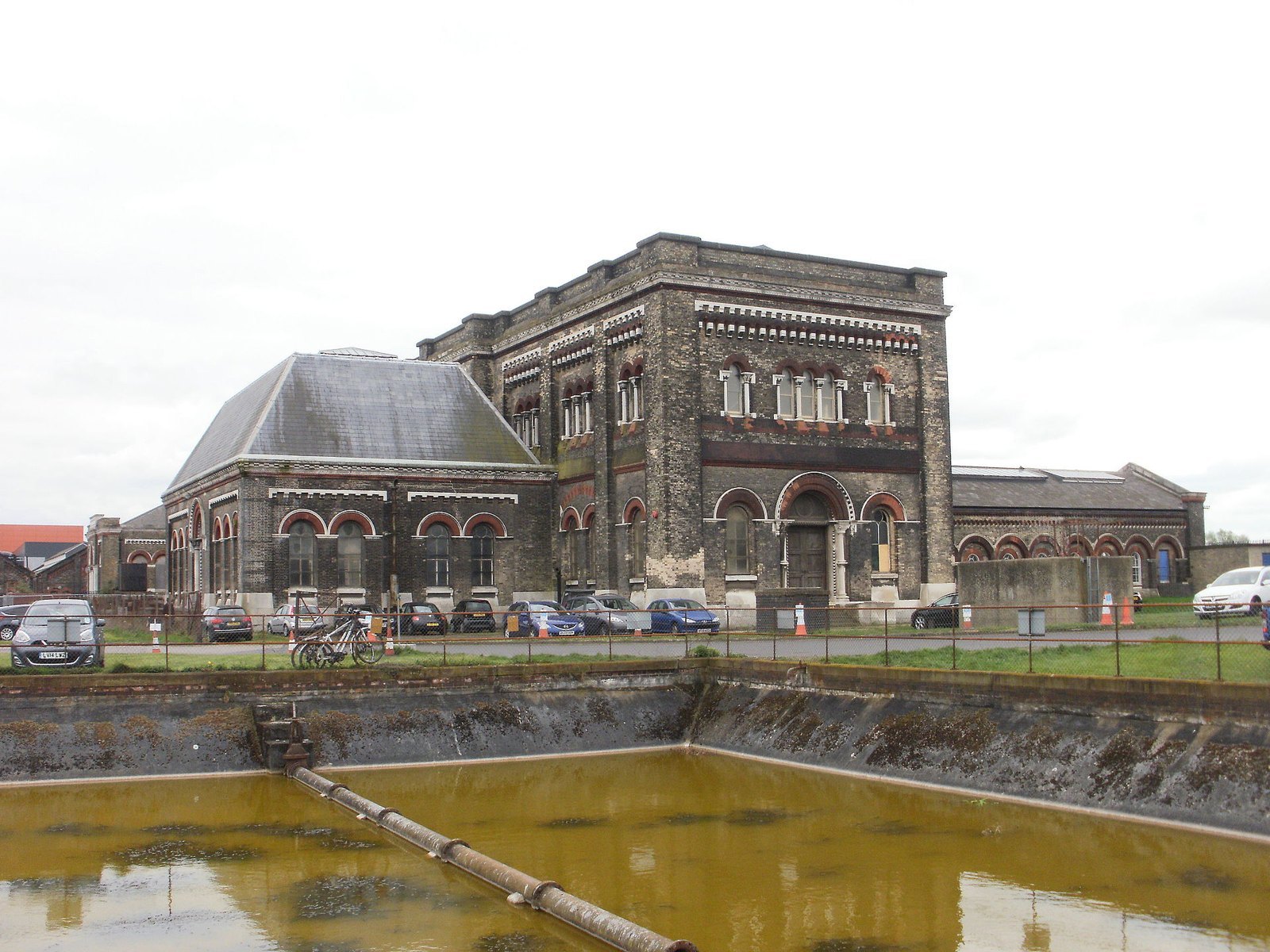
Most retellings of nineteenth-century London public health flatten the story into a single hero arc: John Snow found the source, removed a pump handle, and modern sanitation followed. The historical sequence was more demanding. Snow produced a powerful local inference in 1854; London built a durable citywide sewer regime only after institutional authority, financing, and construction capacity were reorganized across the next two decades.
The central question is therefore not whether Snow was right. It is: what mechanism converted localized epidemiological evidence into metropolitan infrastructure that still structures London today?
Timeline anchors: when each layer of change appeared
- 31 August–September 1854: the Soho cholera outbreak accelerated around Broad Street; Snow documented concentrated mortality and water-use links in his 1855 second edition, including “upwards of five hundred fatal attacks of cholera in ten days.”[1]
- 1855–1856: governance was restructured under the Metropolis Management Act framework, with the Metropolitan Board of Works (MBW) taking metropolitan-scale works responsibilities from earlier fragmented bodies.[2]
- June–August 1858: the Great Stink pushed Parliament into emergency action; contemporary accounts describe legislation passed in about 18 days to fund large sewer works.[3][4]
- 1859–1875: intercepting sewers, pumping stations, and embankment-linked works were built out; the core system reached approximately 82 miles of main sewers and 1,100 miles of street drains/sewers, with full project completion in 1875.[2][4]
The sequence shows a layered state-building process: evidence, then authority, then money, then engineered standardization at scale.
Stage 1: Evidence reframed the disease pathway, but did not by itself create system capacity
Snow’s 1855 text did two things that mattered historically. First, it shifted argument from neighborhood “bad air” generalization toward exposure pathways that could be mapped and compared. Second, it connected local outbreak reconstruction to broader water-supply comparisons, including differences between water companies.[1]
That methodological shift was major, but it was not equivalent to citywide implementation. Even with stronger inference, London still had fragmented governance, uneven fiscal powers, and inherited waste routes optimized for disposal convenience rather than disease interruption.[2]
In mechanism terms: knowledge production lowered diagnostic uncertainty, but left execution constraints mostly untouched.
Stage 2: The Great Stink converted a chronic externality into an immediate governability crisis
By 1858, hot weather and low river flow made Thames pollution politically unbearable at the core of state decision-making. Accounts from London Museum and Royal Museums Greenwich emphasize both scale and proximity: parliamentary work itself was disrupted, curtains were chemically treated to mask odor, and press language framed action as unavoidable.[3][4]
This mattered because it changed the policy clock. Chronic sanitary deterioration had long been tolerated; a concentrated legitimacy shock at Westminster collapsed delay options. What had been distributive conflict over rates and jurisdiction became a high-urgency state-capacity problem.
A useful way to read this step is that smell did not replace epidemiology; it changed veto structure. Snow-like evidence supplied mechanism plausibility. The Great Stink supplied decision coercion.
Stage 3: MBW authority plus financing transformed intent into a buildable program
The MBW provided the administrative platform to coordinate metropolitan works beyond parish boundaries, while parliamentary authorization unlocked project-scale funding.[2][4] Bazalgette’s solution then standardized the system architecture: intercepting sewers carrying waste eastward, integrated pumping stations, and embankment-linked network expansion.[4]
Three numeric anchors clarify why this was a regime change rather than a patch:
- roughly 82 miles of principal sewer lines,
- roughly 1,100 miles of street-level drains/sewers,
- roughly 318 million bricks and multi-year coordinated labor inputs in the London Museum reconstruction.[2][4]
Those magnitudes imply fixed-capital lock-in, not temporary crisis works. Once built, they altered future policy baselines: later governments inherited a metropolitan sanitation spine instead of restarting from local improvisation.
Competing interpretations and evidence balance
Two interpretations remain plausible in the literature and public memory.
- Science-first interpretation: Snow’s epidemiological insight was the decisive cause; infrastructure followed as technical implementation.
- Crisis-governance interpretation: Snow improved causal understanding, but the decisive turning point was the 1858 political crisis that forced fiscal and administrative consolidation.
The evidence supports a combined but asymmetric reading. Snow’s work was necessary for durable policy direction, because it strengthened the waterborne mechanism and narrowed credible alternatives.[1][5] Yet the timing of metropolitan-scale execution aligns more tightly with the Great Stink shock and subsequent institutional-financial authorization.[2][3][4]
A falsifier would be straightforward: if archival budget and authority records showed comparable metropolitan financing and execution commitments already in place before 1858, the crisis-governance weight would weaken materially.
Why this mechanism still matters
This episode is often taught as a triumph of correct science over incorrect theory. That is only part of the story. The fuller lesson is about state capacity under uncertainty: cities typically move from evidence to durable risk reduction only when three layers line up—credible mechanism, concentrated political urgency, and institutions able to borrow, coordinate, and build at the required scale.
London’s nineteenth-century sanitation turn endures because it eventually aligned all three.
Sources
- John Snow, On the Mode of Communication of Cholera (2nd ed., 1855; Project Gutenberg transcription)
- Wikipedia — Metropolitan Board of Works (governance timeline, sewer-system scale with cited references)
- London Museum — The Great Stink of 1858
- London Museum — How Bazalgette built London’s first super-sewer
- Markel H et al., “John Snow, Cholera, the Broad Street Pump; Waterborne Diseases Then and Now,” Emerg Infect Dis (2020)
- Royal Museums Greenwich — Dickens and The Great Stink of 1858
- Wikimedia Commons file page for the Crossness Pumping Station exterior photograph used as the replacement lead image.