The Semmelweis story is often retold as a fable with a clean moral: one doctor discovered handwashing, arrogant colleagues ignored him, and medicine lost years it should have saved. That version keeps the outline and drops the machinery. What changed in Vienna was more specific and more interesting. Ignaz Semmelweis did not propose generic cleanliness as a virtue. He identified a particular exposure path inside a particular hospital system, then imposed a chemical disinfection routine that collapsed one ward’s excess mortality.[1][2]
That distinction matters because it changes what kind of historical figure he was. Semmelweis was not mainly a prophet of “wash your hands.” He was a clinician working inside a bad institutional comparison set: two obstetric clinics in the same hospital, admitting similar women on alternating days, but producing sharply different death patterns once one clinic became tied to autopsy traffic.[1] His breakthrough came from reading that difference as a transmission problem before bacteriology gave him a settled vocabulary for microbes.[2]
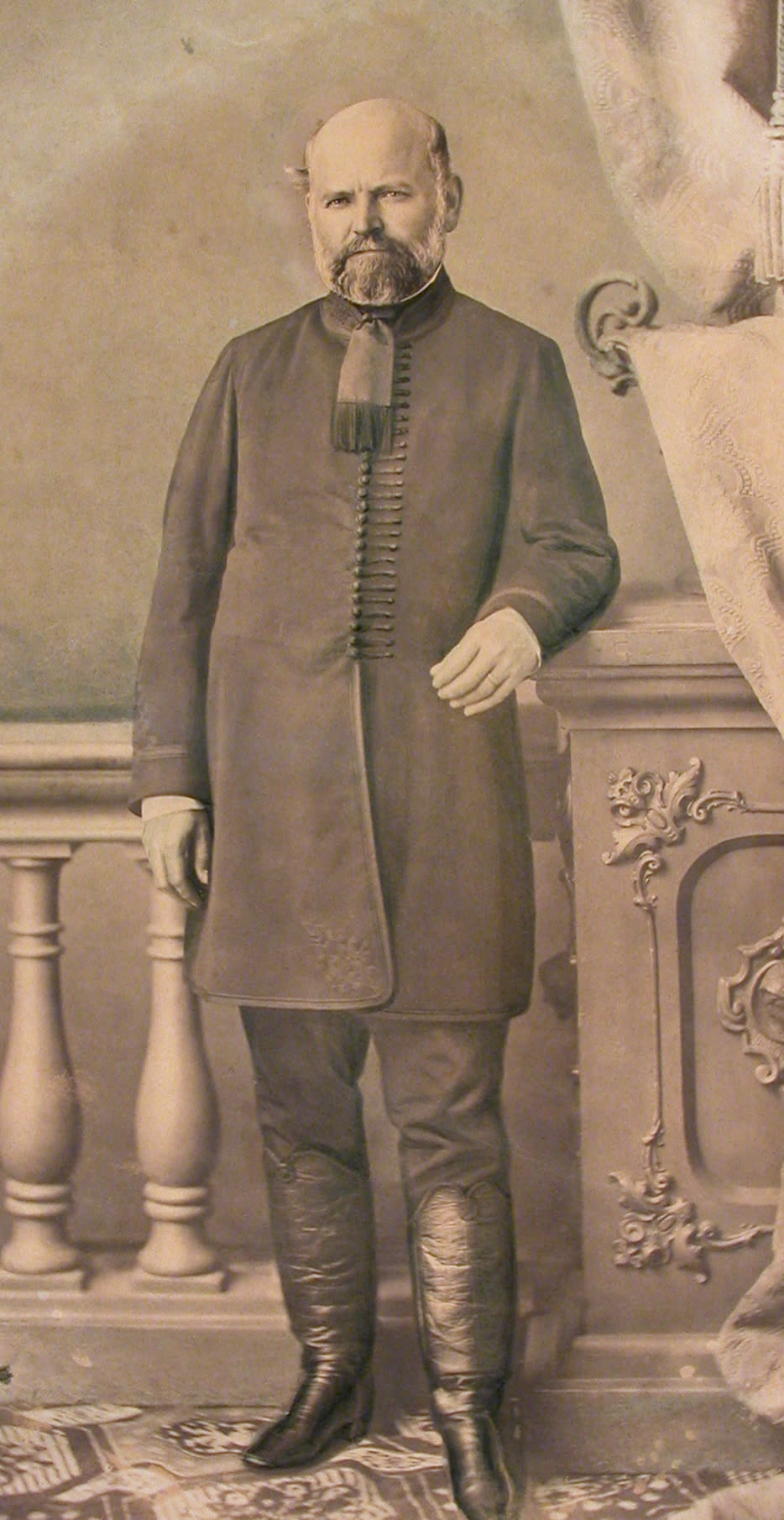
Image context: the cover image is an 1864 portrait photograph of Ignaz Semmelweis, used here as the direct archival visual anchor for a biography-centered account of his Vienna and Pest years.[6]
1) Vienna gave him a brutal natural experiment
The setting was the Vienna General Hospital, the Allgemeines Krankenhaus, where obstetric care had been split into two clinics in 1833. After an 1840 staffing change, Clinic 1 was run by male physicians and medical students, while Clinic 2 was run by female midwives and midwifery trainees.[1] Admission was rotated between the two clinics, which meant the hospital had created an accidental comparison device: same institution, same city, same disease label, different staff workflow.
By the early 1840s, that workflow difference had become lethal. The doctors and students in Clinic 1 attended autopsies and then returned to laboring women for vaginal examinations; the midwives in Clinic 2 did not.[1] Noakes and colleagues’ later reanalysis of Semmelweis’s own tables found that mortality in Clinic 1 was significantly higher than Clinic 2 from 1841 to 1846, and that mortality at Vienna had risen after pathological anatomy became embedded in teaching there in 1823.[1] In other words, the hospital’s educational prestige had created a new exposure channel.
This is the part of the story that gets flattened when Semmelweis is turned into a saint of hygiene. His key evidentiary asset was not a private intuition about dirt. It was a ward design that made comparison unavoidable. Women knew it too. Contemporary accounts record that mothers feared assignment to Clinic 1 and sometimes begged to be sent to the midwives’ division instead.[1] The institution had become legible from the patient side before it became legible in faculty theory.
2) Kolletschka’s death converted pattern into mechanism
Semmelweis was appointed assistant in obstetrics in 1846, briefly displaced, then restored in March 1847.[1] The decisive event came that same month when his colleague Jakob Kolletschka died after a scalpel injury during an autopsy. The pathological findings in Kolletschka’s body resembled those seen in women dying of childbed fever, and Semmelweis treated that resemblance as more than coincidence.[1][2]
This was the moment when a grim comparison tightened into a causal claim. If a professor cut during post-mortem work could die with the same lesion pattern as postpartum patients, then the obstetricians’ route from morgue to ward could no longer be treated as background routine. Semmelweis concluded that what his sources call “cadaverous particles” were being carried on examiners’ hands from corpses to women in labor.[1][2]
The strength of this inference is clearer in the 2022 epidemiology review than in the usual heroic retelling. Haidich and coauthors argue that Semmelweis effectively exploited several epidemiologic advantages at once: two clinics with different exposures, long-run mortality tabulations, an abrupt intervention, and a plausible biological bridge supplied by Kolletschka’s autopsy.[2] He did not have germ theory. He did have comparative structure.
3) The intervention was chlorinated disinfection, not symbolic washing
Late in May 1847, Semmelweis introduced chlorine handwashing for the male clinicians in Clinic 1.[1] That detail is worth holding onto exactly, because chlorine matters. Soap and water had already existed. What he wanted was a substance that would remove the smell and presumed contaminating residue of cadaveric material. The intervention was therefore closer to chemical decontamination than to a general plea for neatness.[1][2]
Once that regime began, the excess mortality in Clinic 1 fell sharply enough that later statistical review judged it no longer different from the pre-1823 baseline at the hospital.[1] The effect was not perfectly smooth, and that unevenness is part of why the history is more instructive than the fable. In October 1847, Semmelweis traced a renewed burst of deaths to a patient with a discharging uterine carcinoma, after which he widened the rule: chlorine washing was necessary after contamination from living diseased tissue as well, not only after contact with corpses.[1] In November, another cluster linked to a patient with a “carious” knee pushed him to think beyond cadavers toward decaying organic matter more generally.[1]
This refinement matters because it shows him reasoning forward from failure instead of basking in a first success. The intervention worked, then produced anomalies, and he modified the contamination model accordingly. In March 1848, during the suspension of clinical teaching amid revolutionary unrest, the clinic recorded a month in which no mother died of puerperal sepsis.[1] The point was not mystical cleanliness. The point was exposure control.
4) Why the evidence did not travel at the speed of the result
If Semmelweis’s data and intervention were so strong, why did adoption move so slowly? The familiar answer is professional vanity. That was part of it, but it was not the whole mechanism.[2] His finding required senior obstetricians to accept that ordinary teaching practice had become a killing system. It also required them to abandon prevailing explanations based on miasma, atmospheric conditions, or diffuse constitutional weakness before a replacement microbial theory fully existed.[2]
Haidich and colleagues summarize the barrier cleanly: acceptance meant denying the dominant theories of puerperal sepsis without yet possessing germ theory; the numerical method in medicine was still young; Semmelweis delayed full publication until 1861; and his written and personal style became increasingly abrasive.[2] The delay matters. UNESCO’s Memory of the World nomination for the Semmelweis documentary collection shows that the printed trail of his discovery stretched from 1858 essays to 1861 teaching instructions, a major 1861 book, and open letters aimed at critics in Vienna, Wurzburg, and Gottingen.[5] The truth, in other words, existed before the communication system for it matured.
There was also a political layer. The 1848 revolutions cut through Vienna while Semmelweis’s career was still insecure, and later historical reviews argue that hierarchy and ideology shaped how his work was received inside Johann Klein’s clinic and beyond.[1] A correct intervention inside a hostile institution does not scale by itself. It needs publication, allies, pedagogy, and a theory the next person can inhabit without feeling accused of murder.
5) Budapest showed the method could travel, but also how fragile it remained
Semmelweis left Vienna on 15 October 1850 and later worked in Budapest, first at St Rochus Hospital and then at the University of Pest.[1] The Budapest years are useful because they test whether Vienna was a one-off. They were not. In the years of Semmelweis’s direction, maternal mortality in the Budapest hospitals ran from 0.39% to 4.01%, compared with 1.07% to 9.10% in Clinic 1 at Vienna across the same period.[1] For eight of nine years in that comparison, Vienna’s physician-run clinic remained worse.[1]
At the same time, Budapest also showed that infection control is operational, not magical. When mortality rose there in 1857 and 1858, Semmelweis linked it to inadequately changed and inadequately disinfected bed linen after outsourcing laundry to the cheapest contractor.[1] That is an almost modern lesson. A successful clinical theory still depends on ordinary delivery systems: water, linen, time, discipline, supervision, procurement.
This is one reason the Semmelweis story still belongs in health-policy thinking. What he discovered was not only a pathogen pathway in embryo. He discovered that hospital architecture, staffing, and logistics can produce disease patterns that look natural until someone treats workflow as epidemiology.[1][2]
6) His afterlife sits inside infection prevention, not personal sainthood
Semmelweis published his major synthesis in 1861 and died in August 1865 after his mental state had deteriorated badly.[1][5] Recognition came later, once bacteriology made his practical rule easier to universalize. The modern infection-prevention world reads him backward through germ theory and hand-hygiene protocols, but that should not erase the narrower brilliance of what he actually did.
WHO’s 2009 hand-hygiene guideline treats hand hygiene as a system-level intervention for preventing transmission in health care, and later commentary marking the bicentenary of Semmelweis’s birth places him directly in the lineage of maternal sepsis prevention.[3][4] That later literature also restores scale to the problem. One in ten deaths associated with pregnancy and childbirth is still attributed to sepsis, and more than 95% of maternal sepsis deaths occur in low- and middle-income countries.[4] Semmelweis therefore reads less like a museum saint than like an unfinished operational argument.
The durable lesson is harsh and useful. Evidence can be strong enough to save lives in one ward and still too weak, socially, to reorganize a profession. Semmelweis’s story is valuable because it keeps both halves together: the intervention was real, and the lag was real. Health systems still produce that combination.
Sources
- Noakes TD, Borresen J, Hew-Butler T, Lambert MI, Jordaan E. "Semmelweis and the aetiology of puerperal sepsis 160 years on: an historical review." Epidemiology & Infection (2008) — mortality comparisons across Vienna, Dublin, and Budapest, plus the chlorine-washing intervention timeline.
- Haidich AB, et al. "A twenty-first century perspective on concepts of modern epidemiology in Ignaz Philipp Semmelweis' work on puerperal sepsis." European Journal of Epidemiology (2022) — why the evidence was methodologically strong yet institutionally slow to persuade.
- World Health Organization. WHO Guidelines on Hand Hygiene in Health Care (2009) — the contemporary infection-prevention framework that places Semmelweis inside modern hand-hygiene practice.
- Pittet D, et al. "Preventing sepsis in healthcare - 200 years after the birth of Ignaz Semmelweis." Infection Control & Hospital Epidemiology (2018) — Semmelweis's legacy and the continuing burden of maternal sepsis.
- UNESCO Memory of the World. Semmelweis Theory nomination form (2012) — the documentary chain from Semmelweis's 1858 articles to his 1861 book and open letters.
- Wikimedia Commons. "Ignaz Semmelweis (1818-1865) in 1864" — archival portrait used as the article image source.