The Ottawa Charter is often remembered as the moment public health learned to speak more positively: less warning, more empowerment; less disease, more wellness. That memory is not wrong, but it is too soft. Read closely, the 1986 text is doing something harder than improving tone.[1][2] It is trying to move health promotion out of the narrow lane of education campaigns and into the design of policy, environments, institutions, and collective decision-making.
That is why the document still matters. The famous language about people gaining more control over their health can sound individualistic when it is quoted alone. The surrounding paragraphs point in a different direction. The Charter begins with conditions like peace, shelter, education, food, income, a stable ecosystem, sustainable resources, social justice, and equity, then builds an action program whose first moves are healthy public policy and supportive environments, not leaflets or counseling.[1] The text does include personal skills, but it places them fourth, after politics, setting, and community action have already entered the frame.[1][3][4]
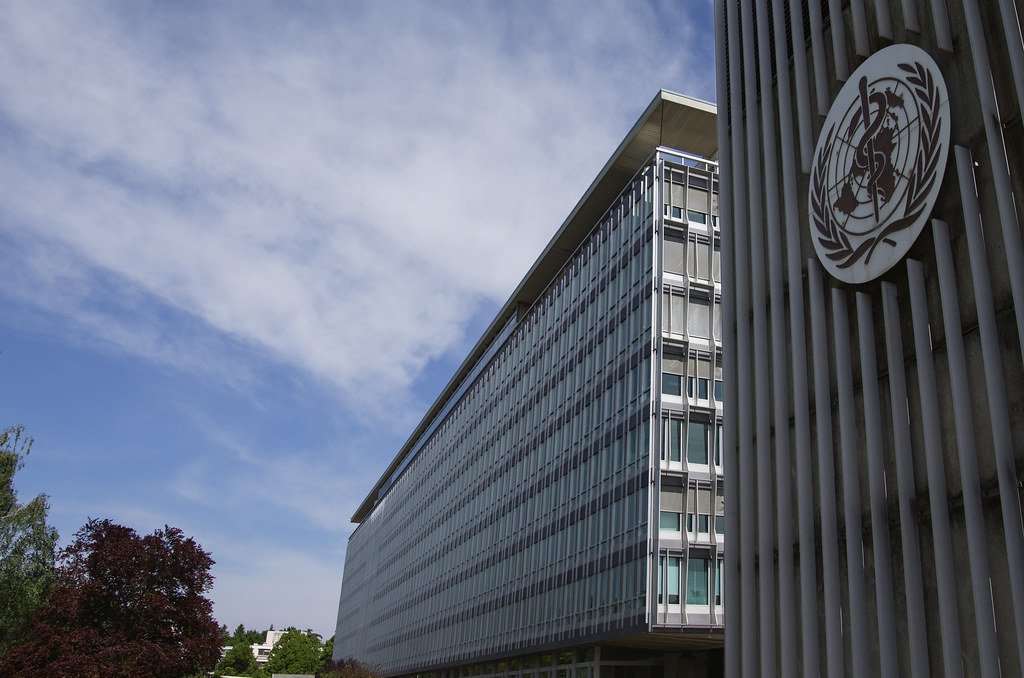
Image context: the article uses a real-world WHO building photograph rather than the Charter's emblematic page layout. That keeps the visual tied to the institution that carried the health-promotion framework forward, with a concrete place instead of a reproduced document page.[2][6]
Timeline anchors before the close reading
- 17-21 November 1986: the First International Conference on Health Promotion met in Ottawa, with 212 participants from 38 countries.[1]
- 21 November 1986: the conference adopted the Ottawa Charter for Health Promotion as a charter for action toward Health for All by the year 2000 and beyond.[1][2]
- 1997: John Catford's "The Ottawa Charter and after" treated the document as the hinge point for later health-promotion conferences while also implying that implementation had remained incomplete.[3]
- 2011: "The Ottawa Charter at 25" still described the Charter's key ideas, including social justice, equity, empowerment, a whole-of-government approach, and the settings approach, as unfinished work rather than closed history.[4]
- 2021: the Geneva Charter for Well-being explicitly said it built on the Ottawa Charter and the legacy of the later health-promotion conferences.[5]
Those dates matter because they show that Ottawa was not a dead-end declaration. Institutions kept returning to it because the original argument remained only partly realized.
1. The Charter opens above behavior
The first surprise is what the text refuses to treat as secondary. Before it says anything about classes, campaigns, or self-management, the Charter lists the prerequisites for health: peace, shelter, education, food, income, a stable ecosystem, sustainable resources, social justice, and equity.[1] That opening is not decorative. It tells the reader that health promotion starts upstream of personal behavior.
This matters because later public-health practice has often collapsed "promotion" into the art of persuading individuals to make better choices. The Ottawa text does not deny the value of knowledge or skill. It denies that those alone can carry the burden. If the prerequisites of health sit in wages, housing, environment, and justice, then a ministry or hospital system cannot claim success merely by teaching people what they should do inside unhealthy conditions.[1][4]
That is the real tone of the document. It is less a lifestyle manifesto than a political brief. Health promotion is defined as enabling people to increase control over, and improve, their health, but that control is immediately linked to the conditions in which people live rather than to isolated willpower.[1][2]
2. The five action areas are a sequence, not a loose slogan bundle
The Charter's most quoted section names five action areas: build healthy public policy, create supportive environments, strengthen community action, develop personal skills, and reorient health services.[1] These are often repeated as if they were a balanced menu. A close reading suggests the order matters.
Healthy public policy comes first because the document assumes governments shape the baseline conditions within which later choices become possible or impossible.[1] Supportive environments follows because health is not produced only in clinics; it is formed in workplaces, homes, schools, and communities.[1][4] Community action comes third because the Charter does not want populations treated only as targets of expert instruction. People are supposed to participate in priority-setting and local control.[1]
Only then does the Charter reach personal skills. That placement is the strongest internal evidence against the later reading of Ottawa as behavior-change marketing in friendlier language. Personal capability matters, but the document refuses to let capability carry the whole explanation for health. Skills are supposed to operate inside better policy, more supportive settings, and stronger local participation, not instead of them.[1][3]
3. Ottawa's settings language is the document's most durable correction
One reason the Charter aged well is that it kept shifting attention away from the clinic as the only meaningful scene of health. The famous line says health is created and lived in the settings of everyday life, where people learn, work, play, and love.[1] The sentence is memorable because it changes the geography of responsibility.
That move was larger than semantics. Once schools, workplaces, neighborhoods, and homes count as health settings, promotion can no longer mean only messages delivered after harm has already accumulated. The object of policy becomes the environment in which risk, resilience, stress, support, and opportunity are patterned.[1][4] This is also why later readers keep linking Ottawa to whole-of-government and settings-based approaches rather than to education alone.[4][5]
The settings argument is especially important because it explains how the Charter differs from a softer version of medical prevention. A vaccination reminder or smoking-cessation leaflet may still be useful, but Ottawa is arguing for something broader: alter the everyday structure in which people make decisions, and health outcomes move before individual counseling has to do all the work.
4. "Reorient health services" is Ottawa's internal critique of the health sector
The most underread action area may be the last one. The Charter says health services need to move beyond a clinical and curative orientation and toward health promotion, with shared responsibility among individuals, communities, professionals, institutions, and governments.[1] That line turns the Charter inward. It is not only criticizing housing or labor policy for shaping health. It is criticizing the health sector for waiting too far downstream.
This is why Ottawa should not be read as anti-medicine. The document does not ask hospitals or professionals to disappear. It asks them to stop imagining that repair at the point of illness is enough. Service systems are supposed to support prevention, participation, and healthier environments rather than acting as if treatment alone can offset the social production of disease.[1][3]
That internal critique still lands in 2026. It is easier for institutions to fund one more campaign than to redesign services around equity, participation, and supportive settings. Ottawa keeps insisting that the hard part is structural. Health promotion fails when it becomes a communications department attached to an otherwise unchanged system.
5. The afterlife shows what was easiest to narrow
The later record is useful because it shows which parts of the Charter traveled cleanly and which parts kept getting reduced. Catford's 1997 reflection and the 2011 anniversary piece both treat Ottawa as a durable reference point, but they also make clear that ideas like social justice, ecosystem health, empowerment, and whole-of-government action remained difficult to implement fully.[3][4] The 2021 Geneva Charter's decision to build explicitly on Ottawa suggests the same thing: the language stayed alive because the underlying task stayed unfinished.[5]
That incompletion is not accidental. The narrowest reading of Ottawa is also the easiest to administer. Teaching skills is simpler than changing housing or transport policy. Telling individuals to cope is cheaper than reorienting services. Running a campaign is institutionally easier than sharing power with communities. A close reading of the 1986 text helps recover what later practice often shaved off.
The strongest way to read the Charter, then, is this: Ottawa did not ask public health to become more cheerful. It asked public health to become more structural. The document's real subject is not messaging style. It is the redistribution of responsibility across policy, settings, communities, and services, with personal behavior placed inside that larger design rather than mistaken for the whole of health promotion.[1][3][4][5]
Sources
- Public Health Agency of Canada, "Ottawa Charter for Health Promotion: An International Conference on Health Promotion" - official full text of the Charter, conference dates, participant count, prerequisites for health, and the five action areas.
- World Health Organization, "Ottawa charter for health promotion" - WHO publication page summarizing the conference, the 1986 Ottawa meeting, and the Charter's publication context.
- John Catford, "The Ottawa Charter and after" (World Health, 1997) - WHO historical reflection on the Charter's place in the later health-promotion conference sequence and its unfinished implementation.
- John Raeburn and Irving Rootman, "The Ottawa Charter at 25" (Canadian Journal of Public Health, 2011; PubMed record) - anniversary reflection identifying social justice, equity, empowerment, whole-of-government, and the settings approach as the Charter's lasting ideas.
- World Health Organization, "10th Global Conference on Health Promotion charters a path for creating 'well-being societies'" (2021) - WHO statement that the Geneva Charter builds on the Ottawa Charter and the legacy of the later conferences.
- U.S. Mission Geneva / Eric Bridiers, "World Health Organization in Geneva, Switzerland" (Flickr photograph, 2014) - real-world WHO institutional photograph used as the article image.