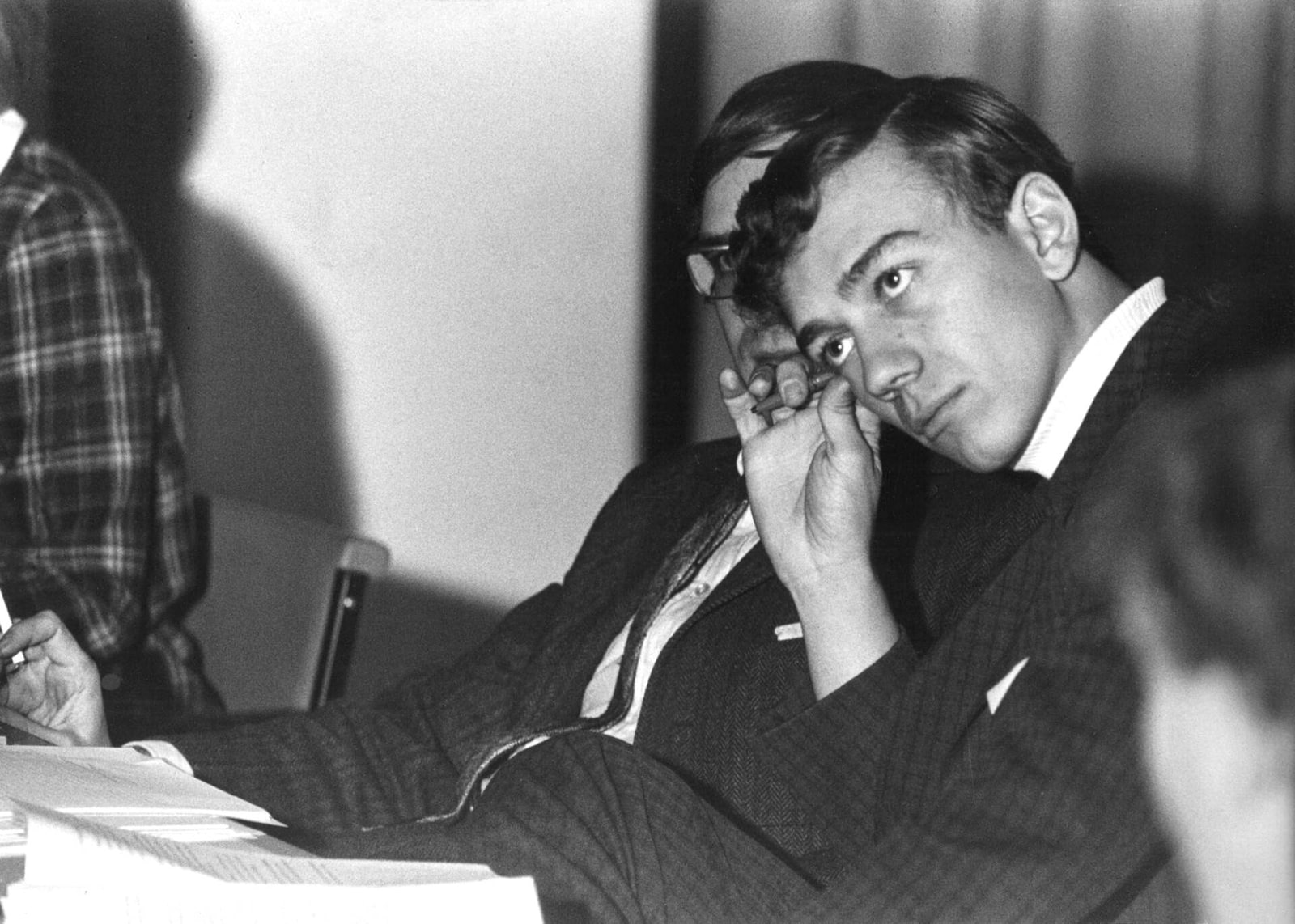
The petition asked Finland's government to do something about heart disease. It did not ask for a five-year experiment in milk, cigarettes, blood-pressure registers, newspaper coverage, village meetings, and the meaning of “community.” Yet that was where the request led.
In early 1971, representatives of North Karelia, a rural province on Finland's eastern edge, demanded urgent national action against exceptionally high rates of coronary heart disease. The familiar version of what followed has the satisfying shape of rescue: officials listened, a young physician named Pekka Puska arrived, people exchanged butter for vegetable oil, and premature deaths collapsed. Every part contains truth. Joined too neatly, however, those parts turn a difficult public-health history into a before-and-after advertisement.
The chronology gives a more useful result. The intensive North Karelia Project ran from 1972 through 1977, continued as a national demonstration, and formally ended in 1997. It changed measured risk factors early and helped make prevention part of Finnish institutions and ordinary life. But the first five years did not prove that the project alone caused a mortality advantage over its comparison province. The much larger fall in deaths unfolded over decades in a country where treatment, policy, industry, and behavior were all changing.[3][4][5][6]
1969–1971: a frightening statistic becomes a public demand
The problem was visible before the project had a name. From the late 1940s, World Health Organization statistics placed Finland near the top of international coronary-mortality tables, especially for middle-aged men. North Karelia looked worse still. Its largely agricultural and forestry population complicated the era's image of coronary disease as an affliction of sedentary, affluent city dwellers. Men doing hard physical work were dying young.[1][5]
Long-running Finnish research supplied a framework for action. North Karelia was one field site in the Seven Countries Study, whose preliminary 10-year results published in late 1969 again highlighted the province's severe burden. By the time planners assembled the project, epidemiology had identified smoking, raised blood pressure, and high serum cholesterol as major modifiable risk factors. These were not rare abnormalities confined to a small clinical group. Moderate elevations ran through much of the province; in combination, they raised risk across the population.[3][5]
Local leaders signed their petition in early 1971. It mattered politically, but it did not create the project from nothing. Historian Mikko Jauho's reconstruction shows that Martti Karvonen and a network including the National Board of Health, the county physician's office, the Finnish Heart Association, North Karelia Central Hospital, and the home-economics Martha Organization had begun planning during 1970. The initiative was therefore both local pressure and expert design. Calling it wholly “grassroots” hides the work already under way; calling it merely imposed from Helsinki hides why a neglected province could demand action with such force.[5]
Spring 1972: measure the province before trying to move it
The project began by making a baseline. In spring 1972, investigators drew a representative random sample of adults aged 25 to 59 in North Karelia and in neighboring Kuopio, selected as a comparison area because its cardiovascular burden and social conditions looked similar. The plan was to repeat the cross-sectional survey five years later with a new sample. Within North Karelia, continuous myocardial-infarction and stroke registers tracked clinical events; comparison-area mortality came from national statistics.[1][3][4]
The starting measurements explain why an individual-clinic strategy seemed too small. The 1979 evaluation reported that about 52% of North Karelian men in the sample smoked. Their mean serum cholesterol was about 7.0 mmol/L (269 mg/dL), and their mean casual blood pressure was 147/91 mm Hg. An early project report placed acute myocardial-infarction incidence among men aged 30 to 64 at 13.8 per 1,000 in the first project year.[2][3]
Those numbers did not identify one group that could be treated while everyone else continued as before. They described a distribution. If ordinary milk, bread, meat, cigarettes, and clinical routines kept moving the whole curve toward risk, counseling only the people at its far end would leave most future events untouched. The project consequently tried to alter what a normal choice looked like while also improving detection, treatment, and follow-up for people at high risk.[1][3][5]
1972–1977: the intervention leaves the clinic
North Karelia did not rely on one message or one messenger. Project staff worked through health centers, schools, workplaces, local media, voluntary associations, food producers, and shops. Nurses ran smoking-cessation groups. Blood pressure was measured during routine clinical contacts and special campaigns; people with high readings entered a regional register and were invited back for follow-up. Existing services were reorganized rather than replaced by a temporary campaign office.[1][3][6]
Food advice became social practice. The project urged people to replace high-fat milk and hard butter with lower-fat milk, soft margarine, and vegetable oils; to choose leaner meats and fish; and to reduce salt. Members of the Martha Organization cooked altered versions of familiar dishes at local “parties of long life.” During the initial five years, later project accounts counted more than 1,000 newspaper articles, over 150 health-education meetings, and more than 300 of those cooking gatherings.[6]
The point was not that publicity magically changed metabolism. Repetition across trusted settings could make a new choice recognizable, available, and socially supported. A leaflet about low-fat milk had limited reach if the dairy did not sell it, the shop did not stock it, or a household understood it as an attack on local farming. By putting the same proposal in a nurse's office, a village kitchen, a newspaper, and a grocery aisle, the project tried to change the environment in which an individual decision occurred.[1][5]
Early monitoring suggested movement. A 1976 report said the share of men smoking fell from 54% to 42% during the first two and a half years, while use of low-fat milk rose from 17% to 48%. The share of men who reported a blood-pressure measurement in the previous six months rose from 28% to 56%, and the share receiving antihypertensive drugs rose from 3.1% to 9.1%.[2] These were intermediate outcomes, not heart attacks prevented. They nevertheless showed that a province-wide intervention could reach several links in the causal chain at once.
There were limits inside that achievement. The early project foregrounded education, social influence, and personal behavior more than the economic structure producing those behaviors. Dairy and animal husbandry were woven into North Karelia's livelihood; residents could be asked to consume less saturated fat while remaining surrounded by incentives to produce it. Later historical analysis treats this tension as central, not incidental: the campaign called itself environmental, but during its first phase it changed social norms more readily than the food economy beneath them.[5]
Spring 1977: a strong risk-factor result and an incomplete mortality answer
In spring 1977, the five-year evaluation sampled independent participants from the same 1913–1947 birth cohorts—now ages 30 to 64—in North Karelia and Kuopio, using the baseline methods. Across the initial and terminal rounds, more than 10,000 people were studied each time and participation was roughly 90%. Compared with changes in Kuopio, the combined estimated coronary-risk score derived from smoking, cholesterol, and blood pressure fell by a net 17% among men and 12% among women in North Karelia.[3]
That is the project's cleanest early finding. It is also narrower than the legend. North Karelian cardiovascular mortality fell during 1972–1977—by 13% among men and 31% among women aged 30 to 64 in the contemporary report—but mortality was also changing in the comparison area. The between-area difference was not statistically significant. The investigators wrote plainly that the program's true effect on mortality could not be deduced from those five-year results.[4]
Two interpretations must therefore be kept separate. The risk-factor comparison supports the claim that North Karelia changed measurable intermediate conditions more than Kuopio did, particularly among men. It does not establish that every observed reduction was caused by the project, nor that a mortality effect should already have appeared on the same schedule. Coronary disease develops over years; five years may be enough to alter smoking or cholesterol and still be too short to isolate the eventual effect on deaths.[3][4]
The comparison itself was becoming porous. Contemporary evaluators offered spillover of North Karelia's antismoking education into neighboring Kuopio as one possible reason smoking declined there too. Finland's Parliament also approved national antismoking legislation during the trial period. A “control” province could not be sealed away from national news, products, or policy—and the project helped generate some of that attention. What weakened the tidy experiment was also evidence that the intervention was escaping its original boundary.[3][5]
After 1977: the pilot enters national policy
When the initial intensive phase ended in 1977, North Karelia became a demonstration area and parts of its program moved across Finland. Kuopio continued to be surveyed, including in 1982, but national tobacco rules, mass-media campaigns, food reformulation, salt reduction, workplace and school practices, and improved hypertension care made it progressively less credible as an untouched counterfactual.[1][5][6]
Structural change arrived unevenly and later. Food companies developed lower-fat products; rapeseed oil and softer spreads became ordinary alternatives. The 1986 East Finland Berry and Vegetable Project even tried to connect dietary advice to production by helping dairy farms diversify into berries. That chronology matters. It prevents later changes to the food economy from being retroactively assigned to the five-year pilot and shows how a behavior campaign could evolve toward the material conditions it had initially left largely intact.[8]
Long-term measurements are dramatic. Between 1972 and 2012, reviews report mean serum cholesterol declines of more than 20% in North Karelian men and women and mean systolic-pressure declines from 149 to 134 mm Hg in men and from 153 to 129 mm Hg in women. The share of residents reporting butter on their bread fell from almost 90% to less than 10%. By 2014, coronary mortality among middle-aged men was reported to be 84% below its 1972 level.[6][7]
Those figures describe a genuine transformation, but attribution remains layered. Project researchers estimated that roughly two thirds of the long mortality decline could be explained by changes in the major risk factors, with improved treatments accounting for much of the rest from the 1980s onward.[7] Their observational prediction model compared mortality expected from periodic risk-factor surveys with observed coronary mortality; it was not a randomized estimate of the original North Karelia campaign. Secular change, national policy, medical care, and the project's own diffusion are entangled by design.
1997 and after: what the petition actually built
The project formally ended after 25 years in 1997. Its most defensible legacy is neither “diet advice cured a province” nor “the trial failed because five-year mortality was inconclusive.” It demonstrated that prevention could treat a risk distribution as a collective object: measure it, choose a few causal targets, coordinate many institutions, feed results back to the public, and keep adapting after the original study window closed.[1][5][6]
It also leaves a warning. Community participation can mean local people shaping an intervention, or it can mean trusted organizations carrying expert priorities deeper into private life. In North Karelia, it meant some of both. The campaign gave residents practical routes to act on a problem they had publicly named; it also applied social pressure and often translated economic constraints into the language of personal choice.[5]
The petition succeeded, then, not because it produced one perfect experiment. It forced heart disease out of the category of private misfortune. The answer became a chain running from a blood-pressure cuff to a follow-up register, from a cooking meeting to a dairy shelf, and from a county newspaper to national legislation. North Karelia's later mortality curve cannot tell us which link deserves every life gained. The chronology can tell us why no single link was ever going to be enough.
Sources
- World Health Organization Regional Office for Europe, Comprehensive Cardiovascular Community Control Programmes in Europe (1988), “Finland: The North Karelia Project” — institutional account of the project's origins, design, implementation, and evaluation.
- Pekka Puska et al., “The North Karelia Project: A Programme for Community Control of Cardiovascular Diseases,” Scandinavian Journal of Social Medicine 4(2), 1976 — early report of baseline risk and the first two and a half years of behavioral and care changes.
- Pekka Puska et al., “Changes in Coronary Risk Factors During Comprehensive Five-Year Community Programme to Control Cardiovascular Diseases (North Karelia Project),” British Medical Journal 2, 1979 — primary five-year risk-factor comparison with Kuopio.
- Jukka T. Salonen, Pekka Puska, and Heikki Mustaniemi, “Changes in Morbidity and Mortality During Comprehensive Community Programme to Control Cardiovascular Diseases During 1972–7 in North Karelia,” British Medical Journal 2, 1979 — primary outcome analysis and its explicit limits on causal attribution.
- Mikko Jauho, “The North Karelia Project (1972–1997) and the Origins of the Community Approach to Cardiovascular Disease Prevention,” American Journal of Public Health 111(5), 2021 — archival history of the petition, planning, community model, structural limits, and diffusion.
- Pekka Puska and Paresh Jaini, “The North Karelia Project: Prevention of Cardiovascular Disease in Finland Through Population-Based Lifestyle Interventions,” American Journal of Lifestyle Medicine 14(5), 2020 — project-authored synthesis of interventions and long-term risk-factor and mortality trends.
- Erkki Vartiainen, “The North Karelia Project: Cardiovascular Disease Prevention in Finland,” Global Cardiology Science & Practice, 2018 — long-run risk-factor trends, the 1972–2014 coronary-mortality decline, and modeled contributions of prevention and treatment.
- Elizabeth Semler, “Finland's North Karelia Project: Structural Barriers to Changing a Food Economy,” American Journal of Public Health 111(5), 2021 — historical commentary on the pilot's behavioral emphasis and the later berry-and-vegetable structural intervention.
- Wikimedia Commons, “Pekka-Puska-1972.jpg” — source and provenance page for the 1972 Helsingin Sanomat photograph used as the article image.