Ludwig Guttmann is usually remembered through the Paralympics, which is understandable and slightly misleading. The Games are the most visible descendant of his work. They are not the original health intervention. The intervention began in a wartime hospital ward, where spinal injury was often treated as a short road from trauma to infection, bed confinement, dependency, and early death.
The useful microhistory is therefore not simply "a doctor invented disability sport." It is sharper than that. Guttmann treated spinal injury as a system failure that could be reorganized: admit patients early, prevent complications, train the body that remained, build a specialist team, keep research beside clinical work, and return patients to social life instead of warehousing them as survivors with no future.[1][3]
That change belongs in health history because it moved the boundary of care. Surgery and nursing could keep a patient alive, but Guttmann's wager was that survival without social reintegration was an incomplete outcome. Sport became famous because it made that wager public. The deeper shift was the rehabilitation pathway around it.
The timeline makes the scale visible. In 1939, Guttmann reached Britain as a Jewish refugee from Nazi Germany and continued spinal-injury research in Oxford.[4] In February 1944, the new Spinal Injuries Unit opened at Stoke Mandeville Hospital with Guttmann in charge; the National Paralympic Heritage Trust records that it began with 24 beds and one patient, and had nearly 50 patients within six months.[1] On 29 July 1948, the day London opened the postwar Olympic Games, he staged the first Stoke Mandeville competition for 16 injured servicemen and women competing in wheelchair archery.[2] In 1952, Dutch ex-servicemen joined, making the movement international.[2][5] In 1960, the Games moved to Rome and included 400 athletes from 23 countries, the event later recognized as the first Paralympic Games.[2]
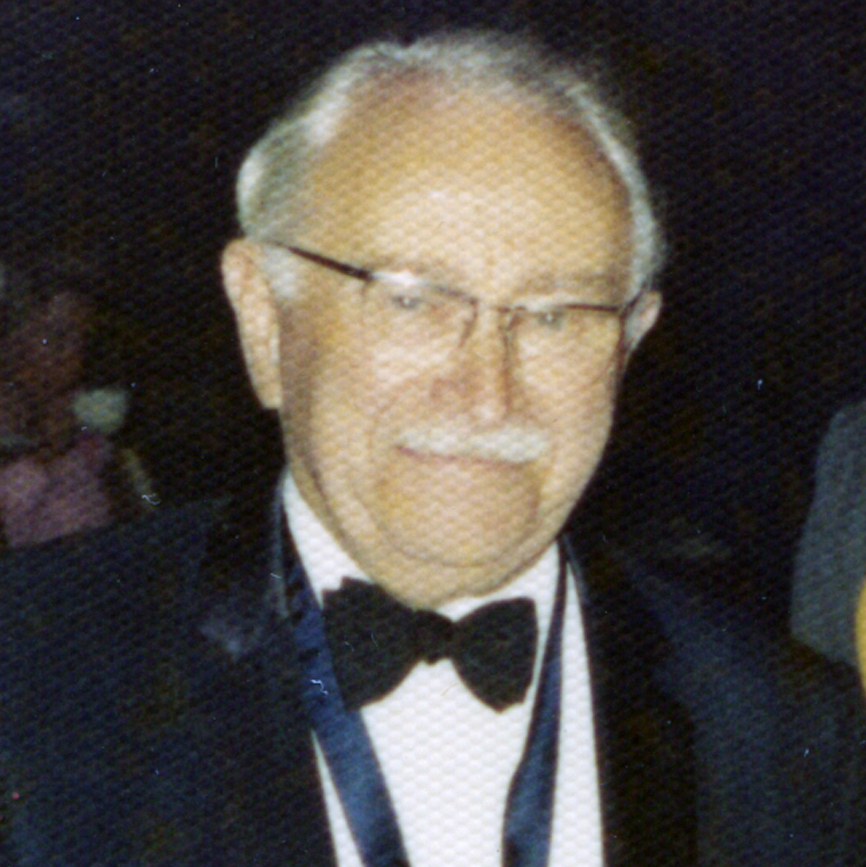
The cover image comes from later in that sequence, at the 1976 Toronto Paralympic Games, where Guttmann appears with Australian team official Richard Jones.[6] It is not a clinical photograph, and that is the point. By then, a hospital method had become a public scene: wheelchair users as competitors, officials, travelers, and members of national teams, not only as patients being managed out of sight.
The ward problem before the Games
Stoke Mandeville did not begin as a sports story. It began as a grim clinical problem created by modern war and older assumptions. Pilots, soldiers, and civilians with spinal cord injuries could survive the initial trauma and still die from pressure sores, urinary infection, renal failure, respiratory complications, sepsis, immobility, despair, and the slow institutional stripping away of ordinary roles.
The National Paralympic Heritage Trust summarizes the pre-Guttmann expectation bluntly: life expectancy for paraplegic people was about two years from injury when he began work at Stoke Mandeville.[1] That number should be read as a systems indictment, not as fate. It meant hospitals lacked a stable pathway for the injury after the dramatic emergency was over. The body had to be protected from secondary complications. The person had to be kept from becoming a permanent bed case. The ward had to be designed around long rehabilitation, not only acute rescue.
Guttmann's own route helps explain why he attacked the problem in that form. Wellcome's account places him first as a German-trained neurosurgeon forced out by Nazi persecution, then as a refugee researcher in Britain, and finally as the physician asked to set up the specialist Stoke Mandeville center for wartime spinal injuries.[4] He arrived with neurological expertise, but the unit demanded more than neurological diagnosis. It required a new operating culture for people whose bodies, work prospects, family roles, and self-respect had all been damaged at once.
The intervention was a pathway, not a slogan
The clearest compact description comes from H. L. Frankel's 2012 Sir Ludwig Guttmann Lecture in Spinal Cord. Frankel describes Guttmann's method as comprehensive care: early admission, prevention and treatment of spinal-cord-injury complications, active rehabilitation, and social reintegration.[3] Each element matters because any one of them, left alone, is too weak.
Early admission matters because complications begin while everyone is still thinking about the original injury. Delay gives pressure damage, urinary infection, contractures, and despair time to settle into the case. Prevention matters because the old story of paraplegia was partly a story of secondary harm that medicine had allowed to appear inevitable. Active rehabilitation matters because the patient's usable strength, balance, wheelchair skill, bladder and bowel routines, and daily confidence had to be rebuilt through practice rather than wished into being. Social reintegration matters because a patient discharged into isolation has not really been restored to health in the public-health sense.
That is why Guttmann's work is easy to flatten if sport gets separated from the ward. Sport was not an inspirational garnish added after medicine had finished. It was one way to make the rehabilitation claim physical, measurable, competitive, and social. A person who could draw a bow, throw, race, or compete before spectators was practicing more than muscle work. They were rehearsing a public identity that contradicted the older assumption of passive invalidism.
Frankel's summary also notes that Stoke Mandeville built a dedicated specialist team, encouraged visitor training, combined research with clinical work, and produced more than 500 scientific contributions over time.[3] That detail matters because the method did not scale by charisma alone. A charismatic doctor can start a ward culture; a durable field needs trained teams, publications, visiting clinicians, specialist societies, and routines that other hospitals can copy.
Why archery was more than a symbol
The first Stoke Mandeville Games were tiny by modern standards: 16 injured servicemen and women, wheelchairs, archery, hospital grounds, and the deliberate timing of 29 July 1948 beside the London Olympics.[2] The smallness is part of the lesson. Guttmann did not need a global broadcast to test the idea. He needed an event that made patients prepare, compete, compare performance, be watched, and be treated as people with ambitions beyond discharge.
Archery was a good first sport precisely because it made control visible. The wheelchair did not disappear. It became part of the athletic scene. The archer needed posture, shoulder strength, breathing, concentration, and repeated practice. Those skills sat close to rehabilitation aims, but the contest also changed the social frame. The patient was no longer merely compliant or noncompliant. The patient could improve, lose, win, return, and belong to a team.
That is the hinge between health and public life. Rehabilitation can happen privately, but dignity often needs witnesses. When Dutch athletes joined in 1952, the event stopped being only an internal hospital ritual and became an international exchange.[2][5] By 1960, the Rome Games showed that the same idea could travel outside Stoke Mandeville and sit beside Olympic spectacle without being absorbed by it.[2] The medical point did not vanish as the public event grew. It became easier to see: spinal injury had not ended these athletes' claims on skill, movement, travel, competition, or civic attention.
What the microhistory corrects
The first weak version of the story is hero worship. Guttmann mattered enormously, but the result was not a miracle of personal will. The Stoke Mandeville change required wartime state need, hospital space, nurses, physiotherapists, orderlies, patients willing to endure hard training, research networks, visiting clinicians, administrators, and eventually sports organizers. The biography is real, but the public-health lesson is institutional.
The second weak version is the slogan "sport heals." Sport did not heal spinal cord injury in the sense of reversing paralysis. It helped organize rehabilitation around strength, discipline, skill, social confidence, and public recognition. That distinction protects the history from sentimentality. A wheelchair race or archery match could not replace urinary management, skin care, respiratory vigilance, pain control, surgery when needed, or long-term follow-up. It could, however, fight the social and psychological shrinkage that medical survival alone did not solve.[3]
The third weak version is to treat the Paralympics as the whole outcome. The modern Games grew far beyond Guttmann's original spinal-injury population and beyond the early Stoke Mandeville frame. That expansion is part of their strength. But the health lesson remains rooted in the original narrow setting: a specialized unit learned to treat spinal injury as an integrated life problem. The Games became the most famous proof that the old prognosis was too small.
There is also a boundary to keep visible. Guttmann's early model was still shaped by strong medical authority and by the paternal language of its time. The point now is not to freeze his approach as a perfect template. It is to notice what he forced medicine to include. A serious spinal-injury system cannot stop at wound closure, vertebral stabilization, or discharge paperwork. It has to include preventable complications, equipment, training, housing, work, sexuality, family life, sport if desired, and the patient's authority over what a livable future means.
The lesson that still travels
Stoke Mandeville's durable contribution is a design principle: rehabilitation is not what happens after medicine is done. For spinal cord injury, rehabilitation is part of medicine's definition of success. The patient who survives but is left immobilized, infected, isolated, or socially erased has not received the full intervention.
That principle is broader than paraplegia. Health systems repeatedly face conditions where acute survival outpaces social recovery: stroke, traumatic brain injury, limb loss, severe burns, long ICU stays, disabling infection, and chronic neurological disease. The Guttmann lesson is not that every condition needs a Games. It is that care has to build routes back into ordinary life while the medical work is still happening.
The small archery contest in 1948 therefore deserves its fame, but not because it was a charming origin myth. It matters because it revealed the shape of a better endpoint. A spinal-injury patient was not only alive, not only clean, not only discharged, and not only grateful. The patient could train toward something, appear in public, measure progress, and be seen by others as a competitor.
Guttmann made that claim inside a hospital before the world knew what to call it. The Paralympics later supplied the name, scale, and spectacle. The health intervention was already there: comprehensive care tied to social return, with sport serving as one of the clearest ways to prove that the old prognosis had mistaken institutional failure for destiny.
Sources
- National Paralympic Heritage Trust, "Professor Sir Ludwig Guttmann" - biography page on the 1944 Stoke Mandeville unit, 24-bed opening, early patient growth, and prewar life-expectancy context.
- International Paralympic Committee, "Paralympics History - Evolution of the Paralympic Movement" - official chronology for the 1948 Stoke Mandeville Games, 1952 Dutch participation, and 1960 Rome Games.
- H. L. Frankel, "The Sir Ludwig Guttmann Lecture 2012: the contribution of Stoke Mandeville Hospital to spinal cord injuries," Spinal Cord 50, 790-796 (2012) - review abstract describing Guttmann's comprehensive care model, specialist team, research output, sport, and professional legacy.
- Wellcome Collection, "Ludwig Guttmann and the birth of the Paralympics" (2021) - archival account of Guttmann's refugee path, Stoke Mandeville appointment, and the hospital-to-Games sequence.
- National Paralympic Heritage Trust, "Games" - institutional history page on the 1948 Stoke Mandeville archery competition, 1950s international Games, 1960 Rome event, and later expansion.
- Wikimedia Commons, "File:Ludwig Guttmann 1976.jpeg" - source page for the 1976 Australian Paralympic Committee photograph used as the article image.