Louise Brown is usually remembered through one compressed sentence: the world's first "test-tube baby" was born on 25 July 1978. That sentence is true, but it hides the operational change that made the birth possible. IVF did not suddenly become real because scientists learned how to fertilize a human egg in a dish and then waited for history to happen. The decisive shift came later, in Oldham, when Robert Edwards, Patrick Steptoe, and Jean Purdy stopped treating ovarian stimulation as the obvious road forward and instead built a tightly timed natural-cycle workflow around one egg, one laparoscopy, one embryo, and one transfer.[1][2][3][4]
That narrower reconstruction matters because it changes what the breakthrough was. The achievement was not merely laboratory fertilization. Edwards had been pursuing that problem for years, and the team had already accumulated many cycles without a live birth.[2][3] The breakthrough was learning how to align egg recovery, hormone timing, embryo culture, and uterine transfer closely enough that an embryo could survive beyond the bench and establish a pregnancy that held. Louise Brown's birth was therefore less a miracle of first conception than a triumph of sequence control.[1][2][3]
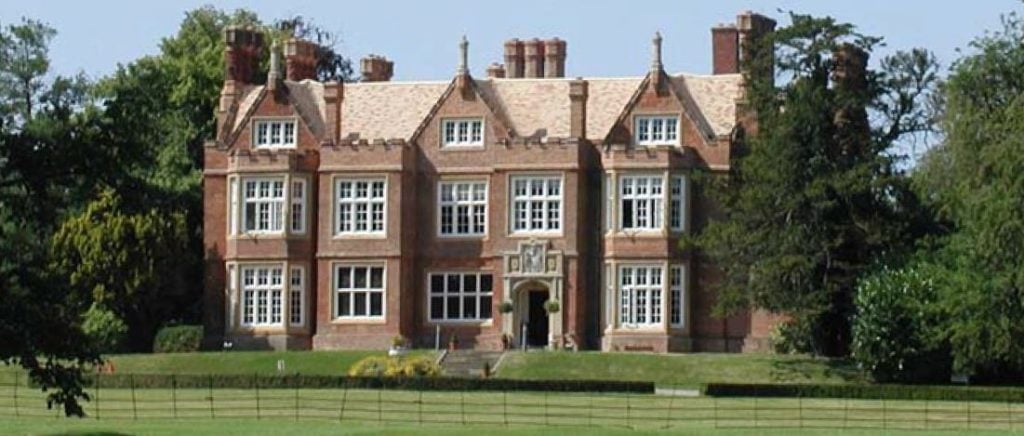
Image context: the cover uses a real photograph of Bourn Hall Clinic from the Nobel Prize's popular history of Edwards's work. It belongs here because the meaning of the 1977-1978 breakthrough was institutional as well as biological. Once one Oldham pregnancy went to term, IVF stopped looking like an eccentric laboratory wager and started becoming a reproducible clinic.[1]
Timeline anchors before the interpretation
- 1968: Edwards and Steptoe begin collaborating, joining reproductive physiology to Steptoe's laparoscopic access to the ovary and fallopian tubes.[2][3]
- 1971: the UK Medical Research Council declines to fund the work, forcing the programme to continue with more fragile institutional and private support.[2][3]
- 1969-1978: the Oldham notebooks record the planned and attempted laparoscopic cycles that show how long the team kept failing before a live birth emerged.[3]
- November 1977: Lesley and John Brown arrive in Oldham after years of infertility; the team uses a natural menstrual cycle rather than multi-egg stimulation, fertilizes one oocyte, and transfers an eight-cell embryo.[1][2]
- 25 July 1978: Louise Brown is delivered by caesarean section after the pregnancy goes to term.[1][2][5]
- 4 July 1979: the second IVF baby is born, showing the event was no longer singular luck.[1]
- 1980: Bourn Hall Clinic opens near Cambridge as the world's first IVF centre, turning a breakthrough pregnancy into a training and treatment system.[1]
Those dates show why the event should be reconstructed as a chain rather than as a headline. The birth looks sudden only if the earlier decade of failed or incomplete cycles is pushed out of view.
1. Fertilization was not the last obstacle; a durable pregnancy was
The Nobel history is especially useful because it resists the false impression that the birth followed directly from one laboratory discovery.[1] By the late 1970s the team had already shown that human oocytes could be fertilized in vitro. The hard part was what came after: recovering the right egg at the right moment, culturing it without losing viability, and returning it to the uterus under conditions that led to implantation and a continuing pregnancy.[1][2]
Johnson's short history of IVF makes the same point in more explicit historical terms. He describes the years from 1969 to 1978 as the period of the "first definitive achievement" by Edwards, Steptoe, and Purdy, which implies that multiple earlier steps had fallen short of definitive success.[2] The event chain mattered because each stage had its own failure mode. A mature egg might not be recovered. Fertilization might occur but cleavage might stall. An embryo might be transferred but not implant. The eventual live birth was strong evidence precisely because it cleared every bottleneck in sequence.
The Oldham notebooks sharpen this picture further.[3] They document not one dramatic attempt but a long series of laparoscopic cycles planned, attempted, or completed between 9 January 1969 and 1 August 1978. That archival pattern changes the feel of the story. Oldham was not a stage for a single triumphant experiment. It was a repeated procedural environment in which the team kept modifying timing, retrieval, and laboratory handling until one pathway finally held.
2. The natural-cycle turn was not romantic minimalism; it was a technical correction
The crucial move in 1977 was to stop insisting on the earlier stimulation logic. According to the Nobel account, after more than a hundred failed attempts to establish pregnancy, the team decided to skip hormone treatment designed to push the ovaries toward producing several mature oocytes.[1] Instead they relied on the single oocyte that matures in a natural menstrual cycle and used hormone analysis to pinpoint the right time for retrieval and fertilization.[1]
That shift can sound modest when written in retrospect, but it was a hard methodological correction. Stimulated cycles promised more eggs and therefore, in theory, more chances. Yet more chances on paper do not help if egg quality, endometrial timing, or the overall sequence becomes harder to synchronize. The natural-cycle approach narrowed the operation down to one opportunity, but it also reduced one kind of biological disturbance. In reconstruction terms, the team gave up quantity in order to gain control over timing.[1][2]
The result is the most famous sentence in the story, but the sentence matters because of what preceded it. In November 1977, Lesley Brown's oocyte was fertilized in vitro, the embryo developed to eight cells, and it was transferred back to the uterus.[1] The pregnancy then continued to term. That continuity is the real proof. Earlier work had already produced laboratory success signals. This cycle produced a living pregnancy that stayed viable long enough to become a child.
This is also why Louise Brown's birth should not be reduced to the lazy phrase "test-tube baby." Even Louise Brown herself has objected to the phrase's mechanical simplification in later interviews, and the historical record backs her up.[4] The event was never about a baby being made in glassware from start to finish. It was about an embryo being created outside the body and then successfully reimplanted. The decisive task was not only conception outside the body, but the handoff back into it.[1][5]
3. Oldham worked because it was a place-system, not just two famous names
The third correction concerns personnel and place. Public memory often collapses the event into Edwards the scientist and Steptoe the clinician. That is too thin. The Oldham notebooks and the later reassessment of Jean Purdy show that the programme depended on a more durable working system.[3][4]
Purdy's role is especially important because it reveals what a successful cycle required beyond headline science. The reassessment article argues that she recorded and organized most of the data systematically, spent extensive time in Oldham, managed laboratory and logistical continuity, and was a significant part of the work leading to Louise Brown's birth.[4] That matters because IVF was not a single insight applied once. It was a repetitive, information-heavy programme in which recordkeeping, culture conditions, scheduling, and procedural discipline were inseparable from the conceptual breakthrough.
Oldham itself also matters. The notebooks article makes clear that the clinical work was conducted at Oldham District and General Hospital and the associated Dr Kershaw's Cottage Hospital, while research materials circulated back to Cambridge for examination.[3] In other words, the birth emerged from an intercity workflow. Cambridge supplied much of the reproductive-science frame; Oldham supplied the operative access, patients, and repeated clinical setting in which laparoscopy, retrieval, and transfer could actually happen. The breakthrough belonged to this corridor, not to one room.
That is why the event's afterlife naturally led to Bourn Hall.[1] Once one pregnancy and then a second birth proved the sequence could repeat, the next problem was not discovery in the abstract. It was building a centre where the method could be refined, taught, and normalized. The clinic was not an epilogue. It was the institutional answer to the question Louise Brown's birth had opened.
4. Two interpretations compete, but one explains more
Interpretation A: Louise Brown's birth was mainly a one-off scientific first
This interpretation is not baseless. A first live birth after IVF is inherently singular, and it is understandable that the press fixed on novelty, celebrity, and the language of "first baby."[1][4] It captures the emotional force of the event and explains why one date, 25 July 1978, dominates public memory.
Interpretation B: the stronger explanation is that a failed decade finally became a reproducible workflow
This interpretation fits the evidence better. The archival record documents years of planned and attempted cycles before the successful one.[2][3] The Nobel account identifies a concrete methodological shift toward natural-cycle timing after repeated failure.[1] The Purdy reassessment shows the programme depended on rigorous organization and laboratory continuity rather than on inspiration alone.[4] And the rapid move from Louise Brown's birth to the second IVF birth and then to Bourn Hall suggests the significance lay in reproducibility, not only in the first successful headline.[1]
Current assessment: Interpretation B is stronger. The first birth mattered historically because it showed the team had finally found a sequence that could be repeated and taught, not because history had briefly smiled on one exceptional case.
What would change the assessment: evidence that the 1977 cycle was idiosyncratic and could not be repeated would shrink the event back toward singularity. The 1979 second birth and the creation of Bourn Hall point the other way.[1]
What the reconstruction changes
This reconstruction makes Louise Brown's birth look less like a miracle in glass and more like a controlled narrowing of variables. Edwards, Steptoe, and Purdy did not win because they made IVF more extravagant. They won because, after many failures, they made it more exact.[1][2][3][4]
That matters in present-tense health history because medicine often advances through this kind of shift. The public remembers the first visible success. The working teams remember the quieter decision to stop doing the thing that looks more powerful and start doing the thing that makes timing, handling, and follow-through more reliable. Oldham's natural-cycle gamble belongs to that second category. Louise Brown's birth became world history because the team finally found a way to make one embryo survive the entire route from retrieval to term.[1][5]
Sources
- Nobel Prize, "The Nobel Prize in Physiology or Medicine 2010: Popular information" - official narrative of the Oldham breakthrough, the switch away from hormone stimulation, Louise Brown's 1978 birth, the 1979 second IVF birth, and the opening of Bourn Hall.
- Martin H. Johnson, "A short history of in vitro fertilization (IVF)" (The International Journal of Developmental Biology, 2019) - concise historical synthesis describing the 1969-1978 period as the first definitive IVF achievement by Edwards, Steptoe, and Purdy.
- Martin H. Johnson and Kay Elder, "The Oldham Notebooks: an analysis of the development of IVF 1969-1978. I. Introduction, materials and methods" (Reproductive BioMedicine & Society Online, 2015) - archival reconstruction of the laparoscopic cycles attempted between 1969 and 1978 in Oldham.
- Martin H. Johnson and Kay Elder, "The Oldham Notebooks: an analysis of the development of IVF 1969-1978. V. The role of Jean Purdy reassessed" (Reproductive BioMedicine & Society Online, 2015) - evidence for Purdy's central organizational and laboratory role in the work leading to Louise Brown's birth.
- P. C. Steptoe and R. G. Edwards, "Birth after the reimplantation of a human embryo" (The Lancet, 1978) - the landmark report attached to the first successful IVF birth.