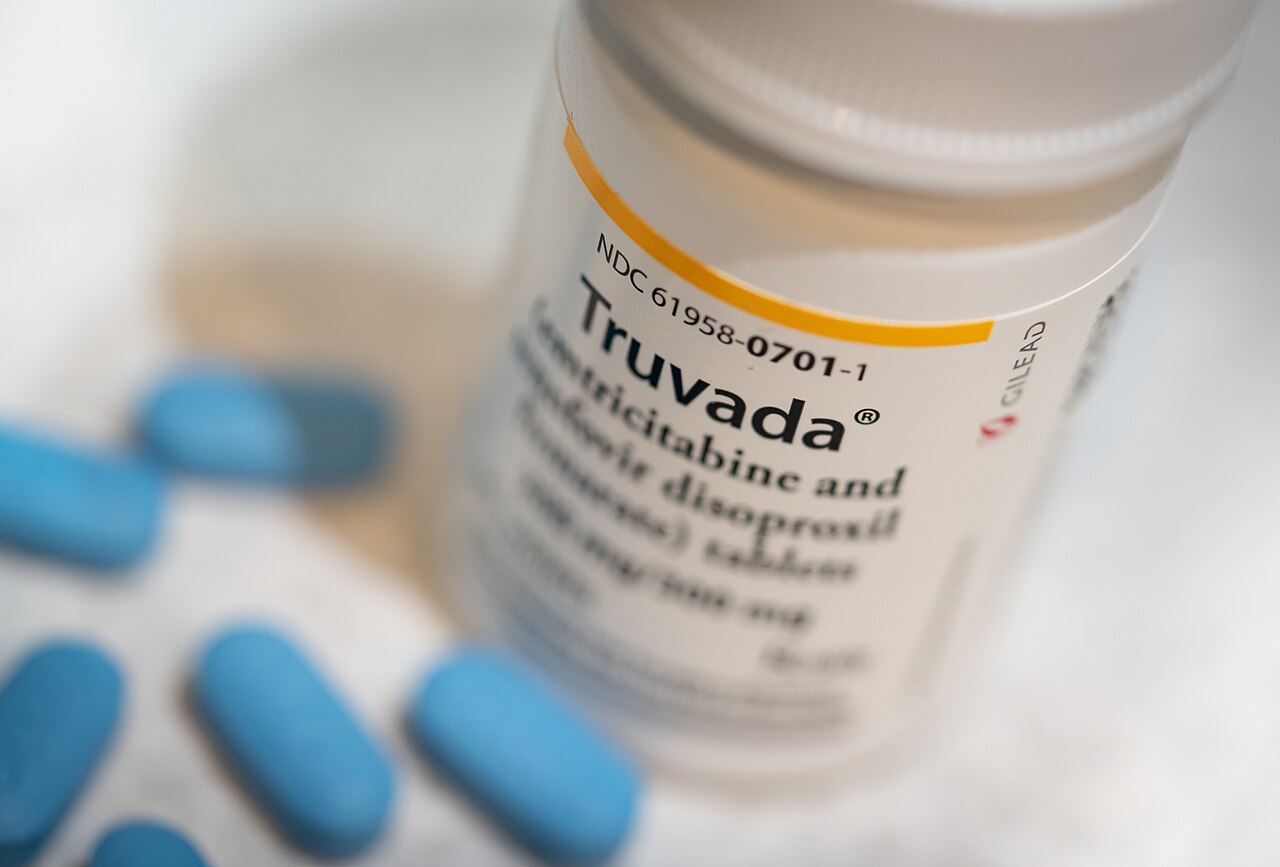
The 2010 iPrEx paper is easy to remember as the moment a daily pill proved HIV prevention could happen before exposure. That memory is true, but it is not precise enough. The trial's more durable lesson is that PrEP was never just a pill. It was a prevention system made of a drug, a schedule, repeated HIV testing, counseling, condoms, STI management, renal monitoring, and enough adherence support to turn pharmacology into protection.[1][4]
That distinction matters because the result looked modest and dramatic at the same time. In the modified intention-to-treat analysis, iPrEx reported 36 HIV infections in the FTC-TDF arm and 64 in the placebo arm, a 44% reduction in HIV incidence with a 95% confidence interval from 15% to 63%.[1] A headline could call that proof of concept. A skeptical reader could call it incomplete protection. The paper itself teaches a better reading: the average effect was diluted by uneven drug exposure, and the trial's real signal emerges only when the result is read beside adherence and measured drug levels.[1][2]
The trial was built as combination prevention
iPrEx enrolled 2,499 HIV-seronegative men and transgender women who have sex with men at 11 sites in six countries between July 2007 and December 2009.[1] The design was randomized, double-blind, and placebo-controlled, but it was not a bare drug-versus-nothing experiment. All participants received regular HIV testing, risk-reduction counseling, condoms, and STI management.[1] That design choice is ethically necessary, but it also shapes interpretation. The trial asked whether daily FTC-TDF added protection on top of a prevention package, not whether tablets could replace prevention infrastructure.
The visit schedule reinforces the point. Participants returned every 4 weeks for drug dispensation, pill count, adherence counseling, rapid HIV-antibody testing, and medical review; laboratory monitoring followed at early intervals and then every 12 weeks.[1] The modern CDC PrEP page still carries that structure forward: PrEP is recommended as part of a comprehensive prevention plan, baseline HIV testing is required, kidney function matters for oral tenofovir-based PrEP, and ongoing visits include HIV testing plus adherence and risk-reduction support.[4]
So the first close-reading move is to resist isolating the pill from the choreography around it. The intervention was medication in a managed loop. If the loop breaks, the drug's population effect changes.
The 44% result was an average, not the mechanism
The headline number came from 3,324 person-years of follow-up, with a median of 1.2 years and a maximum of 2.8 years.[1] FTC-TDF reduced incidence by 44% compared with placebo, and serious adverse-event rates were similar between groups.[1] Nausea was more common during the first 4 weeks in the active arm, and creatinine elevations were monitored closely, which is why the safety reading cannot be separated from scheduled follow-up.[1]
But the most important paragraph is the one that links drug detection to outcome. In the FTC-TDF arm, study drug was detected in 22 of 43 seronegative participants sampled in the pharmacology substudy, compared with only 3 of 34 participants who acquired HIV.[1] That 51% versus 9% split is the paper's hinge. The trial did not merely show that PrEP can work. It showed that PrEP works through sustained exposure, and that self-report or pill counts can overstate the biological reality.
This is why "44%" should not be treated as the stable efficacy of PrEP in a person who actually takes it. It is the trial-level effect produced by a real-world-like mixture of consistent use, partial use, and very low use. The pill's mechanism was stronger than the average; the implementation of use was weaker than the ideal.
The pharmacology follow-up made adherence visible
The 2012 pharmacology analysis of iPrEx is the key companion text because it translates the original adherence clue into drug concentration. It found that any detectable drug in plasma or viable PBMCs was much less frequent among people who acquired HIV than among matched controls at the first infection visit, 8% versus 44%, and also in the previous 90 days, 11% versus 51%.[2] The authors interpreted that pattern as evidence that infections in the active arm occurred during periods of low drug exposure.[2]
The same study estimated that a TFV-DP concentration of 16 fmol per million viable PBMCs was associated with a 90% reduction in HIV acquisition relative to placebo.[2] Using directly observed dosing data from STRAND, it modeled risk reductions of 76% for 2 doses per week, 96% for 4 doses per week, and 99% for 7 doses per week in the studied population.[2] Those numbers should not be generalized casually to every exposure route or patient group; the paper itself notes that rectal, vaginal, penile, and parenteral exposure contexts differ.[2] But they clarify the central point. iPrEx did not leave PrEP efficacy as a vague matter of motivation. It made adherence measurable as pharmacologic exposure.
That is the article's strongest current relevance. Contemporary CDC guidance says oral PrEP reaches maximum drug levels associated with protection for receptive anal sex after about 7 days of daily use, and up to about 21 days for receptive vaginal sex and injection drug use.[4] The difference is not a moral judgment about users. It is tissue pharmacology, exposure route, and time.
Approval turned evidence into governance
On July 16, 2012, FDA approved Truvada for PrEP, and HIV.gov's federal timeline records the milestone as approval for adults without HIV who were at risk of sexually acquired infection.[3] Current CDC guidance keeps that approval logic inside risk mitigation: HIV-negative status before starting, repeated HIV testing during use, adherence support, and continued prevention counseling remain part of safe PrEP delivery.[4] That is the regulatory version of the iPrEx lesson. A prevention pill becomes safe public health only when the system prevents two errors at once: missed HIV acquisition on insufficient therapy and missed prevention opportunity in people who could benefit.
The newer long-acting PrEP era has not erased that lesson. CDC's 2025 lenacapavir recommendation reviews trials in which injectable medication given every 6 months showed very high efficacy, including no new infections in the primary PURPOSE 1 analysis among participants receiving lenacapavir over 52 weeks.[5] That is a different product and a later evidence base, but the design problem is continuous with iPrEx. Longer-acting options reduce the daily-pill burden; they do not remove the need for HIV testing, follow-up, route-specific counseling, and continuity after discontinuation.[4][5]
The close reading, then, is not "iPrEx proved one pill prevents HIV." It is sharper: iPrEx proved that antiretroviral prevention can work before exposure, and that its clinical meaning depends on whether drug exposure, testing, and support stay synchronized. The trial made PrEP possible. The pharmacology made PrEP interpretable. The guideline world that followed turned both into a care system.
Sources
- Grant RM, Lama JR, Anderson PL, et al.; iPrEx Study Team, "Preexposure Chemoprophylaxis for HIV Prevention in Men Who Have Sex with Men" (New England Journal of Medicine, 2010) - primary iPrEx trial report with design, 2,499 enrollment, 36-vs-64 infections, 44% efficacy, safety, and drug-detection findings.
- Anderson PL, Glidden DV, Liu A, et al.; iPrEx Study Team, "Emtricitabine-tenofovir exposure and pre-exposure prophylaxis efficacy in men who have sex with men" (Science Translational Medicine, 2012) - pharmacology follow-up linking TFV-DP concentrations, detectable drug, and modeled protection.
- HIV.gov, "A Timeline of HIV and AIDS" - federal timeline entry for FDA's July 16, 2012 approval of Truvada for PrEP.
- Centers for Disease Control and Prevention, "Clinical Guidance for PrEP" (April 30, 2026) - current clinical guidance on PrEP as combination prevention, baseline testing, oral and injectable options, renal thresholds, adherence, and follow-up intervals.
- Centers for Disease Control and Prevention, "Clinical Recommendation for the Use of Injectable Lenacapavir as HIV Preexposure Prophylaxis - United States, 2025" (MMWR, 2025) - current long-acting PrEP recommendation and PURPOSE 1/PURPOSE 2 evidence summary.
- Wikimedia Commons, "File:Truvada for PrEP HIV Prevention Prescription Pill Bottle (48610088067).jpg" - source page for the lead photographic image.