The World Health Organization's Model List of Essential Medicines is easy to misread as a poor-country shopping list. That reading is too small. The list is better understood as a way of turning scarcity into a design problem: which medicines should a health system be able to supply reliably, in the right forms, at assured quality, and at prices that do not collapse access?[1][2]
That distinction matters because the word "essential" can sound austere. In WHO's current definition, essential medicines are selected for the priority health-care needs of a population, with attention to disease burden, public-health relevance, evidence on benefits and harms, and cost or affordability considerations.[2] The list is therefore not saying that everything else is useless. It is saying that a health system without a stable answer for this core set has a structural access failure before the clinician even writes the prescription.
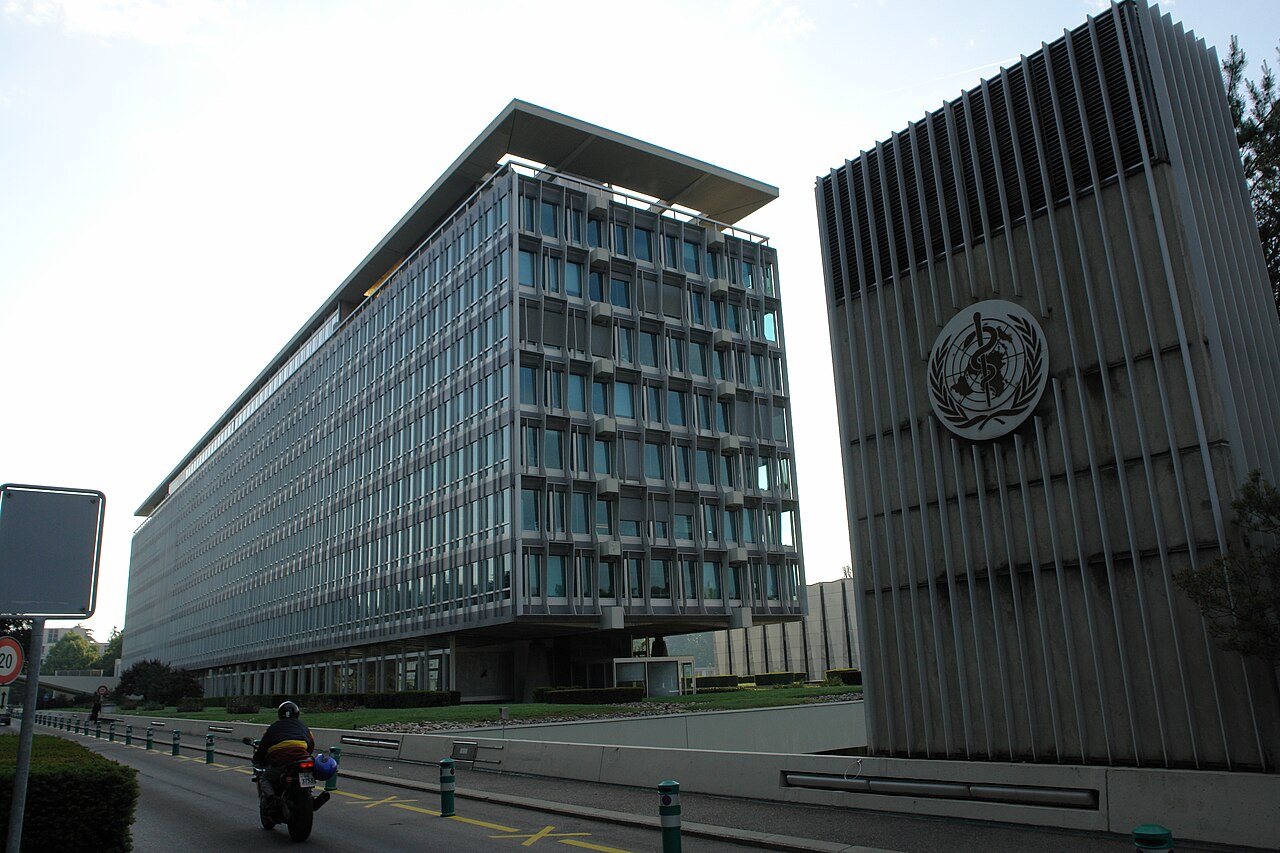
Image context: the cover uses a real photograph of WHO headquarters in Geneva.[6] That choice is deliberate. The Model List is not only a document; it is an institutional method. WHO convenes expert review, publishes applications and decisions, revises the list every two years, and then countries translate that model into national formularies, procurement plans, and treatment guidance.[2][3][5]
Timeline anchors
- 1977: WHO published the first Model List of Essential Drugs; a later WHO regional history records the first list as containing 208 medicines.[4]
- 1978: the Declaration of Alma-Ata named the provision of essential drugs as one element of primary health care, tying the medicines idea to first-contact systems rather than to pharmacy shelves alone.[4]
- 2007: WHO created the first Model List of Essential Medicines for Children, separating pediatric formulation and age-appropriateness questions from the adult list.[1]
- 2017: WHO introduced the AWaRe classification of antibiotics, turning the list into an antimicrobial-stewardship tool as well as an access tool.[2]
- 5-9 May 2025: the 25th WHO Expert Committee met in Geneva and considered 59 applications for additions, changes, and deletions.[3]
- 5 September 2025: WHO released the 24th adult list and 10th children's list.[1]
- 26 January 2026: WHO's fact sheet described the 2025 edition as including more than 520 medicines, including 374 for children, and said more than 150 countries have national lists based on the WHO model.[2]
1. "Essential" is a selection rule, not a downgrade
Read closely, the Model List begins with a disciplined definition. WHO says essential medicines should satisfy priority health-care needs, should be chosen with regard to public-health relevance, evidence of efficacy and safety, and comparative cost-effectiveness, and should be available at all times in appropriate dosage forms, assured quality, and affordable prices.[1][2] Each part of that sentence narrows a different failure mode.
"Priority health-care needs" blocks the fantasy that a list can be universal in the abstract. A medicine matters because disease burden and clinical need make it matter. "Evidence of efficacy and safety" prevents political demand or market enthusiasm from becoming the only route onto the list. "Comparative cost-effectiveness" forces a choice among alternatives, not only a yes-or-no judgment about whether a medicine works. "Appropriate dosage forms" keeps the list from being adult-centered by default. A tablet that cannot be used by an infant is not accessible just because the molecule exists.[1][2][3]
The strongest close-reading point is that availability sits beside quality and affordability. A cheap medicine that is missing from clinics fails. A stocked medicine that is poor quality fails. A proven medicine that is unaffordable fails. WHO's sentence makes access a chain, not a slogan.[1][2]
2. The list belongs inside primary care and referral, not outside them
The history also pushes against a narrow pharmacy reading. WHO's regional retrospective places the first list in 1977, just before Alma-Ata, and notes that Alma-Ata later included essential drugs among the fundamental elements of primary health care.[4] That timing matters. Essential medicines were not imagined as a warehouse fix separate from health-service design. They were part of the question of what first-contact care could actually do.
The same history says the expert committee later recommended a separate primary-health-care list of 23 medicines drawn from the main list.[4] That small number can look minimalist if read without context. Read in context, it was a service-design move. A primary-care level cannot be responsible for every medicine in a national system, but it does need a dependable set that matches its tasks, staff, diagnostics, and referral relationship to secondary and tertiary care.[4]
This is where the list's quiet radicalism sits. It accepts that not every point in a health system can do everything, while refusing to let that become an excuse for empty shelves. The list makes the first level of care legible: what must be there, what must be referred, and what procurement must protect if guidelines are to mean anything in practice.[2][4]
3. The 2025 process shows how "essential" keeps changing
The 2025 update makes the list feel less like a fixed canon and more like a living governance process. WHO's executive summary says the Expert Committee met from 5 to 9 May 2025, reviewed 59 applications, and evaluated comparative effectiveness, safety, and cost-effectiveness. It also considered child formulation issues and revisions to AWaRe antibiotic definitions and classifications.[3]
That process is important because "essential" is not frozen in 1977. WHO's fact sheet says the list has expanded in scope as the global disease burden changed, including medicines that require specialized care such as newborn lung surfactants, targeted cancer treatments, and medicines for multiple sclerosis.[2] This is the part that breaks the cheap-care caricature. A medicine can be expensive, specialized, or operationally demanding and still belong in an essential-medicines framework if the evidence and population need justify it.[2][3]
The affordability logic has also matured. WHO says that since 2002, affordability has shifted from being a precondition for listing to being a consequence of listing: putting a medicine on the Model List can be one step toward lower prices, better affordability, and greater access.[2] That is a subtle but crucial policy move. If high price automatically excluded a medicine, the list would merely ratify market failure. By allowing listing to create pressure on markets, procurement, and policy, WHO treats selection as a lever rather than a passive reflection of what is already affordable.[2]
4. National adaptation is the mechanism that keeps the list from becoming imperial
The Model List is global, but it is not supposed to erase local priority-setting. WHO describes it as guidance for countries and regional authorities to adopt or adapt according to local priorities and treatment guidelines.[1] The 2025 national-list repository makes that adaptation visible at scale: WHO said the repository compiled 150 national essential medicines lists from all six WHO regions, covering material from 2005 to 2025.[5]
That repository changes the meaning of the Model List. It is not a single command flowing from Geneva into every clinic. It is a reference architecture. Countries still have different burdens, budgets, regulatory systems, procurement channels, and treatment protocols. A malaria-endemic setting, an aging high-income system, and a small island supply chain will not have identical practical needs. But the model gives all of them a way to ask the same disciplined questions: priority for whom, evidence compared with what, formulation for which patient, procurement through which channel, and price under which constraint?[2][5]
The risk is that national adaptation can become either under-selection or list inflation. Too few medicines leave clinicians with a brittle toolkit. Too many can dilute procurement power, complicate storage, and make rational prescribing harder. WHO's limited-list logic is designed to hold that tension: selection should improve supply, prescribing, and costs precisely because it refuses to treat every licensed product as equally central.[1][2]
5. The list is most useful when it is read as a contract between evidence and logistics
The essential-medicines idea survives because it joins two worlds that health writing often separates. Evidence alone does not stock a rural facility. Procurement alone does not decide which medicine deserves priority. Clinical guidelines alone cannot help if the dose form is wrong for a child or the supply chain breaks every quarter. The Model List makes those problems part of one system.[1][2][3]
That is why the best reading of the list is neither romantic nor cynical. It is not a promise that listing a medicine will automatically put it in a patient's hand. WHO's own description makes the chain longer than that: countries need selection, procurement, distribution, quality assurance, prescribing practice, affordability policy, and health-system implementation.[1][2][5] But it is also not mere paperwork. A medicine named essential becomes easier to defend in budgets, tenders, training, insurance design, and public accountability.
The list's deeper claim is that access starts before the crisis encounter. It starts when a health system decides, in advance, which medicines it must not improvise. That decision does not solve every shortage or every price fight. It does something more basic: it gives scarcity a public shape and makes the absence of priority medicines harder to excuse as random bad luck.
Sources
- World Health Organization, "WHO Model Lists of Essential Medicines" - official page identifying the current 2025 adult and children's lists, the two-year update cycle, and the 1977 and 2007 origins of the adult and children's lists.
- World Health Organization, "Essential medicines" fact sheet (26 January 2026) - current definition, selection criteria, 2025 list size, national-list adoption, 2002 affordability framing, and AWaRe context.
- World Health Organization, The selection and use of essential medicines, 2025: report of the 25th WHO Expert Committee on Selection and Use of Essential Medicines, executive summary - 2025 meeting dates, application count, and review criteria.
- World Health Organization Eastern Mediterranean Health Journal, "Thirty years of essential medicines in primary health care" - historical account of the 1977 first list, its 208 medicines, Alma-Ata linkage, and the separate 23-medicine primary-health-care list.
- World Health Organization, "WHO unveils global repository for National Essential Medicines Lists (nEMLs)" (8 April 2025) - launch note for the repository of 150 national lists spanning 2005 to 2025 across six WHO regions.
- Yann Forget, "WHO headquarters.jpg," Wikimedia Commons - source page for the real photograph of WHO headquarters in Geneva used as the article image.