The most useful way to read the 2014-2016 West Africa Ebola epidemic is not as a single virology shock, but as a timing failure inside emergency operations. The pathogen was highly lethal, but the slope of catastrophe depended on when case finding, isolation capacity, safe burials, and community-facing trust work reached operational scale. In that sense, the key health variable was response latency.
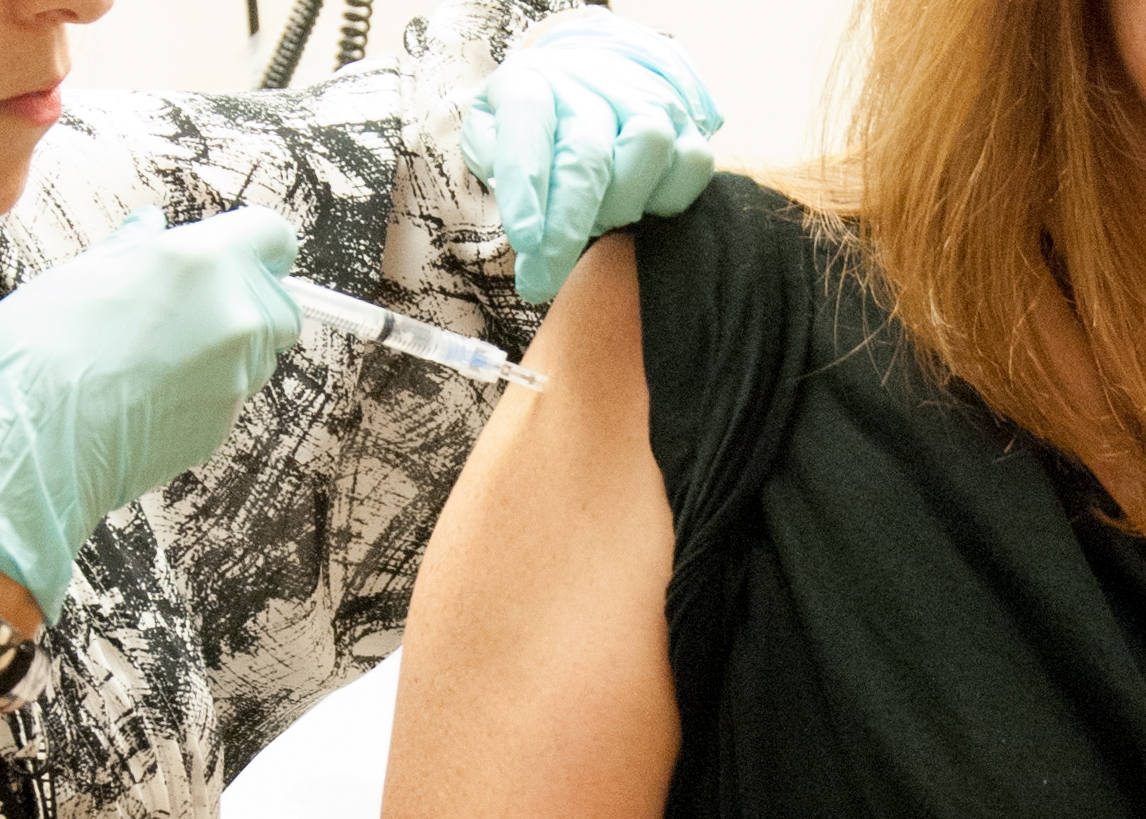
Image note: the cover photo shows an Ebola ring-vaccination participant in Guinea and is used as context for the article’s core argument that outbreak control shifted once field operations added targeted immunization around detected cases.
Timeline anchors: where the curve accelerated and where it bent
- December 2013: WHO later identified this as the start period of the outbreak in Guinea.[1][2]
- 23 March 2014: WHO was formally notified of the outbreak in Guinea.[3]
- 8 August 2014: WHO declared a Public Health Emergency of International Concern (PHEIC); as of 4 August, affected countries had reported 1,711 cases and 932 deaths.[1]
- 31 August 2014: WHO situation counts cited in CDC MMWR reached 3,685 probable/confirmed/suspected cases in West Africa.[4]
- Late 2014 modeling window: CDC estimated that if control measures were not scaled up, Liberia and Sierra Leone could reach roughly 8,000 reported cases by 30 September 2014, or about 21,000 under an underreporting correction factor.[4]
- 2015 ring-vaccination trial period (Guinea): the rVSV-ZEBOV field trial enrolled 11,841 participants; in WHO’s report, no Ebola cases occurred 10+ days after vaccination in vaccinated participants, versus 23 in those not yet vaccinated.[5]
- June 2016: WHO declared the regional outbreak over; cumulative burden exceeded 28,600 infections and 11,325 deaths.[2]
The pattern is operationally clear: early transmission expanded faster than control infrastructure, then the curve bent only after multi-layer controls reached enough coverage and continuity.
Mechanism: why delay translated into additional mortality
CDC’s 2014 planning model framed the containment math explicitly: timing of isolation coverage mattered as much as nominal policy intent. In one scenario, delaying the move to roughly 70% effective isolation by 30 days tripled projected peak daily cases.[4]
That mechanism did not stop at Ebola-only mortality. A 2016 Emerging Infectious Diseases modeling analysis estimated that Ebola-era disruption of routine services could add substantial deaths from malaria, HIV/AIDS, and tuberculosis in Guinea, Liberia, and Sierra Leone (point estimates 6,269, 1,535, and 2,819 additional deaths, respectively, under a 50% service-access reduction scenario).[6]
So the practical chain looked like this:
- delayed detection and isolation,
- sustained community and household transmission,
- health-system overload,
- collateral mortality outside the index pathogen.
A phase-by-phase latency map (why sequencing mattered more than slogans)
A useful way to reconstruct this outbreak is to separate political declaration from operational penetration. The PHEIC declaration on 8 August 2014 was a critical coordination signal, but on-the-ground control still depended on whether concrete capacities reached enough districts quickly enough.[1] In this event, policy urgency arrived before operational density.
You can read that lag through four layers that had to scale together:
- Detection layer: communities and local facilities had to identify suspect cases early enough for tracing windows to remain open.[3][4]
- Isolation layer: case-management and treatment capacity had to absorb rising caseloads fast enough to prevent household spillover.[4]
- Safe-burial layer: culturally workable burial protocols had to spread with local acceptance, not just formal publication.[1][2]
- Trust layer: messaging had to be delivered through credible local channels so that families would report symptoms, cooperate with tracing, and avoid informal care loops that amplified transmission.[2][3]
When one layer lagged, the others lost efficiency. Faster detection without isolation beds produced queueing and returns to household care. More beds without trust work left hidden chains outside formal surveillance. Better protocol documents without locally legible execution still translated into delayed uptake. The epidemic therefore behaved less like a single intervention problem and more like a synchronization problem.
This is also why early international comparisons were often misleading. Looking only at total case counts by date obscured local control readiness at district level. Two regions could show similar caseloads while facing very different next-month trajectories if one had closed the detection-to-isolation loop and the other had not.
Operational turning points in 2014-2016
Three turning points stand out in the historical record.
First turning point: from recognition to mobilization (March-August 2014). Formal recognition advanced, but system throughput remained behind epidemic growth. By late August 2014, cumulative counts had already climbed to 3,685 cases in WHO counts cited by CDC, and modeling scenarios warned that delay in reaching high isolation coverage could radically increase peak burden.[4]
Second turning point: from mobilization to field throughput (late 2014 to 2015). The control curve improved only when tracing, isolation, and burial pathways ran as a routine field system rather than as ad hoc surge actions. This period did not remove risk, but it narrowed uncontrolled transmission windows and made each response cycle faster.[2][4]
Third turning point: from containment-only logic to containment-plus-immunization (2015 onward). Ring vaccination added a new outer shield once detection chains were active. The Guinea trial evidence (11,841 participants, with zero cases in vaccinated participants 10+ days after vaccination versus 23 in delayed groups) did not make classic public-health controls obsolete; it raised their effectiveness by reducing onward risk around known cases.[5][7]
Seen together, these turning points reinforce the same conclusion: epidemic control quality is path-dependent. Early delays increase downstream workload; later tools, including vaccines, perform best when the core response system is already functioning.
Competing interpretations
Interpretation A: this was mainly a pathogen-severity event
Under this reading, Ebola’s intrinsic fatality and transmission context dominated outcomes; governance and operations affected optics more than total burden.
Interpretation B: this was mainly a response-sequencing event
This view argues the opposite emphasis: severity set the stakes, but operational timing determined the area under the curve. Earlier scale-up of isolation pathways, burial safety, contact tracing, and trust-preserving community engagement would have materially reduced both direct and indirect mortality.
The stronger evidence supports Interpretation B with an important caveat: biology set hard constraints, but timing and execution quality set realized damage.
Why ring vaccination mattered in this reconstruction
Ring vaccination did not retroactively prevent the early phase, but it changed the control toolkit from purely reactive isolation toward targeted immunologic buffering around detected cases. The Guinea trial results, later reported by WHO and published in The Lancet, provided concrete field evidence that strategy could work in outbreak conditions.[5][7]
Operationally, that changed planning doctrine: case detection speed remained critical, but each detected case could now trigger not only tracing and isolation, but also a protective ring that reduced onward spread risk.
What would materially change this assessment
A stronger counterargument would be evidence that similar epidemic decline would have occurred on the same timetable under substantially slower operational scale-up. Existing modeling and trial-era evidence points the other way: timing differences were not marginal—they were structural.
Why this remains high-value for health systems
The transferable lesson is that emergency doctrine should treat latency-to-capacity as a first-class metric. In future outbreaks, dashboards that track only case counts are too late; systems need explicit lead indicators for isolation capacity, tracing completion lag, burial safety coverage, and community trust friction before those delays compound into mortality.
Sources
- WHO — Statement on the 1st meeting of the IHR Emergency Committee on the 2014 Ebola outbreak in West Africa (8 Aug 2014)
- WHO — Ebola outbreak 2014-2016 - West Africa (situation overview and cumulative counts)
- WHO Ebola Response Team et al. — Ebola virus disease in West Africa--the first 9 months of the epidemic and forward projections (NEJM 2014, PubMed)
- CDC MMWR — Estimating the Future Number of Cases in the Ebola Epidemic — Liberia and Sierra Leone, 2014-2015
- WHO — Final trial results confirm Ebola vaccine provides high protection against disease (23 Dec 2016)
- Parpia AS et al. — Effects of Response to 2014-2015 Ebola Outbreak on Deaths from Malaria, HIV/AIDS, and Tuberculosis, West Africa (Emerg Infect Dis 2016, PubMed)
- Henao-Restrepo AM et al. — Efficacy and effectiveness of an rVSV-vectored vaccine... (Lancet 2017, PubMed)