
NHTSA's short "Forward-Facing Install | English" video is useful because it refuses to treat a child car seat as a magic object.[1] The seat is only one part of a system. The vehicle supplies anchors, belts, seating positions, and a tether point. The car-seat manual supplies limits and routing rules. The child supplies a changing body: height, weight, shoulder position, posture, and the ability or inability to sit safely in the next restraint stage. The adult's job is to make those pieces agree every ride, not simply to buy a seat with a safety label.
That is why this is a health article as much as a road-safety note. Child passenger safety is injury prevention made physical. CDC's current child passenger safety guidance tells caregivers to use a rear-facing seat, forward-facing seat, booster seat, or seat belt according to the child's age and size, and to keep children in the back seat.[3] NHTSA frames the same pathway as a process: find the right car seat, install it correctly, keep the child safe in it, and register the seat for recall notices.[2] The video matters because it makes the middle step visible. Correct stage selection can still fail if the seat moves too much, the tether is skipped, or the harness is adjusted as if clothing and growth do not matter.
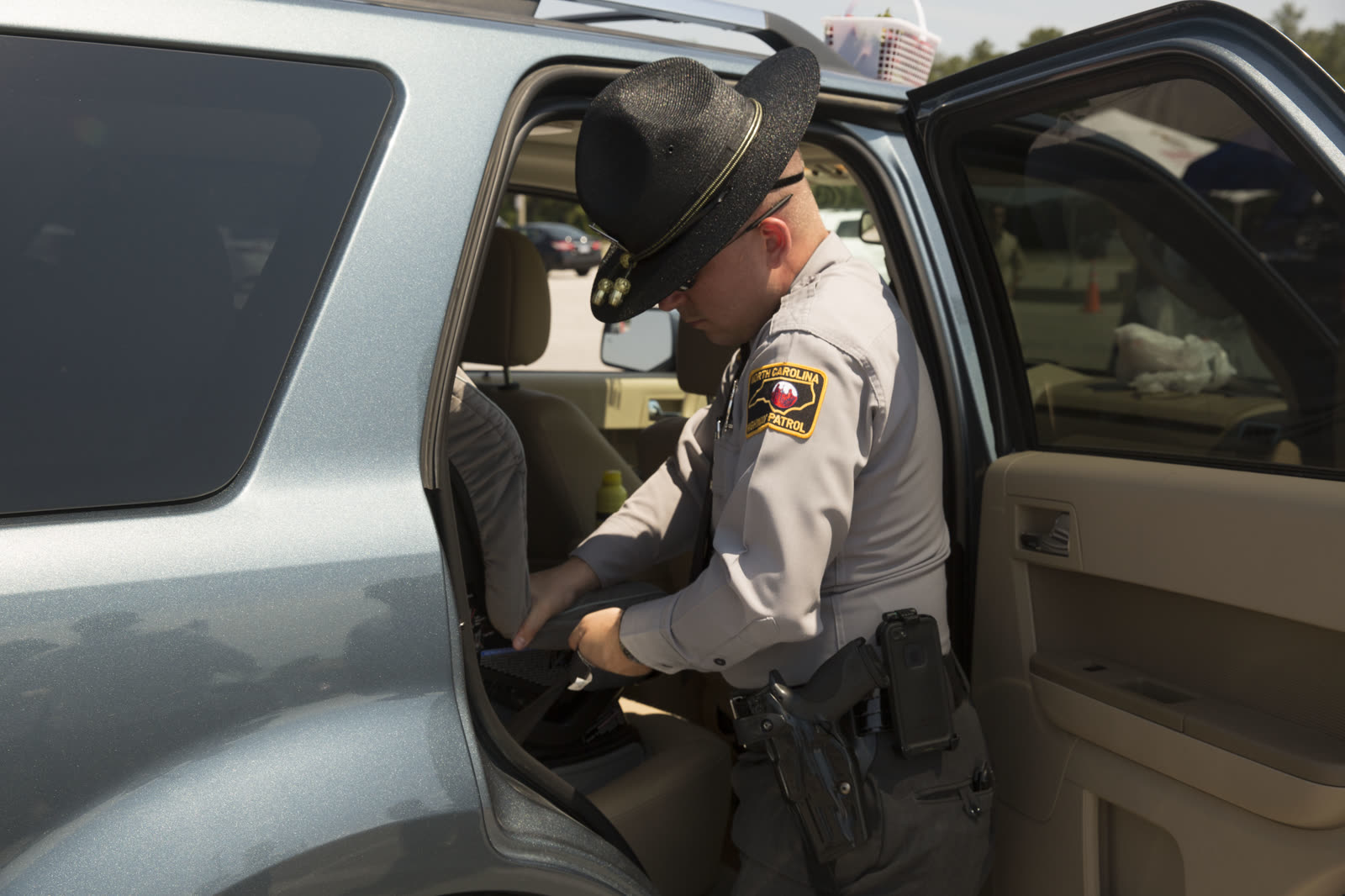
Image context: the cover photograph shows a certified inspection setting rather than a showroom seat.[6] That distinction matters. The article's central claim is that installation is a practiced check: hands pull a belt or lower-anchor strap, a tether is located, a harness is tested, and a real vehicle either accepts the seat well or exposes a problem that has to be solved before the next trip.
The first decision happens before installation
The forward-facing video should not be read as permission to turn a child forward as soon as the seat can technically do it.[1] NHTSA's broader guidance says children ages 1 to 3 should remain rear-facing as long as possible, until they reach the top height or weight limit allowed by the car-seat manufacturer; once they outgrow rear-facing, they move into a forward-facing seat with a harness and tether.[2] CDC gives the same practical sequence and says never to put a rear-facing seat in the front seat because passenger air bags can injure or kill young children in a crash.[3]
The American Academy of Pediatrics sharpened this point in its 2018 policy statement: infants and toddlers should ride rear-facing as long as possible, until they reach the highest weight or height allowed by the seat manufacturer.[4] That shift matters because it moves the decision away from birthday folklore. A child does not become crash-ready for the next stage at midnight on a birthday. The relevant boundary is whether the child's body still fits inside the protective geometry of the current seat.
So the first annotation on the video is a boundary condition. A forward-facing installation demonstration is for the child who has already outgrown rear-facing limits. It is not the first rung of car-seat safety. It is the next rung after rear-facing has done its job as long as the seat allows.[2][3][4]
The tether is not decorative hardware
The most important thing to notice in a forward-facing installation is the top tether. NHTSA describes the tether as the strap on the top rear of many convertible, combination, and all-in-one seats that connects to a vehicle tether anchor; for forward-facing seats, it limits the child's forward movement during a crash.[2] The video is strongest when it treats this as a required part of the installation logic rather than as an optional extra.[1]
This is where many adults can be misled by the fact that the seat may feel "in" the car after a belt or lower-anchor strap is tightened. Installed is not the same as optimized. The lower connection holds the seat at the base. The tether controls forward rotation at the top. In crash terms, those are different jobs. NHTSA's guidance is explicit that forward-facing seats should use a tether when available and permitted by both the car-seat and vehicle manufacturers.[2]
The practical consequence is simple: the vehicle manual matters. Tether anchors are not always where a hurried adult expects them to be. NHTSA notes that in sedans they are often on the rear shelf, while in vans, pickups, and SUVs they may be on the back of a seat, the floor, the ceiling, or another location; the owner manual is how caregivers avoid mistaking cargo hardware for a safety anchor.[2] The video compresses that search into a clean demonstration, but the real-world lesson is slower: before tightening anything, know which anchor you are actually using.
Belt path, lower anchors, and the danger of doing both
The installation video also belongs inside NHTSA's larger warning about connection methods. Every car seat is secured using either the vehicle seat belt or the lower anchors, not both, unless the specific car-seat and vehicle instructions permit an exception.[2] That point can feel counterintuitive. More attachment seems as if it should mean more safety. In engineered restraints, more is not automatically better; the crash forces are expected to travel through approved paths.
That makes the belt path more than a slot in plastic. It is the route by which crash energy moves from child seat into vehicle structure. If the belt is routed through the wrong path, if the seat belt is not locked according to the vehicle manual, or if lower anchors are used past their weight limits, the system being tested in the driveway may not be the system the manufacturer designed.[2] NHTSA even gives a rule of thumb for lower-anchor weight limits: when the car-seat label does not state the limit, the maximum allowable child weight can be determined by subtracting the seat's weight from 65 pounds.[2]
This is why the video should be watched with both manuals nearby, not as a stand-alone memory trick. The clip supplies body mechanics. The manuals supply the model-specific contract. A caregiver who combines the two is in a better position than one who treats the video as a universal recipe for every vehicle and every seat.[1][2]
The child has to fit after the seat fits
Installation is only half of the fit problem. The child still has to be buckled correctly. CDC's stage guidance keeps returning to age and size because restraint choice has to match the child's body, not the adult's impatience to simplify the back seat.[3] AAP's policy statement makes the same staged argument: rear-facing as long as possible, then forward-facing with a harness, then a belt-positioning booster, then the vehicle belt once it fits properly.[4]
NHTSA's booster guidance explains the end point clearly. The adult seat belt fits only when the lap belt lies snugly across the upper thighs rather than the stomach, and the shoulder belt lies across the shoulder and chest rather than the neck or face.[2] That standard helps interpret the forward-facing stage. A harness is not a babyish accessory to escape. It is the restraint system for a child who has outgrown rear-facing but is not yet ready for a booster or belt fit.
The article's inference from the video and written guidance is that child passenger safety fails in transitions. A child grows a little. A coat gets thicker. A carpool changes vehicles. A caregiver moves the seat from one row to another. A grandparent installs the same seat in an unfamiliar sedan. None of those moments looks dramatic. All of them can change whether the restraint system is still doing the job adults think it is doing.[1][2][3]
Inspection is part of the system, not an admission of failure
The most humane line in NHTSA's guidance is the inspection option. The agency says certified technicians can inspect a car seat free of charge in most cases and show caregivers how to correctly install and use it; some locations also offer virtual inspections.[2] That should not be treated as a remedial service only for people who "cannot figure it out." It is a recognition that car seats are a real interface problem.
CDC's numbers explain why ordinary diligence is not enough by itself: motor vehicle crashes are a leading cause of death among children in the United States, and proper restraint use decreases as children get older; CDC also cites evidence that booster seats reduce serious injury risk compared with seat belts alone.[5] NHTSA's safety facts add a second warning signal, reporting that a substantial share of children killed in crashes were unrestrained in 2024.[2] The exact local risk varies by trip, vehicle, and behavior, but the prevention logic is stable: correct restraint use is a repeatable layer of injury control.
The video succeeds because it makes that layer concrete. It does not ask the viewer to admire a branded product. It asks the viewer to check stage, route, tension, tether, harness, and vehicle position. A car seat works only when the vehicle and the child both fit. The best version of the lesson is therefore not "install once and forget it." It is "install, verify, re-check after growth or transfer, and use inspection help when the fit is uncertain."[1][2][3][4]
Sources
- USDOTNHTSA, "Forward-Facing Install | English," YouTube video.
- National Highway Traffic Safety Administration, "Car Seat & Booster Seat Safety, Ratings, Guidelines" - car-seat stages, installation process, tether, lower-anchor, belt-path, inspection, and registration guidance.
- Centers for Disease Control and Prevention, "Child Passenger Safety" - stage guidance for rear-facing, forward-facing, booster, and seat-belt use by age and size.
- Benjamin D. Hoffman and Dennis R. Durbin, "Child Passenger Safety," Pediatrics / American Academy of Pediatrics, 2018 - policy statement on rear-facing as long as possible and staged child restraint use.
- Centers for Disease Control and Prevention, "Booster Seat Planning Guide" - booster-seat role, injury-prevention framing, and serious-injury risk reduction compared with seat belts alone.
- Wikimedia Commons / Marine Corps Base Camp Lejeune, "Quarterly Child Passenger Safety Seat Check held at MCX parking lot 140519-M-IY869-013.jpg" - source page for the 2014 child safety seat inspection photograph used as the article image.