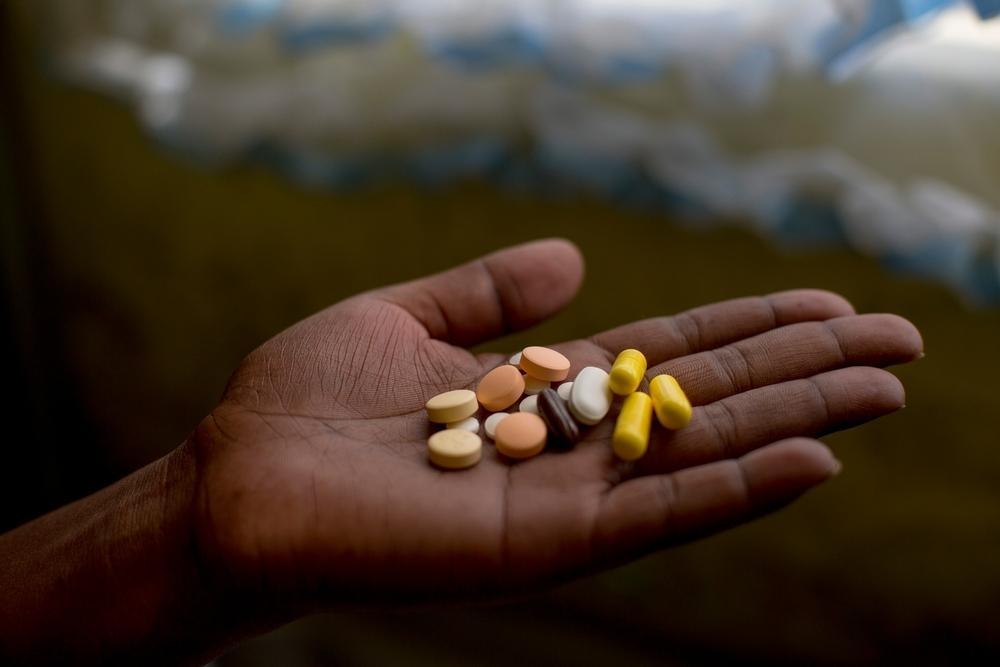
Drug-resistant tuberculosis is easiest to misread if the story is reduced to one new medicine. Bedaquiline mattered because it did something narrower and more useful: it gave clinicians and TB programs a new active backbone around which treatment could be rebuilt. The mechanism was not "take bedaquiline, cure TB." It was "replace a weak, long, toxic treatment architecture with a shorter all-oral regimen that still has enough active drugs, monitoring, and follow-up to keep resistance from outrunning the cure."
That distinction matters because drug-resistant TB is a systems disease as much as a bacterial one. CDC defines multidrug-resistant TB as resistance to at least isoniazid and rifampin, the two most powerful first-line drugs; pre-XDR and XDR patterns add resistance to other important classes.[2] Once those first-line pillars fail, treatment stops being a standard prescription and becomes a construction problem. Which drugs remain active? How long must they be given? Which toxicities are tolerable? Can a public-health program keep the patient on therapy long enough for culture conversion and relapse prevention?
The old answer was duration plus burden. A CDC Emerging Infectious Diseases review notes that MDR/XDR TB treatment historically required more than four active drugs in longer regimens lasting about 18 to 20 months, with frequent debilitating adverse events.[3] That is the background against which bedaquiline became important. It did not merely add another name to a shelf. It changed the possible shape of the regimen.
The mechanism: starve the bacterium's energy system
Bedaquiline is a diarylquinoline antimycobacterial drug. The official DailyMed label describes its target as the mycobacterial ATP synthase enzyme, a bacterial energy-production machine.[5] In plain terms, bedaquiline attacks Mycobacterium tuberculosis by interfering with the organism's ability to make the energy currency it needs to survive. That mechanism is distinct from the mechanisms of older TB drugs, which is why it became valuable against organisms that had already learned to resist the first-line core.
But a new target does not make a single-drug cure. TB treatment has long been built around combination therapy because M. tuberculosis populations can contain resistant subpopulations, and weak regimens create selection pressure. That is why bedaquiline's clinical meaning depends on regimen design. It must be paired with other active drugs, guided by susceptibility information where available, and supported by monitoring for toxicity, adherence, and treatment response.
The timeline shows how cautious that shift had to be. Bedaquiline received accelerated U.S. approval in 2012 for pulmonary MDR TB as part of appropriate combination therapy when other options were limited.[3] In 2013, WHO issued interim conditional guidance because early evidence came with uncertainty, including mortality concerns from phase II data and the need for close monitoring and pharmacovigilance.[3] By 2016, MSF field programs were using bedaquiline in difficult DR-TB cases, including in Khayelitsha, where the cover image comes from.[6] By 2022, WHO's consolidated drug-resistant TB treatment guideline included a 6-month BPaLM regimen: bedaquiline, pretomanid, linezolid, and moxifloxacin for eligible MDR/RR-TB and pre-XDR-TB patients, alongside a 9-month all-oral regimen for other MDR/RR-TB patients where fluoroquinolone resistance has been excluded.[1]
That movement from conditional salvage drug to regimen anchor is the real story.
Why shorter does not mean simpler
The appeal of a 6-month regimen is obvious. For patients, it can mean fewer months of side effects, fewer clinic contacts, less income disruption, and a treatment plan that feels survivable. For health systems, it can mean less default risk, fewer handoff failures, and lower program burden. MSF's TB-PRACTECAL page framed the promise in exactly those terms: a six-month all-oral regimen had the potential to transform care for patients whose older treatment options were long, toxic, and less successful.[6]
Shorter, however, raises the standard for getting the ingredients right. A weak short regimen is worse than an inconvenient long one if it amplifies resistance. WHO's 2022 update is careful for that reason. BPaLM is not presented as a universal TB shortcut; it is a specific regimen for specified resistance patterns and eligibility boundaries.[1] CDC's 2023 BPaL update makes the same point from the implementation side. It tells clinicians to review updated provisional guidance, notes a 600 mg initial linezolid dose recommendation, and explicitly says that suspected or confirmed drug-resistant TB should involve TB expert consultation.[4]
That linezolid detail is not minor. Bedaquiline may anchor the regimen, but linezolid toxicity can decide whether the patient can finish it. Monitoring is therefore part of the mechanism. The cure depends on active drug exposure over time, but exposure has to be livable enough to complete.
The evidence boundary
The numeric signal is strong enough to explain why the field moved, but not so simple that it should be oversold. In the CDC review of five bedaquiline-treated cohorts, 6-month culture conversion reached 78% with a 95% confidence interval of 73.5% to 81.9%, treatment success was 65.8% with a 95% confidence interval of 59.9% to 71.3%, and death occurred in 11.7% with a 95% confidence interval of 7.0% to 19.1%.[3] The same review also reported that up to 91.1% of patients experienced at least one adverse event and that the certainty of evidence was assessed as very low.[3]
Those numbers hold two truths together. First, bedaquiline-containing treatment made outcomes plausible in patients whose disease had become very hard to treat. Second, the evidence did not remove the need for disciplined use. Drug-resistant TB is not a setting where enthusiasm alone is safe. Programs need resistance testing, expert regimen assembly, electrocardiogram and adverse-event monitoring where indicated, patient support, and follow-up after treatment ends.
The all-oral shift is still a genuine humane advance. Older DR-TB treatment often meant injectables, long calendars, hearing risk, and months of daily struggle. Bedaquiline helped move the field toward regimens that could be shorter and oral while still bacteriologically serious. But the better slogan is not "new drug beats old disease." It is "a new active backbone lets the whole delivery system be redesigned."
That is why the hand in the photograph matters. It does not show a miracle. It shows a regimen. Bedaquiline's public-health achievement is that, in the right combination and with the right safeguards, a once nearly impossible treatment problem could be made shorter, more oral, and more governable.
Sources
- World Health Organization, WHO consolidated guidelines on tuberculosis. Module 4: treatment - drug-resistant tuberculosis treatment, 2022 update - BPaLM and all-oral regimen recommendations.
- Centers for Disease Control and Prevention, "Clinical Overview of Drug-Resistant Tuberculosis Disease" - definitions of MDR, pre-XDR, and XDR TB and clinical framing.
- Borisov et al., "Outcomes of Bedaquiline Treatment in Patients with Multidrug-Resistant Tuberculosis," Emerging Infectious Diseases / CDC, 2019 - pooled cohort outcomes, old-regimen burden, and approval/guidance timeline.
- Centers for Disease Control and Prevention, "Updates to Provisional Guidance for the Use of Pretomanid as Part of a Regimen [Bedaquiline, Pretomanid, and Linezolid (BPaL)]" (March 13, 2024 page; May 4, 2023 guidance update text).
- DailyMed, "SIRTURO - bedaquiline fumarate tablet" - official U.S. label source for drug class, mechanism, administration, and safety information.
- Médecins Sans Frontières Southern Africa, "Trial of MDR-TB treatment ends enrolment early after independent board indicates new regimen is superior" - TB-PRACTECAL context and source page for the Nanyanyiso Baloi bedaquiline-regimen photograph.