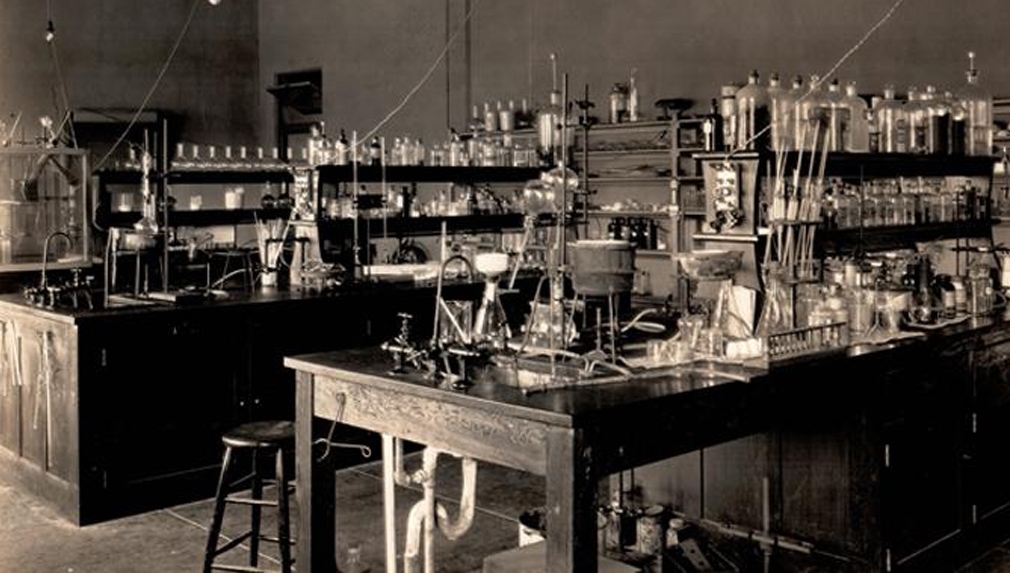
Alice Ball's story is often told as a lost-genius anecdote: a young Black woman chemist solved leprosy, died at 24, and had her work taken by a man. The outline is true enough to be memorable, but too flat to explain why the work mattered. Ball's contribution was not a miracle cure. It was a precise change in form. She made a difficult medicine usable by changing how chaulmoogra oil could enter the body.
That distinction is the health lesson. In the 1910s, Hansen's disease was still governed as much by stigma and isolation as by treatment. The modern WHO fact sheet describes it as a chronic bacterial infection of skin and peripheral nerves, curable today with multidrug therapy and not spread by casual contact such as sharing a meal or sitting near someone.[5] That is the current boundary. Ball worked before that boundary existed. In her moment, the disease carried a public sentence: visible disability, fear of contagion, and forced separation in places such as Kalaupapa on Molokai, where more than 8,000 people in Hawaii were isolated over time.[1][6]
The available medicine had an almost cruel gap between promise and use. Chaulmoogra oil, pressed from seeds of Asian Hydnocarpus trees, had a long record in traditional and colonial medicine. It could help some lesions and slow some disease, but its ordinary forms fought the patient. Taken by mouth, the oil was foul and often caused nausea or vomiting. Injected as raw oil, it was thick, painful, poorly absorbed, and prone to local reactions.[1][2][6] In public-health terms, the active hope was trapped inside an administration failure.
Ball entered that problem through chemistry, not through legend. Born in Seattle in 1892, she earned pharmacy-related degrees at the University of Washington, moved to the College of Hawaii, and in 1915 became the first woman and first African American to earn a master's degree in chemistry there.[3][6] Her thesis work on kava showed enough laboratory skill that Harry T. Hollmann, a physician working with Hansen's disease patients in Hawaii, asked her to attack the chaulmoogra problem.[2][6] The question was not simply "Does the oil work?" It was "Can the useful fatty-acid fraction be prepared in a form that the body can actually absorb?"
That is where the Ball Method becomes more than a biographical footnote. ACS describes the chemistry as ethyl esterification of chaulmoogra fatty acids, producing a water-soluble preparation that could be injected and absorbed more readily.[1] The National Library of Medicine's historical account preserves the credit trail in sharper detail: Hollmann later wrote that he had interested Ball in obtaining the active agents from chaulmoogra oil and that, after extensive experimental work, she solved the problem by making ethyl esters of the fatty acids.[2] The practical consequence was a formulation that could move from a punishing, unreliable oil into a therapy physicians could administer with less damage.
The innovation was modest only if one mistakes medicine for molecule alone. A drug that cannot be tolerated, delivered, stored, or repeated is not yet a public-health tool. Ball's work sat at the point where organic chemistry touched ward life. By changing solubility and injectability, she changed the treatment bargain for patients who had often been told that diagnosis meant lifelong removal from ordinary family and civic life.[1][2][6]
The early evidence was hopeful but bounded. The NLM history notes that Dean and Public Health Service colleagues later reported encouraging outcomes with chaulmoogra derivatives, including 94 patients "paroled" from the hospital in fiscal year 1921, while also recognizing that follow-up was needed to know whether improvement would hold.[2] That boundary matters. The Ball Method did not eradicate Mycobacterium leprae. It did not end stigma by itself. It did not make isolation policy humane overnight. It did, however, create a treatment form that could let some patients improve enough to leave institutions and return to ordinary life, years before sulfone drugs and far before today's multidrug therapy standard.[1][2][5]
Then the credit record failed her. Ball became ill and died on December 31, 1916, before she could publish the work herself.[3][6] Arthur L. Dean, her supervisor and a powerful figure at the College of Hawaii, continued the chaulmoogra research and published on the derivatives with collaborators in the early 1920s. NLM's account is careful but clear: Dean and coauthors did not credit Ball in the papers they published on chaulmoogra between 1920 and 1922, while Hollmann's 1922 article explicitly credited her and used the name "Ball's Method."[2]
That misattribution is not a side drama. It shaped how scientific memory worked. If Ball's contribution is told only as an injustice story, the chemistry can disappear behind the theft. If it is told only as a chemistry story, the injustice can look incidental. The microhistory requires both. A young chemist changed the usable form of a medicine; a publication system and university hierarchy then made it easier for another name to stick to the method than hers.
The recovery took decades because the disease, the treatment, and the archive all moved on. Sulfone drugs arrived in the 1940s and replaced chaulmoogra oil as a more genuinely antimicrobial route.[1][2] Modern leprosy care now uses multidrug therapy with dapsone, rifampicin, and clofazimine, with WHO recommending 6 months for paucibacillary disease and 12 months for multibacillary disease.[5] Once the old oil was obsolete, the social urgency around credit faded too. The patients mattered less to institutional memory after the treatment era passed; Ball mattered less to institutions that had already normalized Dean's name.
Recognition eventually came through archival reconstruction and public commemoration. HistoryLink credits historians and University of Hawaii researchers with helping bring Ball back into view in the late twentieth century.[6] The University of Hawaii's 2026 account marks a later stage of that repair: the Ball Method was designated an American Chemical Society National Historic Chemical Landmark, and the university used the ceremony to connect Ball's chemistry to Hansen's disease patients, Kalaupapa, and a wider obligation to remember Black women in science accurately.[4] ACS likewise frames the landmark as both a chemical achievement and a correction to a record in which women and Black scientists were often denied durable credit.[1]
The strongest way to read Ball now is not as a simple "overlooked no more" icon. It is to see the layers she forces into one case. Hansen's disease shows how infection can become social exile when fear outruns evidence. Chaulmoogra oil shows how a treatment can contain useful pharmacology and still fail patients if form, dose, tolerability, and delivery are wrong. Ball's method shows how a laboratory intervention can have population meaning when it changes who can plausibly leave an institution. The later credit fight shows how scientific knowledge can travel under the wrong name if authorship, race, gender, and hierarchy are treated as background conditions rather than part of the evidence record.[1][2][3][6]
The current WHO facts also keep the story from becoming sentimental. Leprosy still occurs in more than 120 countries, with around 200,000 new cases reported each year, even though it is curable and early treatment can prevent disability.[5] That means Ball's story is not only about a vanished era of botanical medicine. It is about the practical work that always sits between a disease and a livable outcome: make the treatment usable, make access real, prevent disability early, and do not let stigma write the patient's identity.
Ball did not solve Hansen's disease. She solved a bottleneck that had made one of the few available treatments punishing and unreliable. That is a smaller claim than the legend, and a stronger one. Public health often changes at exactly that scale: the moment when a substance becomes a usable therapy, when a ward result becomes a route home, and when an archive finally admits whose hands made the change possible.
Sources
- American Chemical Society, "Alice Augusta Ball: A trailblazing chemist created a viable treatment for leprosy" - National Historic Chemical Landmark page on Ball Method chemistry, Hansen's disease context, and recognition.
- John Parascandola, "Chaulmoogra Oil and the Treatment of Leprosy," National Library of Medicine PDF (2003) - historical study of chaulmoogra therapy, Ball's role, Dean's publications, Hollmann's credit, and early Public Health Service reports.
- Sabha Mushtaq and Paul Wermager, "Alice Augusta Ball: The African-American chemist who pioneered the first viable treatment for Hansen's Disease," PubMed record for Clinics in Dermatology 41(1), 2023.
- University of Hawaii News, "'Ball Method' declared national historic landmark at Alice Ball celebration" (February 26, 2026) - university report on the ACS landmark designation and contemporary commemoration.
- World Health Organization, "Leprosy" fact sheet (January 23, 2026) - current medical framing of cause, transmission, treatment, disability prevention, and global case burden.
- John Caldbick, "Ball, Alice Augusta (1892-1916)," HistoryLink.org Essay 23522 (May 3, 2026) - biography and media section containing the 1915 College of Hawaii laboratory photograph used as the article image.