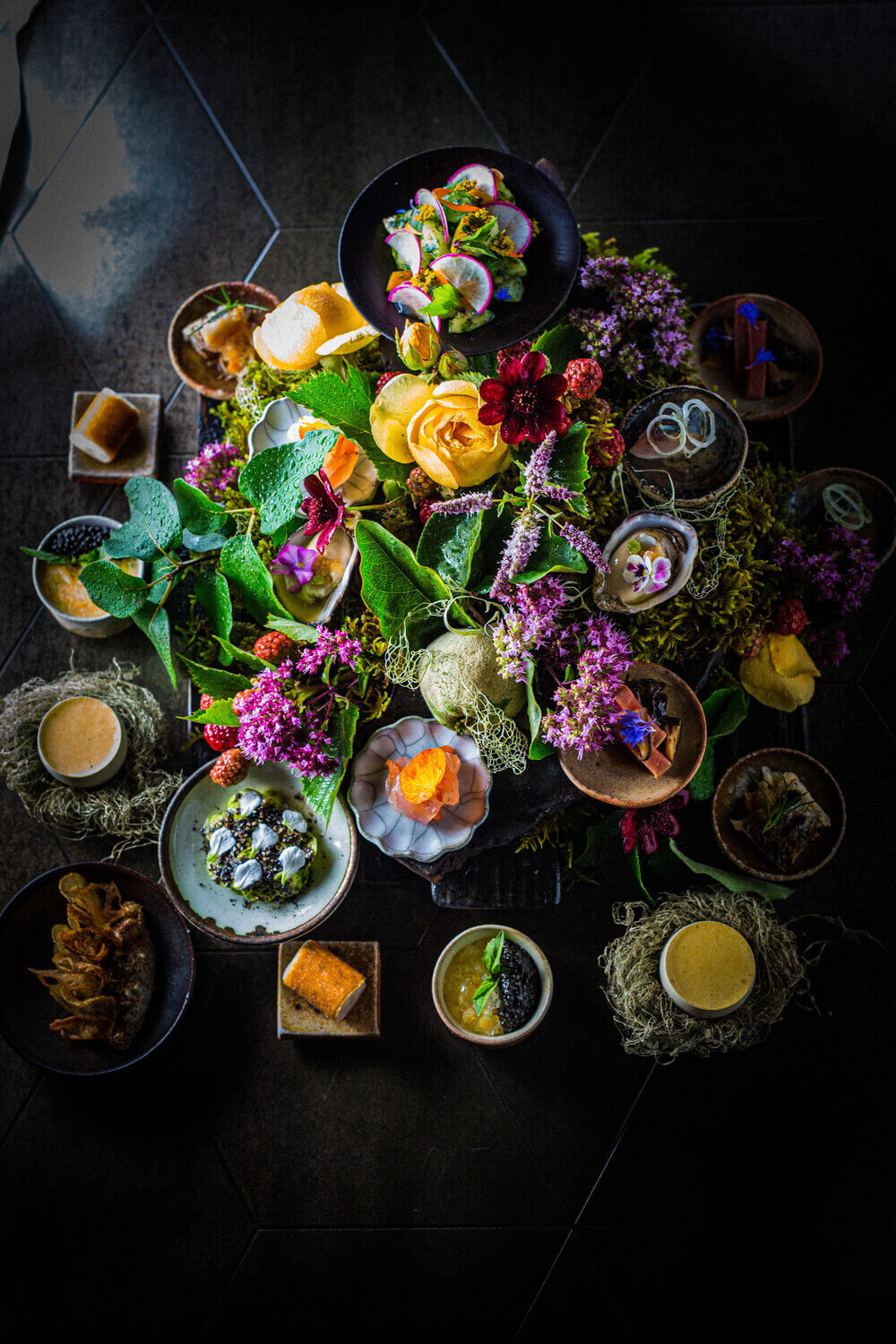
If you are evaluating SingleThread only as a “three-star reservation,” you miss the thing that actually drives its consistency. In 2026, the useful lens is system design: one address integrating a tasting-menu restaurant, an inn, and a farm operation with unusually explicit timing and supply logic.
That systems view matters because this is now one of the clearest examples in U.S. fine dining where kitchen quality, agricultural throughput, and guest flow are designed as one product rather than adjacent businesses.
Why SingleThread still matters in 2026
SingleThread opened in late 2016, won two MICHELIN stars within about 10 months, and quickly moved from insider project to global reference point.[1] That early acceleration was not just hype: current positioning still combines top-tier guide status with a clear farm-to-menu identity and a kaiseki-influenced service frame.[2][3]
What has held up is coherence. Many luxury restaurants can execute a great dinner. Fewer can make the dinner, sourcing story, and booking mechanics reinforce each other in a way guests can actually feel.
The operating architecture in hard numbers
Several published data points show how the model is built:
- 10-course tasting format as the core dining product.[3][4]
- 24-acre farm platform in Dry Creek Valley supporting produce, flowers, honey, and seasonal menu rhythm.[2][5]
- 55 dining seats + 5 guest suites at the Healdsburg property layer, creating built-in overnight conversion rather than pure one-night throughput.[4]
- Daily service window around 4:00 PM–8:45 PM on public listing channels.[2][4]
- Reservation release cadence: 9:00 AM PST on the 1st of each month for the following month on the official restaurant channel.[3]
The structural point is that SingleThread is not selling “a menu with a farm story.” It is selling a tightly constrained hospitality system where farm seasonality, service pace, and access mechanics are all pre-engineered.
Chef/farmer identity is not branding garnish here
SingleThread’s owner-operator pairing is unusually legible: Kyle Connaughton’s background spans Japanese kitchen training and later R&D leadership at The Fat Duck experimental kitchen, while Katina Connaughton’s side anchors long-cycle farm operations in Sonoma after formative agricultural work in Japan and England.[6]
This matters for diners because it explains why the restaurant rarely reads as trend-chasing luxury. The room’s identity is less “new technique theater” and more “controlled seasonality with technical discipline.”
Put differently: many restaurants add farm language to signal values; SingleThread uses farm constraints to set the actual shape of the menu.
Pricing and access: where the real friction sits
Public booking channels currently show notable day-of-week spread for prepaid experiences (for example, lower Monday–Wednesday pricing than Thursday–Sunday) while keeping the same 10-course framework.[4] That pattern is operationally rational: demand concentration at the end of week is being priced explicitly, not hidden.
The decision implication for serious diners:
- If your goal is maximum calm and lower booking pressure, weekday seating can be the cleaner entry point.
- If your goal is peak social energy and full destination-night feel, weekend inventory remains the premium lane.
Uncertainty boundary: third-party listing prices can move with tax/fees/event programming, so treat these as execution snapshots, not permanent menu law.[4]
Where SingleThread over-delivers, and where people misread it
Where it over-delivers:
- End-to-end coherence (farm, kitchen, service, lodging logic pulling in the same direction).
- Narrative density without obvious theatrics (the meal tends to read as calm precision rather than shock-and-awe sequencing).
- Logistical clarity (published release cadence and operating windows reduce ambiguity for planners).
Where guests misread it:
- Treating it as “just another three-star splurge.” The room rewards diners who value pacing and context, not only maximal luxury signaling.
- Ignoring booking geometry. Missing the monthly release rhythm turns this into a low-odds scramble.
- Underestimating system premium. You are paying for integrated orchestration, not only plate-level fireworks.
Practical booking model for 2026 diners
A high-signal way to decide:
- Book SingleThread if you want a farm-anchored, highly controlled, low-chaos luxury night with strong service continuity.
- Skip (or deprioritize) if you prefer high-voltage spectacle and don’t care much about agricultural or hospitality-system depth.
- If schedule flexibility exists, test weekday inventory first, then escalate to weekend if occasion value outweighs friction and cost spread.[4]
Bottom line
SingleThread remains one of the most complete system restaurants in U.S. fine dining because its quality is not carried by one layer. The meal, farm supply chain, reservation mechanics, and lodging adjacency are aligned tightly enough that the guest experience feels authored before you sit down.
In a market where many top rooms now optimize for headline moment, SingleThread’s durable edge is operational coherence.
Sources
- New York Times (2018 profile: opening timeline, early MICHELIN acceleration, ownership context)
- MICHELIN Guide — SingleThread listing (farm context, cuisine framing, operating hours)
- SingleThread official restaurant page (10-course format, booking release cadence and time)
- OpenTable — SingleThread profile (capacity, suite count, award/ranking references, current booking-price snapshots)
- SingleThread official farm page (24-acre biodiversity platform, production scope)
- SingleThread team page (chef/farmer background and operating leadership details)