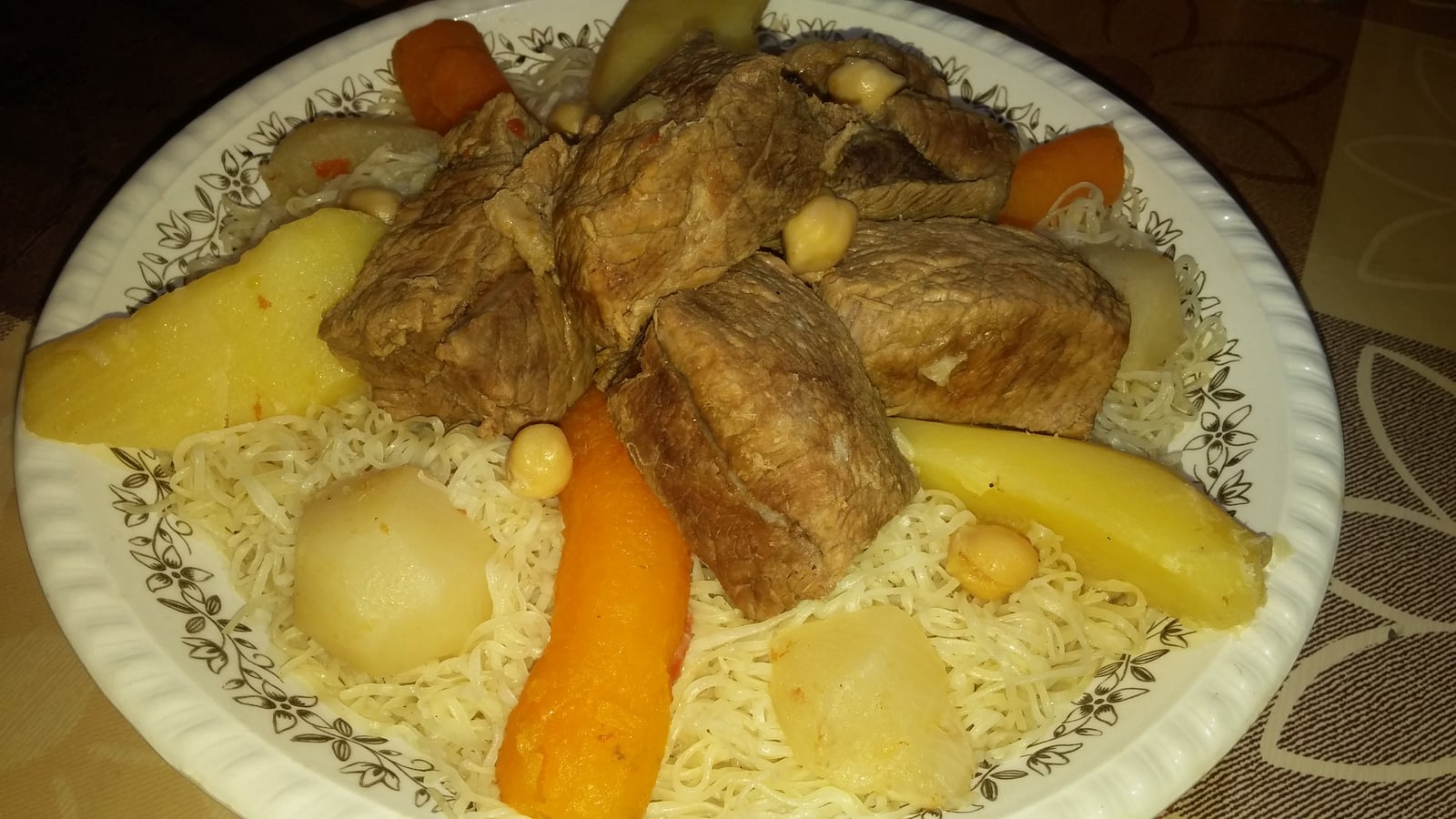
A platter of rechta has a quiet palette: pale noodles, chickpeas, turnip and pieces of meat. Then the seasoning begins to complicate the picture. In the Algiers preparation documented by the cook Soulef, cinnamon shares the broth with black pepper; a little more cinnamon may finish the dish at the table. The familiar scent of a sweet spice arrives in a thoroughly savory meal.[1]
Rechta rewards attention to small differences. A strand should remain a strand, even when it has taken up the sauce. A piece of turnip should have enough shape to be lifted from the platter. The broth must reach the pasta without turning the whole serving into a wet, indistinct heap. That balance gives the dish its particular elegance.
It also belongs to a generous occasion. Algeria's National Tourism Office describes rechta as a food of weddings and religious celebrations, including the Prophet's birthday.[2] Here, the feast takes the form of a broad serving dish: noodles underneath, substantial pieces above, enough to divide and pass around.
A white sauce with a warm scent
The phrase sauce blanche can mislead a reader expecting cream. In Djouza's published rechta recipe, the liquid comes from water added to meat, onion, fat, seasoning and chickpeas. There is no milk or cream in that sauce. Chicken and lamb cook in it; the turnips enter after the cooked meat has been lifted out.[3]
This makes the pale color more interesting. The richness has accumulated in the cooking liquid, without a thick dairy coating to announce it. Visually, the sauce lets the noodles keep their fine outlines. Cinnamon supplies an aromatic thread through ingredients that remain easy to recognize.
Soulef is explicit about keeping the onion from browning and about maintaining a fluid sauce. Her serving instructions leave additional broth on the side.[1] Read together, those details suggest a dish whose restraint is deliberate: the sauce needs enough presence to season the pasta and enough freedom to move through it.
The turnip deserves some attention of its own. Nadji, writing at Saveurs et Gourmandises, cuts it lengthwise into quarters and adds it after the meat's first cooking stage.[4] The large, pale pieces provide a different scale beside the fine pasta. A forkful can move from delicate strands to a substantial vegetable without leaving the same gentle range of colors.
The work hidden in the mound
The noodles make the platter look abundant, but their looseness takes work. Djouza describes a homemade dough containing durum semolina, flour and egg, rolled into sheets and cut into narrow strips. Her method then sends the noodles through repeated steaming in a couscoussier, the stacked pot also used for couscous.[3]
The revealing moment comes between those visits to the steam. The pasta returns to a wide bowl, where it is lifted, separated and moistened. In Nadji's version, three steaming stages alternate with this handling before butter or smen is added at the finish.[4] The cook is repeatedly checking and rearranging what will eventually look like one effortless mound.
That sequence changes how the finished plate reads. Its delicacy is visible in the spaces between the noodles. A generous serving can still offer distinct, supple strands; the pleasure depends on their remaining loose enough to take up the broth. The wide bowl is as important to that result as the steaming pot.
One platter, several family versions
The published recipes resist a single rigid ingredient list. Djouza combines chicken with lamb and offers halved eggs as an optional garnish.[3] Nadji uses veal.[4] Soulef includes courgettes and identifies them specifically as part of her family's version.[1]
These differences help locate the dish's continuity. Across the three accounts, fine steamed pasta meets a pale, cinnamon-scented sauce, chickpeas and turnips. The choice of meat or an extra vegetable can change while that relationship stays legible. Reading the recipes side by side is more useful than treating one photographed platter as a rule for every household.
It also gives a diner something better to notice than the size of the meat portion. How easily do the noodles separate? Does the sauce season them all the way through the serving? Can the vegetables still be distinguished? Those questions follow the cooks' own priorities and explain why an apparently modest arrangement can feel so carefully made.
Leave a little broth for the table
Nadji's final instruction is to dress the noodles with a ladle of sauce, arrange the accompaniments and serve the remaining liquid separately.[4] It is a small hospitality gesture with a practical effect: the person eating has a say in the last stage of the dish.
For a reader encountering rechta for the first time, that separate sauce is a useful clue. Start with a few strands, then try them with a little more broth. Take a chickpea or a piece of turnip alongside. The dish offers its complexity through those changes in a mouthful. A pale platter can hold a long afternoon's work, and still leave the final spoonful to the guest.
Sources
- Soulef, “Rechta algéroise, cuisine algérienne,” Amour de cuisine — family recipe, cinnamon and pepper seasoning, sauce consistency and courgette variation.
- Algeria's National Tourism Office, “Rechta, one of Algeria's best-known traditional dishes” (April 9, 2025) — wedding and religious celebration context.
- Djouza, “Rechta algéroise (pâtes en sauce blanche),” Cuisinez avec Djouza — dough description, chicken and lamb preparation, repeated steaming and optional egg garnish.
- Nadji, “Rechta algéroise (recette facile et pleine de saveurs),” Saveurs et Gourmandises — veal version, staged vegetable cooking, noodle handling and sauce served separately.
- ABBASHouda, “20161201 211328rechta.jpg,” Wikimedia Commons (December 1, 2016) — original photograph of Algerian rechta, CC BY-SA 4.0.