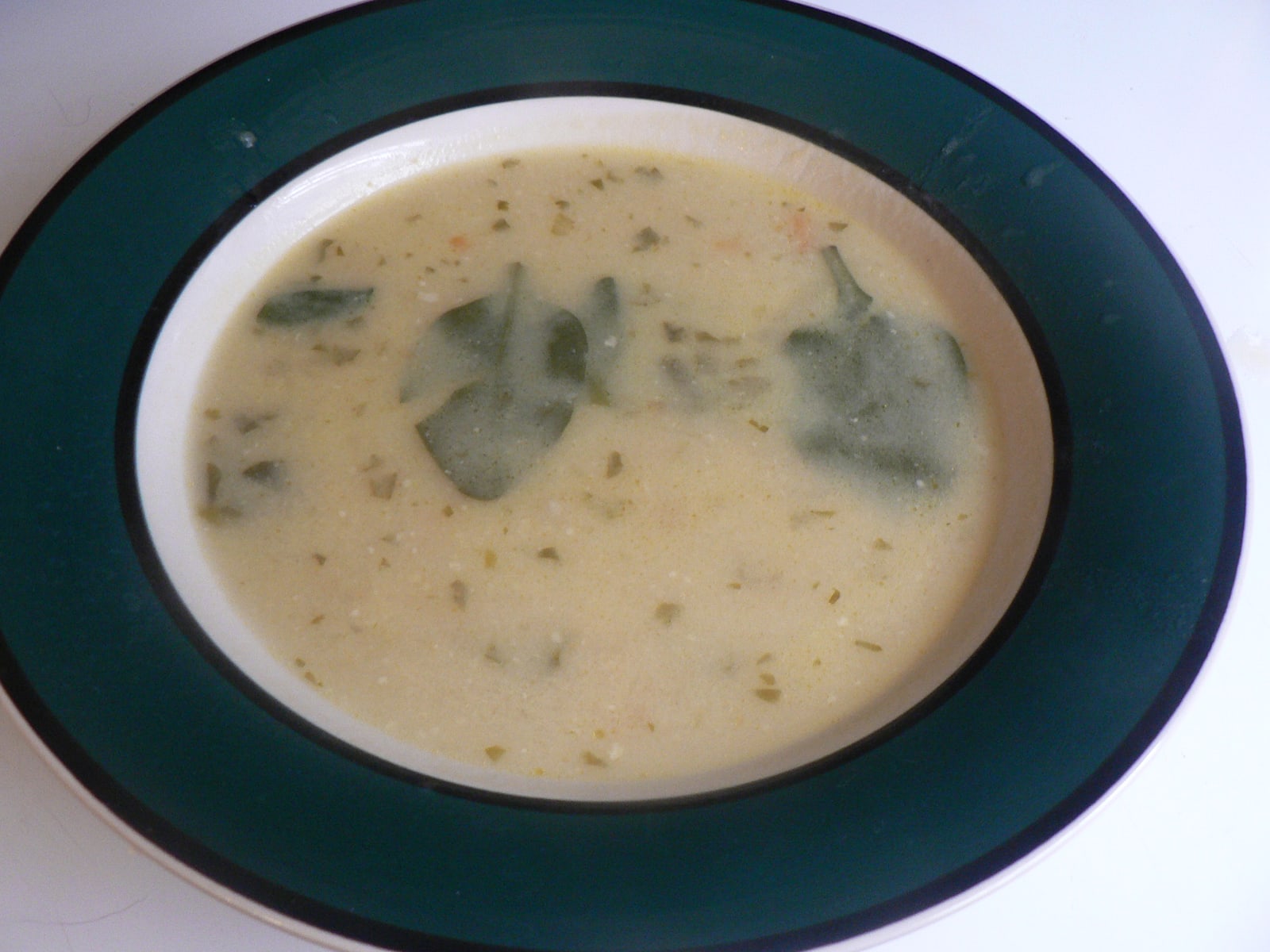
Four pounds of veal is a substantial beginning for something whose name means pepper-water. In the 1830 American edition of William Kitchiner’s The Cook’s Oracle, the cook cuts that veal into pieces, makes broth from the trimmings, and browns the meat and onions in butter. Curry and flour follow. Rabbits or fowls are acceptable alternatives.[1] Even on the page, this is a soup with weight.
The name reaches back to the Tamil milagu tanni, pepper-water.[2] The gap between that name and Kitchiner’s saucepan opens a particularly revealing chapter of fine-dining history. A dish can acquire new ingredients, a different texture and a place in an elaborate meal while retaining a verbal trace of where it began. Mulligatawny lets us follow those changes through unusually talkative recipes.
A name in the coffee-house window
Kitchiner’s footnote is almost as appetising as his recipe. He describes the unfamiliar name appearing in coffee-house windows and enticing customers inside. Calling it curry soup, he suggests, might have done less to draw an English diner away from a familiar favourite, mock turtle.[1] Novelty was already part of the service.
The edition digitised by Project Gutenberg was published in New York, adapted for American readers from a London edition. It therefore records a recipe already travelling through print; it cannot identify the soup’s first cook. Its value lies in the practical choices it preserves. Veal, poultry and rabbit could occupy the same recipe. The spice could change too: Kitchiner permits shallot, mace and ginger in place of black pepper and allspice.[1]
That flexibility makes the title more interesting. Pepper-water had become a name capable of surviving considerable changes in its seasoning. A cook could recognise the dish through the combination of meat, spicing and thickened broth, even while changing the individual components.
Read as a dining proposition, the recipe offers both familiarity and adventure. Browning meat in butter, simmering it until tender and thickening its broth give the cook a recognisable sequence of tasks. The name in the window offers the guest a journey. Kitchiner’s own explanation places the attraction at precisely that meeting point.[1]
The same soup could signal different things
Literary scholar Modhumita Roy’s 2010 study complicates the idea of a dish simply becoming more fashionable as it travelled. She traces divergent attitudes: Indian food could advertise worldly taste in Britain while some elite British households in India increasingly favoured European dishes to display social and racial distinction.[2]
Roy reads household manuals as evidence of those pressures. Women charged with maintaining an appropriately British home had to manage menus as well as domestic hierarchies. Her account shows that enthusiasm for mulligatawny was neither uniform nor steadily increasing. Its reception depended on who served it, where, and to whom.[2]
That changes how we read the old recipes. Their substitutions belong to a history of appetite shaped by unequal power. The familiar cookbook author’s name also does not establish who first worked out a preparation in the kitchen. A printed recipe records one version of the dish and the authority claimed over it.
Escoffier brings out the tureen
A later version makes mulligatawny’s place in the professional repertoire unmistakable. Auguste Escoffier’s A Guide to Modern Cookery, first published in 1907, includes it as recipe 748. The revised text preserved in Project Gutenberg’s 1920 impression starts with a small fowl, vegetables, mushroom trimmings and white consommé.[3] The pantry has changed again.
Escoffier cooks the bird separately from an onion mixture enriched with butter, starch and curry. The strained cooking liquor joins the onion mixture; the soup then passes through a fine strainer. Further gentle cooking and skimming precede a finish of cream. Thin slices of the cooked bird go into the tureen, and rice is served separately.[3]
There is a small drama in that sequence. The chicken contributes to the liquid, disappears from it during the straining, and returns as a carefully cut garnish. Onion loses its visible identity. Cream arrives near the end. Reading the method, one can see how the cook is directing the eventual spoonful: a smooth liquid, defined pieces of meat, and rice kept apart until service.
This is where the soup’s history becomes particularly tangible for a restaurant diner. The same name can announce Kitchiner’s substantial meat soup or Escoffier’s carefully strained preparation. Texture and presentation carry much of the difference. The tureen is the endpoint of several separate kitchen tasks, assembled just before the food reaches the room.[1][3]
These books document different treatments; they do not prove that Escoffier copied Kitchiner directly. Nor does the later version supersede the earlier one. Set beside each other, they reveal how much a recognised dish could change as cooks fitted it to their own repertoire.
Rice remains within reach
Madhur Jaffrey’s version published by Saveur offers another arrangement. Lamb supplies the meat; ground almonds and chickpea flour contribute body. Garlic, ginger and several spices build the seasoning, while lime and coriander finish the bowls. Rice passes around the table for diners to add to taste.[4]
That last instruction is a generous detail. It leaves the final balance of broth and grain partly in the eater’s hands. Escoffier also keeps rice separate, although his recipe does not establish a direct line to Jaffrey’s.[3][4] Across very different preparations, the bowl need not arrive entirely settled.
For a dining room serving mulligatawny, explaining the chosen version can be as inviting as naming its ancestry. A guest can appreciate the smoothness of a strained soup, the substance of lamb or the brightness of a citrus finish without being told that one bowl resolves the dish’s history. The pleasure lies in that particular preparation. Its long-travelled name leaves room for a conversation over the next spoonful.
Sources
- William Kitchiner, The Cook’s Oracle; and Housekeeper’s Manual, American edition, 1830 — recipe 249, “Curry, or Mullaga-tawny Soup,” and its footnote on coffee-house marketing. Project Gutenberg.
- Modhumita Roy, “Some Like It Hot: Class, Gender and Empire in the Making of Mulligatawny Soup,” Economic and Political Weekly 45(32), August 7–13, 2010, pp. 66–75 — historical interpretation; full-text PDF.
- Auguste Escoffier, A Guide to Modern Cookery, first published 1907; revised edition, 1920 impression — recipe 748, “Mulligatawny Soup.” Project Gutenberg.
- Saveur, “Mulligatawny” — recipe credited to Madhur Jaffrey, including lamb, almonds, chickpea flour, lime and separately passed rice.
- Stu Spivack, “Mulligatawny,” photograph taken April 16, 2006 — image provenance and CC BY-SA 2.0 licence, Wikimedia Commons.