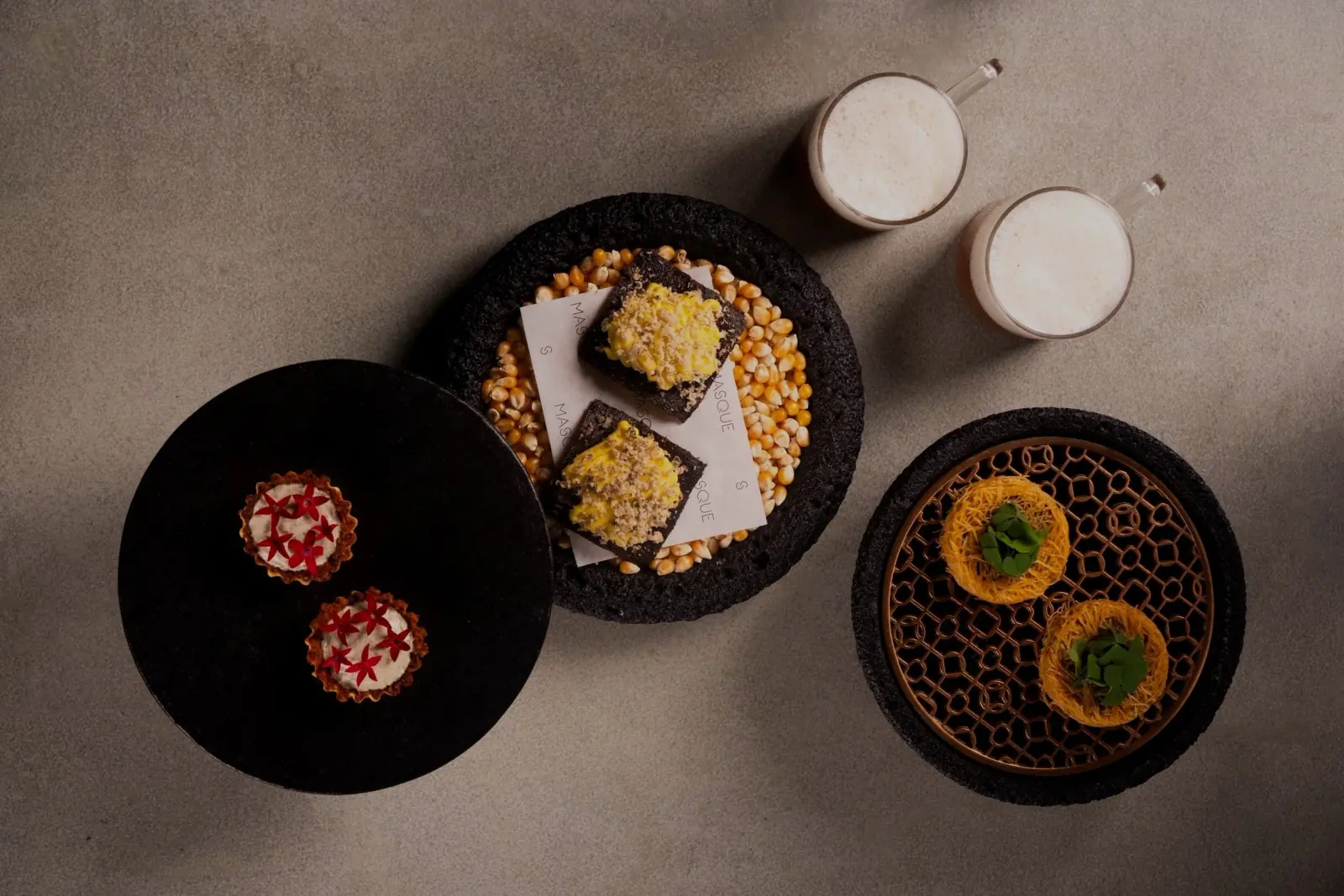
People often describe Masque as India's ingredient-driven flagship. That description is true, but it still misses the more useful point. In 2026, Masque matters less because it can name unusual produce and more because it knows how to place that produce inside a persuasive sequence. The restaurant's real craft is not one signature plate. It is the conversion of fieldwork, test-kitchen research, and hospitality into a 10-course structure that keeps tightening its logic as dinner goes on.[1][2][3]
That is why the current moment feels important. Asia's 50 Best Restaurants 2026 places Masque at No. 15 and also gives it the Art of Hospitality Award 2026, which is a strong clue about how the house now reads from the outside: not only as a kitchen with ideas, but as a complete experience with enough control to carry those ideas cleanly to the table.[5]
Sequence is the main technique
Masque's own public material is unusually direct. The restaurant calls itself ingredient-driven, says it offers a 10-course chef's tasting menu, and describes that menu as seasonal, shaped by local farmers, producers, and foraging trips.[1][2] Those are familiar fine-dining words. The interesting part is how many systems sit behind them.
The menu is not presented as a parade of luxury products. It is presented as a changing argument about Indian produce: what is worth foregrounding this season, what needs a sharper contrast, what benefits from being introduced as a snack rather than a main event, and what can carry emotional weight later in the meal once the palate has already been tuned.[2] That is a sequencing problem before it is a plating problem.
Read that way, Masque looks less like a restaurant chasing surprise for its own sake and more like a restaurant practicing editorial control. The craft is in deciding what arrives first, what gets intensified, and what must be held back.
The ingredient work starts before service
Masque Lab is the clearest proof that this restaurant does not think technique begins at the pass. The Lab page describes a dedicated research and test kitchen opened in 2020 to study seasonal ingredients and techniques: how ingredients age, how they react to contrasting flavors, and how they can be used nose-to-tail or root-to-stem.[3] That language matters because it shifts the idea of technique upstream.
In many restaurants, R&D is basically a hidden room for refining plates. Masque frames it more broadly. The Lab is where ingredients are stress-tested for structure: whether they can hold texture, whether they become richer under age, whether they need acid, smoke, bitterness, or starch around them, and how far they can travel across regional or international references without losing their center.[2][3]
That is what "lab-to-menu" should mean in a serious fine-dining context. It does not mean science theater. It means the restaurant refuses to treat sourcing, transformation, and service as separate departments. They are one chain.
The menu grammar is Indian memory under pressure
50 Best Discovery's current profile is useful because it gives specific dish examples instead of generic praise. It describes a tasting menu led by head chef Varun Totlani and points to dishes such as lamb brain paniyaram or turmeric scampi, while the vegetarian path includes sweet potato paniyaram or morel and gutti aloo. It also highlights a reinterpretation of makkai mathri as corn-and-hemp-seed crisps served with charred corn, Kashmiri chilli, and chutneys.[4]
Those examples show why Masque's cooking feels more controlled than a simple "modern Indian" label suggests. The restaurant is not just reviving regional memory. It is compressing memory into forms that can survive tasting-menu pressure.
Paniyaram is a familiar South Indian shape, but once paired with lamb brain or sweet potato inside this room, it becomes a carrier of contrast between comfort and provocation.[4] Corn mathri can still register as snack food, yet the char, chilli, and chutney framing pushes it into a more layered opening signal.[4] The point is not that tradition is being upgraded into fine dining. The point is that traditional formats are being used as stable vessels for harder sequencing work.
That distinction matters. Restaurants get clumsy when they pile together memory, luxury, and technique on the same plate without giving each element a job. Masque's stronger move is assignment. Shape may carry recognition, seasoning may carry regional memory, and temperature or texture may carry the shock. When those roles stay separate enough, the dish reads clearly instead of turning muddy.
Hospitality is part of the craft, not decoration around it
The Asia's 50 Best Restaurants 2026 recognition matters for another reason. A hospitality award given alongside a top-20 placement suggests that Masque's control now extends beyond the kitchen.[5] The Discovery profile supports that reading by describing an extensive wine list, an Ayurvedic-philosophy-inspired cocktail program, and a distinctive custom-gin option built around herbs, spices, and fruit.[4]
Those details are easy to misread as premium extras. They are more important than that. In a menu built on high contrast, local produce, and reinterpretation, beverage and pacing are part of legibility. They tell the diner how much force a course should carry, whether a turn in the meal should feel cleansing or deepening, and when regional memory should arrive as comfort rather than challenge.[4][5]
Masque Lab reinforces this broader definition of craft. Even its private-dining form is organized around proximity to process: 12 seats around the kitchen, with guests close enough to see experiments before they filter into the main tasting menu.[3] That is not merely a luxury format. It is a statement that interpretation belongs inside the making of the meal.
What diners should understand now
Masque's public menu price is currently Rs. 8,085 before applicable taxes, and the restaurant continues to position the meal as a 10-course tasting experience rather than an a la carte browsing session.[2] That means diners should book it for concentration, not for casual variety.
The upside of that structure is clarity. When Masque is working, the dinner should feel like a line of reasoning rather than a scrapbook of "best ingredients in India" moments. The risk is the same as the ambition: diners who want a quieter, more static luxury format may find the house's editorial hand too visible. This is a restaurant that wants to guide attention, not simply flatter it.
That is also why it feels timely. Plenty of ambitious restaurants can source aggressively. Plenty can build a lab. Plenty can assemble a serious beverage team. Masque's harder achievement is getting those parts to speak in one voice. The strongest argument for booking it now is that the restaurant appears to have moved past the stage where ingredient ambition is enough. It is now practicing structure.
Sources
- Masque official homepage - restaurant positioning in Mumbai's former mill district and the current 10-course tasting-menu framing.
- Masque official food page - founder/head-chef credits, seasonal local sourcing, Masque Lab linkage, and current Rs. 8,085 menu price.
- Masque official "About Masque Lab" page - research brief, nose-to-tail/root-to-stem method, and 12-seat private-dining format around the kitchen.
- 50 Best Discovery - Masque, Mumbai: current profile describing head chef Varun Totlani, dish examples, beverage program, and tasting-menu structure.
- Asia's 50 Best Restaurants 2026 list - Masque at No. 15 and recipient of the Art of Hospitality Award 2026.