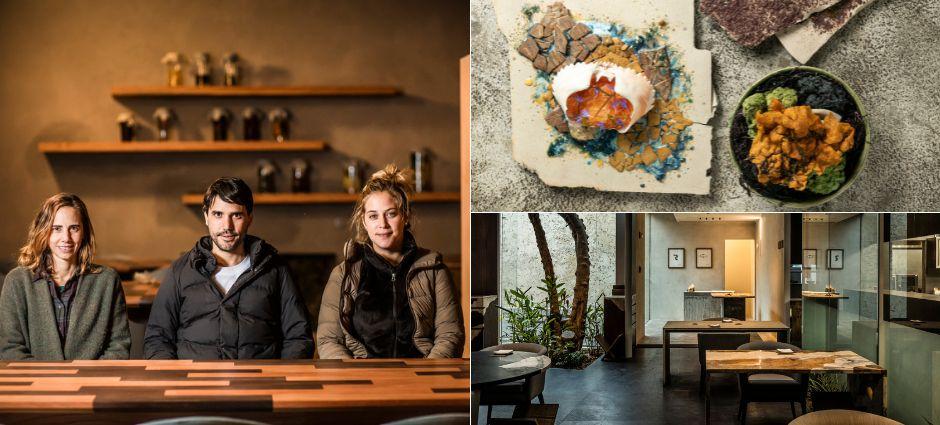
Lima is easy to misread if you arrive with only a leaderboard in your head. The city’s flagship restaurants do not simply compete on luxury, technical polish, or reservation scarcity. They speak three different culinary languages, and each one changed what Peruvian fine dining could mean.[1][2][5]
The cleanest way to understand the city in 2026 is to read it through three names: Gastón Acurio, Virgilio Martínez and Pía León, and Mitsuharu Tsumura. One opened the global door, one pair turned Peru into a research system, and one made Nikkei cuisine feel like a complete flagship grammar rather than a side note.[1][2][3][5]
The first language: Peru as a world-stage dining subject
Astrid y Gaston still describes itself in direct, foundational terms: an internationally recognized restaurant for its contribution to the diffusion of Peruvian cuisine, Peruvian products, and the country’s cultural richness.[1] That sentence matters because it captures the first big shift in Lima’s modern high end. The restaurant was not only serving polished food. It was persuading the world that Peru itself could be the central subject of a serious contemporary dining room.
That language is expansive and diplomatic. It treats the restaurant as a cultural embassy as much as a kitchen. In lineage terms, Acurio’s lasting contribution was to make Peruvian ingredients and Peruvian identity legible as premium dining material without hiding behind imported prestige codes.[1]
Even when newer restaurants moved in more radical directions, that earlier act of framing stayed in the floorboards.
The second language: Peru as territory, altitude, and research
Central changed the scale of the story. Its official description says the restaurant interprets the complexity of Peruvian territory through immersions and tastings that celebrate the country’s diversity and altitudinal irregularity, together with Mater and an interdisciplinary network.[2] That is a very different proposition from national representation alone. The unit is no longer “Peruvian cuisine” in broad cultural terms. The unit becomes ecosystems, fieldwork, altitude bands, and translation from landscape to menu.[2][3]
The World’s 50 Best Best of the Best profile fills in the historical arc. Virgilio Martínez opened Central in 2008, Pía León joined in 2009, and over time the menu became a guided movement through Peruvian ecosystems. In 2018 the project moved to Casa Tupac in Barranco, where the restaurant, investigation center, large garden, and León’s solo restaurant Kjolle came together in one physical complex.[3]
That move is the real hinge in Lima’s lineage. Fine dining stopped being only a dining-room performance and became an ecosystem with a campus feel: research, cultivation, hospitality, and parallel voices living in one address.[3]
Kjolle turned the research branch into a second voice
Kjolle matters because it proves that the Central branch did not end as one auteur restaurant with satellites. Its own official description frames Pía León’s restaurant as contemporary Peruvian gastronomy expressed with freedom and color, in Barranco, through native ingredients and a sustainability-minded approach.[4]
That language is looser and warmer than Central’s topographic severity. The pantry is still Peruvian and still research-led, but the tone shifts. Central asks you to read Peru by terrain. Kjolle asks you to read Peru by ingredient character, chromatic contrast, and León’s more lateral sense of pleasure.[2][4]
As of the 2025 World’s 50 Best Restaurants list, that second voice is no side project: Kjolle sits at No. 9 in the world while Central has already moved into the Best of the Best hall of fame after its No. 1 finish in 2023.[3][6]
The third language: Nikkei as a complete Lima grammar
Maido’s own text is unusually useful because it states the argument in philosophical form. It describes cuisine as constant movement and says Nikkei was born when Peru and Japan came together to create a third reality: Nikkei cuisine.[5]
That phrase, “third reality,” explains why Maido’s role in Lima is bigger than current rankings. Tsumura did not simply add Japanese technique to Peruvian product or vice versa. He helped establish Nikkei as a complete fine-dining language with its own emotional tempo, urban elegance, and intercultural legitimacy.[5]
The 2025 World’s 50 Best list makes the present-tense significance explicit: Maido now stands at No. 1 in the world.[6] But the deeper point is structural. Lima’s flagship dining scene no longer runs on one story about terroir or one story about national identity. It also runs on circulation, migration, and synthesis.
How to book Lima after you understand the lineage
For a traveler, this lineage map is more useful than asking which reservation is “best.”
- If you want the opening act in Lima’s modern fine-dining story, Astrid y Gaston is the language of cultural diffusion and nation-scale hospitality.[1]
- If you want Peru rendered as fieldwork, biodiversity, and research architecture, the Central and Kjolle branch is the right language family.[2][3][4]
- If you want the city’s cross-Pacific energy and its most fully articulated urban synthesis, Maido is the language to hear.[5][6]
That is why Lima feels deeper than many one-city tasting-menu circuits. Its top end is not one ladder with different price points. It is three distinct ways of organizing memory, territory, and exchange on the plate.
Sources
- Astrid y Gastón official homepage (restaurant mission and international recognition framing).
- Central official homepage (territory, altitude, Mater, and interdisciplinary-network framing).
- The World’s 50 Best Restaurants, Best of the Best: Central (historical timeline, Casa Tupac move, and hall-of-fame context).
- Kjolle official homepage (Pía León, native ingredients, Barranco setting, and sustainability framing).
- Maido official homepage (restaurant philosophy and Nikkei as a “third reality” born from Peru and Japan).
- The World’s 50 Best Restaurants 2025 list (Maido at No. 1 and Kjolle at No. 9).