A wedge of Ossau-Iraty can send the wine service in two directions. The cheese’s own appellation body suggests dry whites for younger, milder examples and sweet whites for longer-aged cheeses with more character. Jurançon supplies both. At the same table, the wine might follow the cheese toward freshness or toward a richer, fruitier finish.[5]
That is an inviting way into this corner of southwest France. Begin with the bite in front of you. The word Jurançon identifies a family of wines; the small word sec, meaning dry, changes what arrives in the glass.[1] A cheese course makes the distinction tangible, but the same attention pays off earlier in dinner, with fish, saffron or a glossy sweet-and-sour sauce.
The brightness behind the fruit
Jurançon’s vineyards occupy hills at the foot of the Pyrenees. France’s appellation authority, INAO, identifies Petit Manseng and Gros Manseng as the principal local grapes and describes vivacity as a shared characteristic of the wines. Sweet examples begin with fruit and floral aromas, developing dried-fruit and spice notes with age. Dry examples can also retain freshness as they mature.[1]
The landscape helps explain the range. INAO describes steep sites, sometimes terraced, and a warm, dry southerly wind that favors overripening in autumn. Harvesting is by hand, often in several passes.[1]
Clos Lapeyre gives the process a more intimate scale. For its standard sweet Jurançon, pickers select grapes that have lost water on the vine, concentrating their juice. This drying is called passerillage. The estate also credits cooler nights with slowing maturation and preserving acidity. Fermentation is stopped with some grape sugar remaining; its published description gives a residual-sugar range of 60–70 grams per liter for this wine.[3]
That figure belongs to this particular cuvée. It is no sweetness guarantee for every bottle bearing the appellation. The pairing depends on how the finished wine brings its sugar, acidity and aromas together.
A dry glass beside saffron fish
Clos Lapeyre’s dry bottling provides a useful starting point. Made entirely from Gros Manseng, it is fermented in stainless steel and aged on its lees—the sediment left by fermentation—until spring. The estate describes citrus, white fruit and green hazelnut aromas, with a fresh, persistent palate.[2]
Its food suggestions are unusually helpful: shellfish, fish cooked with curry or saffron, mountain cheeses and regional charcuterie.[2] They give the wine something more substantial to do than accompany an anonymous piece of white fish.
Consider a proposed plate of fish with a saffron-scented sauce. The pairing would connect the wine’s aromatic presence with the seasoning, while its freshness offers contrast to the sauce’s richness. That is a reading of the producer’s recommendation, rather than a report of a meal tasted here. The sauce deserves as much attention as the species of fish.
Nor does the mention of curry promise success with every level of chili heat. A fragrant, gently spiced preparation and a fiercely hot one ask different things of a glass. The producer’s suggestion is a starting point for tasting the finished dish.
Sweetness can join the savory course
Domaine Cauhapé’s Belle des Vignes, made from Petit Manseng, takes another route. The estate describes citrus and exotic-fruit aromas with gingerbread notes, then recommends the wine with seared foie gras and sweet-and-sour cooking. Fruit tarts also appear among its suggested matches.[4]
The savory recommendations reveal what sweetness can contribute. With a browned, rich ingredient, the wine offers a fruit-like counterpoint. Where the plate already contains sweetness and acidity, the glass can echo that combination. These are pairing interpretations of Cauhapé’s suggestions, and they depend on proportion: a discreet glaze and a pool of syrup create very different mouthfuls.
This is also where the particular bottle matters. Lapeyre presents its standard sweet wine as an aperitif or a companion to a lightly sweet dessert.[3] Cauhapé gives Belle des Vignes a broader savory brief.[4] A sommelier choosing between them should taste against the actual sauce, rather than assume that two sweet Jurançons perform identically.
Let the cheese finish the argument
Ossau-Iraty brings the choice back to a small, manageable bite. Its appellation body explicitly welcomes dry Jurançon alongside the cheese’s floral character and describes sweet Jurançon as another attractive possibility. The broader guidance turns on maturity: milder young cheese with dry white wine, longer-aged cheese with sweet white wine.[5]
For a dining room, that suggests a pleasurable comparison. Offer two small tastes with the same cheese, then try a more mature piece. Notice whether the wine leaves room for the cheese or overwhelms it, and whether the fruit in the glass becomes more appealing after a bite. This is a proposed tasting exercise, not a universal ranking. The appellation’s own advice acknowledges both the character of the cheese and personal preference.[5]
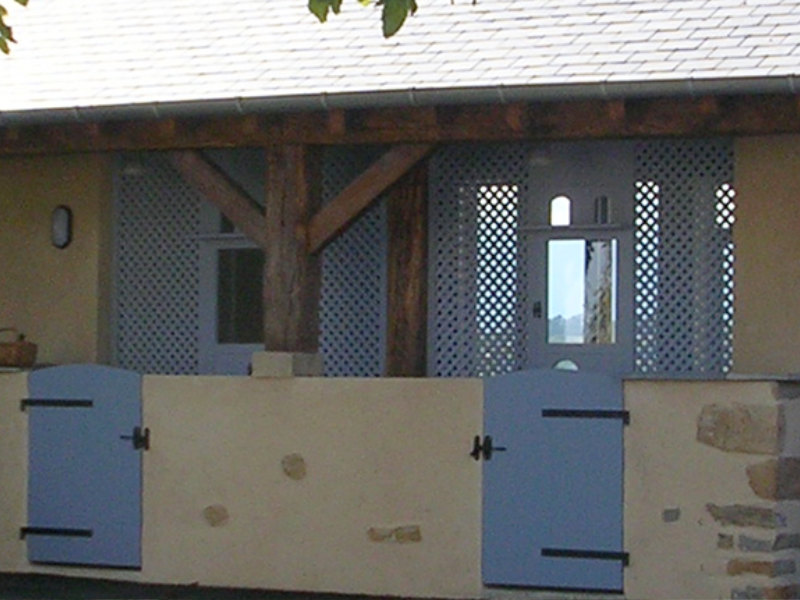
The region itself makes room for such exploration before dinner. At Clos Lapeyre, group events include a tasting of both dry and sweet wines at aperitif time. The estate’s reception room occupies a former chicken coop, remodeled to host meals and gatherings.[7] It is a fitting setting for wines whose range becomes clearer around food.
There is room for an ending without a plate, too. Cauhapé recommends drinking its much more concentrated Quintessence du Petit Manseng on its own. Its description records successive selections of shriveled grapes in the second half of December and fermentation in new oak.[6] Such a wine need not be assigned a dessert simply to complete a pairing menu.
A good Jurançon service leaves these possibilities open. The dry bottle can stay with the savory meal; a sweet one can arrive while the cheese is still on the table. The last decision belongs to the next bite.
Sources
- Institut national de l’origine et de la qualité, “Jurançon sec” — dry and sweet styles, local grapes, aroma development, hillside growing conditions and hand harvesting.
- Clos Lapeyre, “Clos Lapeyre Jurançon Dry Wine” — Gros Manseng, fermentation and lees aging, producer tasting notes and fish, spice and cheese pairings.
- Clos Lapeyre, “Clos Lapeyre Jurançon Sweet Wine” — selective picking, passerillage, retained acidity, residual sugar and suggested occasions for the standard sweet cuvée.
- Domaine Cauhapé, “Belle des Vignes” — Petit Manseng, producer tasting notes and recommendations for seared foie gras, sweet-and-sour cooking and fruit tarts.
- Syndicat de défense de l’AOP Ossau-Iraty, “Quels vins pour accompagner l’AOP Ossau-Iraty ?” — dry and sweet Jurançon pairings, cheese maturity and the role of personal taste.
- Domaine Cauhapé, “Quintessence du Petit Manseng” — late picking, concentrated grapes, oak fermentation and the producer’s recommendation to enjoy the wine by itself.
- Clos Lapeyre, “Group Reception” and estate homepage — the converted reception room and pre-meal tastings of dry and sweet Jurançon; the homepage supplies the accompanying reception photograph. Photograph source page.