Tip a few allspice berries into a mortar and the name begins to make sense. The familiar comparison is to cloves, cinnamon and nutmeg, gathered into one small fruit. Jamaica knows it as pimento: the dried, unripe berry of Pimenta dioica, an evergreen tree native to the Caribbean and Central America.[1] Its apparent generosity is useful in a kitchen. One jar can suggest several corners of the spice cupboard.
A jar on a restaurant shelf conceals a succession of jobs: clipping branches, separating the berries, drying them and filling sacks. A grower's account of those costs makes the finished spice look less effortless.[4]
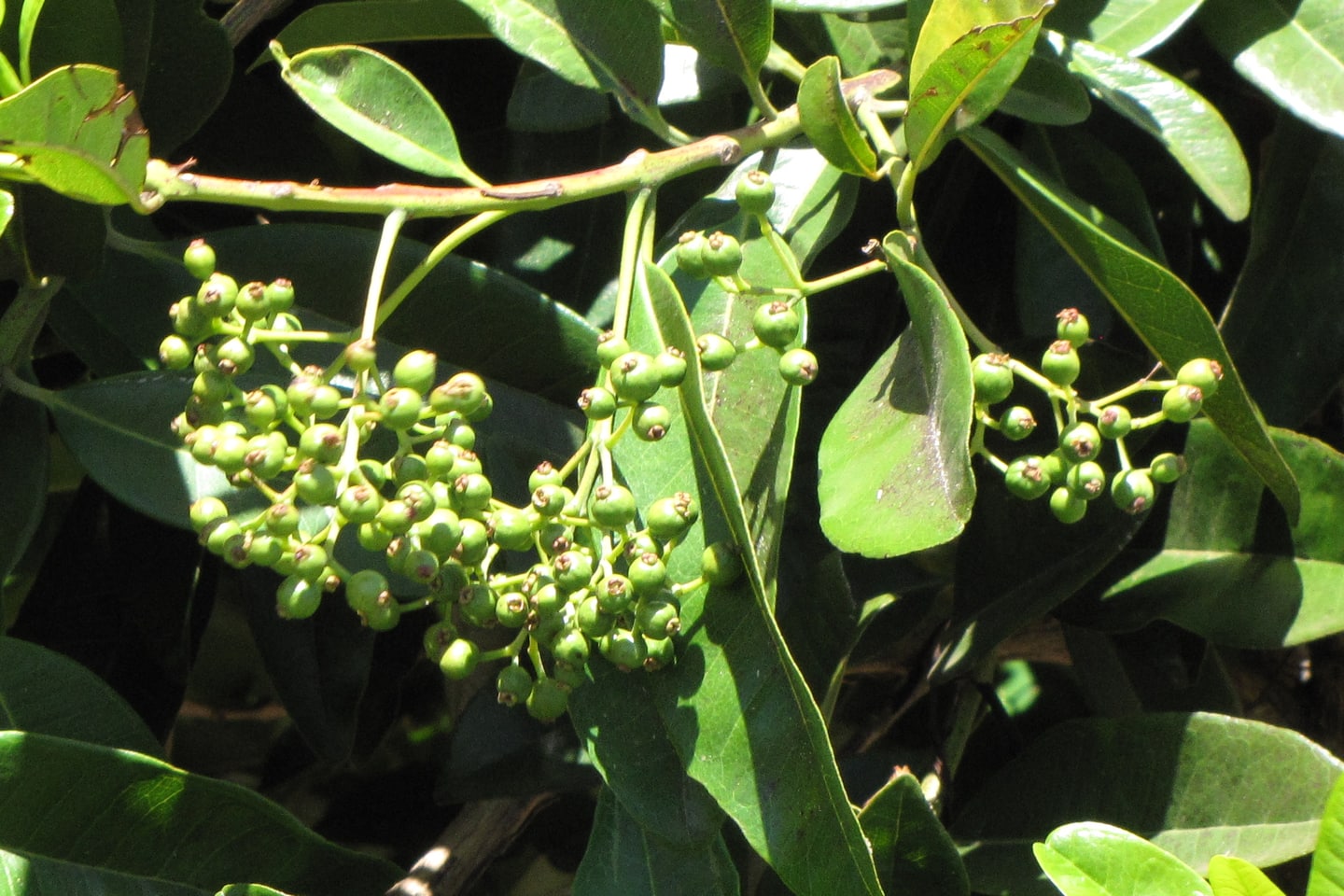
Catch the berry before it turns purple
On the tree, green pimento berries eventually turn purple.[1] The Jamaica Agricultural Commodities Regulatory Authority's growing guide places harvest about three to four months after flowering, generally between July and October, with local climate shifting the schedule. It specifies fully developed green berries: ripe ones have a different flavor and take longer to cure.[2]
The PROSEA crop monograph describes Jamaican harvesting by contracted families, who remove small fruiting branches and separate the berries. It also warns that careless branch removal can damage trees and leave them recovering for years.[3] Harvesting therefore has two objects of care: the fruit leaving the farm and the branches that must carry another crop. The movement that fills this year's sack can affect what remains overhead.
A week on the barbecue
The next stage has a wonderfully misleading name. In the growing guide, a barbecue is the concrete surface on which pimento dries in the sun. Berries are spread thinly, turned with a board rake and brought in or covered against rain and heavy dew. The guide gives a typical drying time of six to eight days and a finished moisture content of about 11–12 percent. Rewetting prolongs drying and can encourage mold.[2]
PROSEA describes well-dried berries as dark and able to rattle when shaken in the hand. It also records variation in processing, including a preliminary sweating stage and the use of artificial dryers.[3] The sun-dried method is a documented practice, rather than a complete description of every lot. For a restaurant interested in the ingredient's journey, asking how it was dried opens a more useful conversation than imagining that the tree produces the finished brown spice.
The people paid before the sack is sold
In a September 2024 letter to the Jamaica Observer, grower Linton P Gordon explained why he had stopped harvesting and planting pimento. He described paying one person to clip the fruiting branches and others to separate berries from leaves and stems, before drying and bagging could begin. In his account, the return did not justify the work.[4]
This is one grower's testimony from 2024, not a survey of farm incomes or a current price quotation. Its value is the sequence it makes visible. Several jobs have already been paid for before a sack reaches a buyer. A tree can still be standing while its fruit becomes uneconomic to collect.
There is also pressure to use the tree itself. JACRA lists cutting pimento for charcoal used in jerking meat among the industry's concerns, alongside price competition from other producing countries.[5] The culinary appeal of pimento reaches beyond its berries, but a felled tree cannot supply future harvests. That tension belongs in the story whenever the spice is celebrated as part of Jamaica's food heritage.
Back at the stove
Pimento's place in jerk gives the sourcing story an immediate destination. The Jamaica Tourist Board's account names it alongside thyme, scallion, onion, garlic and Scotch bonnet in the seasoning.[6] Read that combination and the berry has a distinct role to play: its warm aromatic associations sit among herbs, alliums and chile. The pleasure comes from their company, with pimento helping make the mixture recognizable.
Its range extends further. Kew records allspice in stews, sausages, pickles, cakes and puddings; PROSEA distinguishes whole berries used in broths and pickling liquids from ground fruit used in cakes and preserves.[1][3] The same harvest can reach the table through a savory liquid or a sweet crumb.
A restaurant may finish either with considerable ceremony. The earlier care is quieter: a green berry picked on time, small branches handled carefully, a drying crop covered before it gets wet. Those gestures deserve a place in the description of the ingredient. By the time the mortar releases its aroma, most of the work has already happened.
Sources
- Royal Botanic Gardens, Kew, “Pimenta dioica,” Plants of the World Online, especially the Kew Species Profile — identity, native range, berry color, aromatic comparisons and culinary uses.
- Jamaica Agricultural Commodities Regulatory Authority, Growing of Pimento Trees, “Reaping of Berries” and “Curing of Berries,” PDF pp. 9 and 11 — harvest maturity, seasonal variation, drying surfaces, turning, weather protection and moisture target.
- PROSEA, “Pimenta dioica,” Handbook 13: Spices, record 589 — family harvesting, risks from branch removal, processing variations, dried-fruit characteristics and culinary forms.
- Linton P Gordon, “Lament of a pimento farmer,” letter to the Jamaica Observer, 26 September 2024 — a grower's account of harvesting labor and his decision to stop; used as dated testimony.
- Jamaica Agricultural Commodities Regulatory Authority, “Known Industry Concerns” — tree cutting for charcoal and competition from other pimento producers.
- Jamaica Tourist Board, “The Secret to True Jamaican Jerk,” 8 December 2018 — pimento's place among the ingredients of jerk seasoning.
- Forest and Kim Starr, “Pimenta dioica — fruit and leaves, Wailuku Heights, Maui,” 21 July 2009, Wikimedia Commons — original photograph, location and attribution record.