Apple has a busy evening at Hiša Raduha. In Violeta and Uroš Mencinger’s account of a 2024 meal, it appeared finely diced with chicken and celery, and as a cappuccino-style soup touched with curry. An apple crostata shared its plate with pumpkin-seed-oil ice cream and black-walnut syrup. A familiar fruit kept finding another part to play.[1]
That small procession offers a way into Martina Breznik’s restaurant in Luče, in Slovenia’s Savinja Valley. The kitchen draws on the women who cooked here before her, while giving their ingredients and habits room to move. Gault&Millau’s recognition of Breznik with its 2026 Contemporary Traditional Cuisine Chef Trophy makes this a timely place to consider what a family restaurant can inherit besides recipes.[2][3]
What the family hands down
Michelin identifies Martina as the fourth generation running the restaurant. Its account of her sourcing starts close to the house: the garden, the surrounding forest, nearby growers and farmers. The menu changes daily with what is available, so a description of one dinner is a record of possibilities rather than a dependable order for the next visit.[4]
The family’s own explanation of its cooking, signed by Martina and Matjaž Breznik, places mothers, grandmothers and great-grandmothers at its heart. Yet it also emphasizes the freedom the restaurant gives the family to express itself. Those two commitments belong together. Learning how someone cooked can include learning how they responded when the garden, the season or the people at the table changed.[2]
Gault&Millau’s profile makes a similar distinction, praising a connection to home cooking that avoids turning the restaurant into a display of folklore. That is a useful lens for reading the plates: family continuity can reside in the care given to an ingredient, even when its presentation would surprise an earlier cook.[3]
A river fish with several lives
Trout gives that idea a local shape. Michelin highlights fish from the Savinja with vegetables from the kitchen garden. Taste Slovenia’s chef profile identifies smoked Savinja trout as Breznik’s favorite dish, prepared with wood from the local forest. In that description, the connection to place reaches beyond the fish to the fuel used to cook it.[4][5]
The 2024 VIVI review records another treatment. Fennel cream, a buckwheat soufflé and fried purple potatoes surrounded fish cooked in herb-scented milk and finished with dried wild garlic. The preparation suggests a gentle center surrounded by contrasting textures. It also shows why a restaurant’s identity need not depend on keeping a signature plate frozen in place.[1]
These are documented examples, not a claim that every preparation will be served together. Read across them and the interest lies in the different work asked of the same fish. Smoking gives wood an active role; poaching puts the emphasis on the cooking liquid and the accompaniments. The river remains a recognizable reference as the kitchen changes the encounter.[1][5]
Breznik’s Taste Slovenia portrait also names the egg as her favorite ingredient. Beside the trout, that choice is revealing: an everyday ingredient with many possible treatments sits comfortably within her idea of ambitious cooking. Sour milk, local cheeses and remembered family recipes appear in the same account alongside fermentation and pickling.[5]
New hands in an old house
Sarah Scaparone’s December 2025 Michelin feature describes a fifth generation already working at Hiša Raduha. It also reports collaboration with younger chefs who bring techniques and preparations including kimchi and kombucha into the kitchen. The inheritance is being worked on by people who have their own curiosity.[7]
That makes the daily-changing menu more than a seasonal promise. It leaves space for a family repertoire to acquire new methods. The useful question is what those methods do for the ingredients: how they alter acidity, aroma or texture, and how the resulting course fits with the rest of dinner. A borrowed technique can become part of a house’s cooking through repeated, thoughtful use.
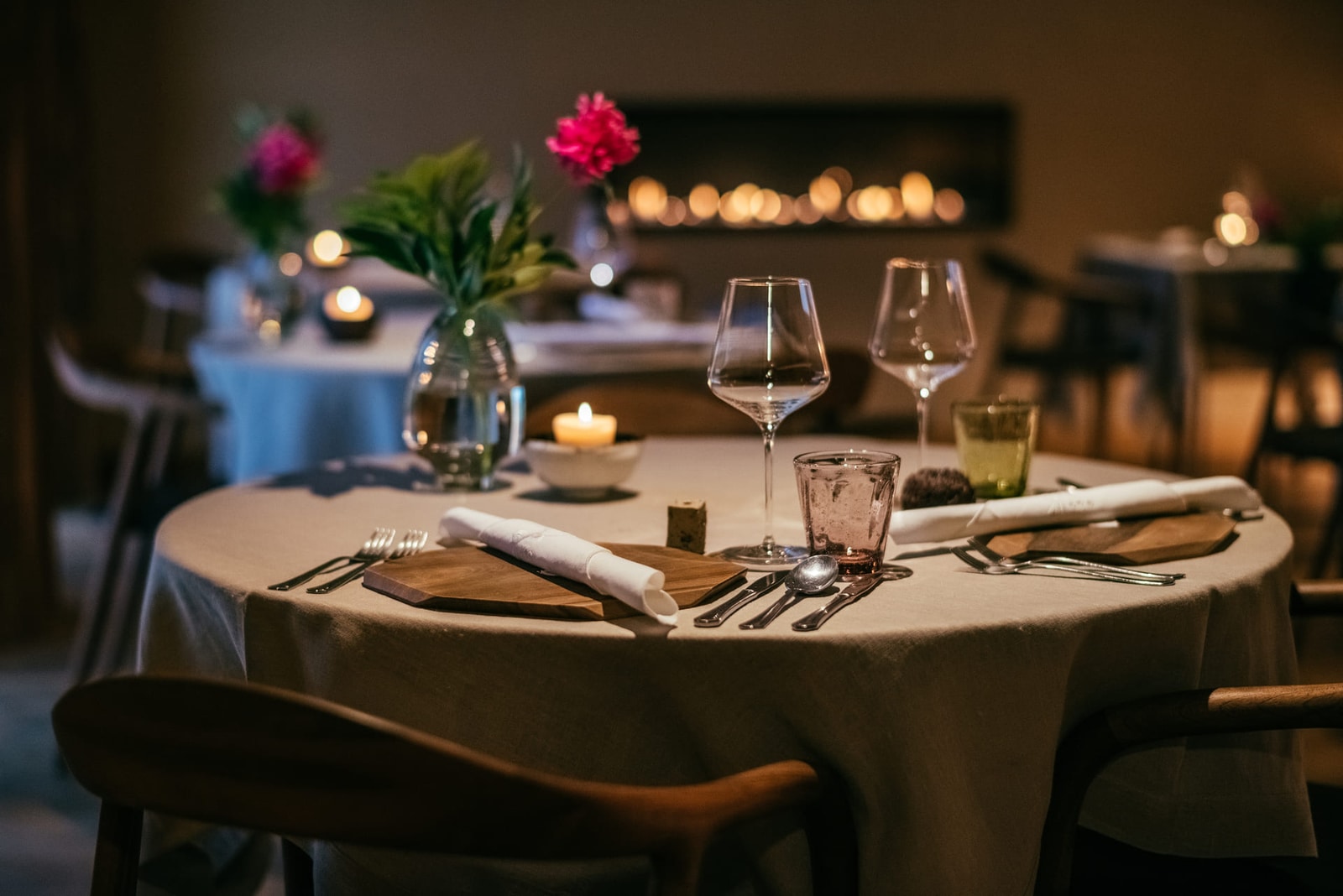
The room gives that ongoing work an intimate setting. Scaparone describes six tables, white cloths, wood and a fireplace used in the colder months. Wooden phoenixes by local artist Jože Strmčnik add another maker’s presence. These details put a particular house around the meal; the family story has furniture, warmth and objects as well as food.[7]
Filip, Martina’s son, carries part of that story into the glass. The restaurant identifies him as its sommelier and describes a wine list centered on Slovenia’s different wine regions. Dinner can therefore look outward from the valley without losing its sense of where it began.[2][7]
Come for the dinner that exists that day
The house’s practical arrangements suit this style of cooking. Its FAQ says that visitors who are not staying overnight can reserve dinner, and that overnight guests should book their meal too. Vegetarian guests are asked to give advance notice. Lunch is not offered. Confirm the seating time when booking; the site’s dining page and FAQ describe the schedule differently.[2][6]
Arriving with a specific photographed dish in mind would miss some of the pleasure. The apple that once became soup may take another route. What these accounts make worth following is Breznik’s attention to familiar things, and the freedom successive cooks have to find something else in them. At Hiša Raduha, a family meal can remain recognizable while giving the next person at the stove something to contribute.
Sources
- Violeta and Uroš Mencinger, “Hiša Raduha,” VIVI, visit 2024 — documented dishes and preparations from one meal.
- Hiša Raduha, “Good taste” — the family’s culinary philosophy, changing menu, suppliers and sommelier; checked November 16, 2026.
- Gault&Millau Slovenia, “Martina Breznik” — chef profile and 2026 Contemporary Traditional Cuisine Chef Trophy.
- MICHELIN Guide, “Hiša Raduha” — restaurant entry, family generation, sourcing and Savinja trout; checked November 16, 2026.
- Slovenian Tourist Board, Taste Slovenia, “Martina Breznik” — chef portrait, smoked trout, eggs and culinary influences.
- Hiša Raduha, “FAQ” — dinner reservations, vegetarian arrangements and service schedule; checked November 16, 2026.
- Sarah Scaparone, “Authentic Flavors of Luče: Dining at Hiša Raduha, Slovenia,” MICHELIN Guide, December 4, 2025 — dining room, younger cooks and family roles; a feature produced through Michelin’s partnership with the Slovenian Tourist Board.