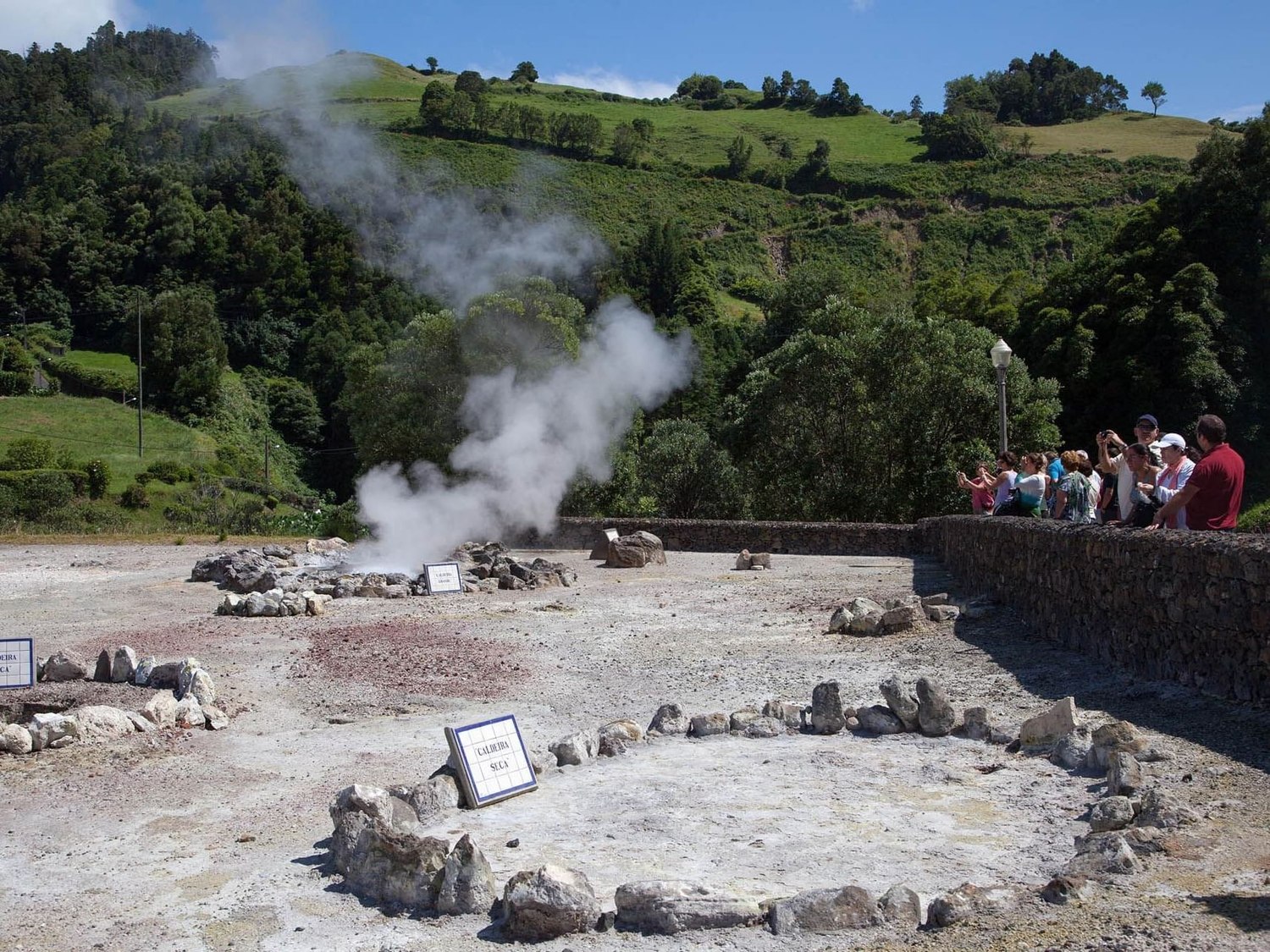
Around midday at Lagoa das Furnas, on the Azorean island of São Miguel, lunch comes out of a hole in the ground. The municipality sets aside some of the cooking holes by the lake for restaurants and others for the public. It even gives the restaurant pots a collection window, from eleven until one. A dining room in the village and a family with a pan of meat and cabbage can draw their heat from the same patch of lakeshore. [1]
At Terra Nostra Garden Hotel, the kitchen describes its cozido das Furnas as a stew that cooks for about five hours. All the liquid in the pot comes from the ingredients themselves. That detail explains something the sight of steam rising beside the lake can obscure. The earth supplies the heat. The cooks have a considerable say in what happens to the juices, starting with what they choose to bury. [2][3]
A Furnas cozido has much in common with the Portuguese boiled dinner a mainland cook would recognize. There are several meats, sausages and greens, with room in the Azorean version for sweet potato and inhame, the starchy tuber known in English as taro. Consider the company a wedge of sweet potato keeps in that pot. As the meat gives up liquid, the potato has the chance to take on some of the savor of sausage while keeping its own sweetness. Even a diner who leaves the meat on the platter gets some of it on the fork. [2][3]
A dinner wrapped in cloth
The Azores Geopark records another way to cook the dish. The cook gathers the ingredients into white cloth or a white fabric bag, slips the bundle into a sack of burlap and buries the whole parcel. It is tempting to think of the sack as an older sort of pot. Unwrap it, though, and the difference becomes apparent. Liquid can seep through the weave as the food cooks. The geopark describes the result as drier, with a more pronounced touch of sulfur. [3]
That gives two quite different meanings to the word stew. In the hotel’s pot there is something left to spoon over a cut piece of tuber. With the cloth bundle, some of that spoonful has gone into the ground. Both dinners have spent hours in the same kind of heat. A cook could change the character of the dish simply by choosing what to carry it to the lake in. [2][3]
Working backward from lunch
Along the Furnas walking trail, the cooking ground occupies a stretch of the lake’s northwestern shore where fumaroles vent steam. The regional trail guide gives about six hours for a buried pan. The municipality gives a range of six to seven hours and reports temperatures from 64 to 96 degrees Celsius at the cooking holes. Set beside Terra Nostra’s five-hour account, those figures make better sense as descriptions of particular cooking arrangements than as a single instruction for when to lift the lid. [1][2][4]
For a restaurant, that stretch of time belongs to the morning’s work even if the guest encounters it only at lunch. The meats and vegetables have to be assembled, the vessel taken out to the lake, the cooked meal collected and brought back. By the time someone in the dining room asks for cozido, the kitchen has long since made its most consequential decisions. One small trace of them is there when the platter arrives. Break a sweet potato with the edge of a fork and see what runs into the gap. [1][2][3]
Sources
- Municipality of Povoação, “Acerca da Lagoa das Furnas,” on the cooking holes, their management and restaurant collection times.
- Terra Nostra Garden Hotel, “Experiences,” including its account and photograph of cozido das Furnas.
- Azores Geopark, “Cozido das Furnas,” on the ingredients and the differences between pot and cloth cooking.
- Visit Azores, Azores Walking Trails Guide, Lagoa das Furnas route, on the fumarole field and the buried pans.