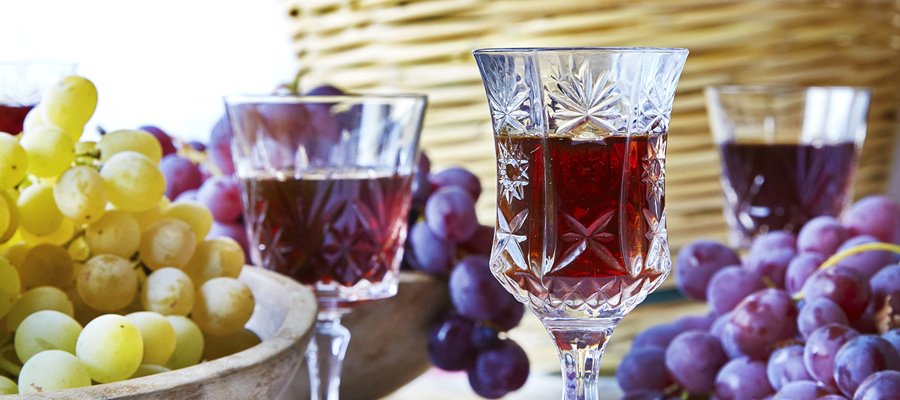
Set a sliver of blue cheese beside a small glass of Commandaria and the end of dinner begins to look different. The cheese supplies the savory bite; the wine supplies sweetness. Tsiakkas, a Cypriot producer, explicitly recommends the combination, alongside dark chocolate and citrus fruit.[2] Those three suggestions are more revealing than a generic instruction to serve the bottle with dessert. Each asks something different of the same wine.
A cheese course needs contrast. Chocolate needs a partner that survives its sweetness. Citrus offers an aromatic connection, but its preparation matters. Reading those possibilities together gives Commandaria a useful place in a carefully paced dinner: a glass chosen for the particular last plate, with enough personality to help shape it.
Sweetness begins outside the cellar
Commandaria comes from a group of 14 winegrowing villages in Cyprus. The island’s tourism authority describes late-picked Mavro, a red grape, and Xynisteri, a white one, dried in the sun before pressing and fermentation.[1] Think of the transformation from a juicy grape toward a raisin: water leaves, and the remaining juice becomes more concentrated. The producer’s technical sheet for Tsiakkas’s 2013 wine describes precisely that evaporation during ten days of drying.[3]
The winery’s current product page identifies a Xynisteri wine from Agios Mamas, with three years in French and American oak and no fortification. It describes aromas of bergamot, quince, honey and fig.[2] These are the producer’s tasting descriptors, useful as clues when composing a plate. They suggest fragrant peel, orchard fruit and something darker and more concentrated than a bowl of fresh grapes.
The older technical sheet makes a useful distinction tangible. For the 2013 vintage, the importer records 13% alcohol and 218.3 grams of residual sugar per liter. It also lists a small Mavro component and five years of barrel aging.[3] Those details belong to that vintage; they should not be carried over to the current product page. They do, however, show why alcohol strength alone cannot tell a diner how sweet a wine will be. A bottle can be intensely sweet without having the strength people associate with a fortified after-dinner drink.
Let the cheese provide the interruption
Blue cheese is a compelling starting point because it puts a savory mouthful between sweet sips. There is a familiar pleasure here: the abrupt meeting of salt and sweetness, with creamy cheese giving the diner time to notice the change.
WSET’s pairing guidance explains that salt in food can make wine seem sweeter and soften its perceived bitterness or acidity.[4] The effect is a change in perception, rather than sugar disappearing from the glass. That matters when deciding what else to put on the cheese plate. If the wine is already generously sweet, a glossy spoonful of jam may add little to the conversation.
For a first trial, I would keep the plate spare: blue cheese, plain bread and a few nuts, with any fruit preserve served separately. This is a proposed arrangement, not a reported restaurant course. It lets the diner compare the wine after cheese alone with the wine after a sweeter bite. The older Tsiakkas sheet also recommends hard cheese and nuts, so a blue-cheese skeptic has another starting point.[3]
The practical luxury is that small freedom to adjust. A diner can change the proportion of cheese to bread or leave the preserve untouched. A fully assembled, heavily sweetened bite offers less room to discover which part of the pairing works.
Follow the chocolate all the way to the plate
Kalamos, another Cypriot winery, describes its Commandaria as a wine from sun-dried Xynisteri and Mavro, aged for three years in oak. Its food recommendation centers on chocolate desserts.[5] That gives a pastry kitchen a direction, but the word chocolate still leaves most of the decision unresolved.
A thin chocolate tart and a mound of chocolate mousse under caramel sauce may share an ingredient while presenting very different levels of sweetness. WSET explains that sweet food can make wine seem drier, less fruity and more bitter; its general advice is to choose a wine sweeter than the food.[4] The relevant comparison is therefore the complete spoonful, including sauce and garnish.
One proposed route would be a modest slice of dark chocolate tart with a little orange zest. The peel takes its cue from Tsiakkas’s citrus recommendation and bergamot descriptor.[2] That is an aromatic hypothesis to try, rather than a promise that any citrus dessert will fit. A sharp lemon sorbet and candied orange peel ask very different things of a drink.
Taste the wine before the dessert, then again after a complete bite. If the second sip loses the fruit that made the first inviting, the pairing has supplied useful information. Try a less sweet mouthful, change the accompaniment, or let the wine be the final course by itself. A prestigious bottle does not oblige the diner to enjoy every combination. WSET’s broader advice makes personal preference central to the exercise.[6]
A cool glass, a little room
Tsiakkas recommends serving its current Commandaria at 12–16°C; the 2013 technical sheet specifies 12–14°C.[2][3] These are helpful bottle-specific starting points, with both pointing toward a cool pour. For a tasting menu, I would begin with a small measure and leave time for another sip after the plate has arrived.
The attraction is in that interval: the first taste of the wine, the forkful, then the return to the glass. Commandaria can bring the sweetness to a cheese course, or join the sweetness already present in pastry. Giving it one clear task lets the last few minutes of dinner remain attentive and pleasurable.
Sources
- Visit Cyprus, “Commandaria” — grape varieties, sun-drying, the 14 winegrowing villages, and the article photograph.
- Tsiakkas Winery, “Commandaria” — current product description, production method, aromas, pairing suggestions and serving temperature.
- Athenee Importers, “2013 Commandaria: Tsiakkas” — vintage-specific technical sheet covering residual sugar, alcohol, grape composition, aging and service.
- Aleesha Hansel for WSET, “Winter wine and food matching” (2020) — how sweetness and salt in food affect wine perception.
- Kalamos Winery, “Kalamos Commandaria” — grape varieties, oak aging and the producer’s chocolate-dessert recommendation.
- James Gore for WSET, “Four rules to masterful food and wine pairing” (2023 publication; originally 2015) — tasting comparisons and individual preference.