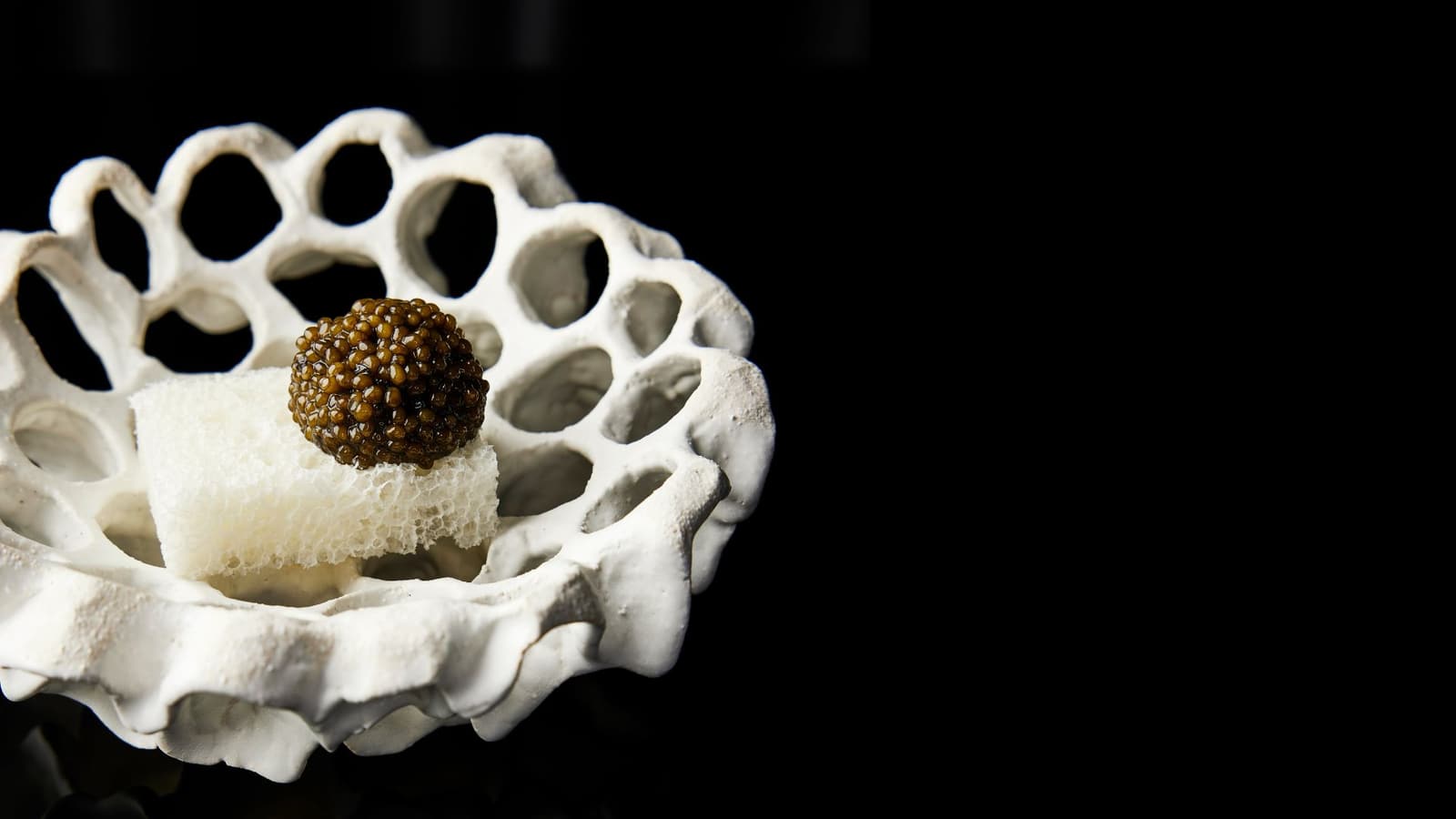
Most diners don’t regret missing a famous table. They regret booking a famous table that does not match how they like to eat.
Alchemist is exactly that kind of high-variance night: extraordinary for the right diner, exhausting for the wrong one. So instead of another generic “must-visit” write-up, this piece uses a Q&A format built from current primary materials and recent interviews to answer one practical question:
Should you book it now, and if yes, how should you book it?
Q1) What are you actually buying?
Chef Rasmus Munk’s own framing is unusually explicit: this is a multi-sensory “experience” rather than a conventional tasting menu. The official page says the format runs up to 50 impressions and typically lasts 4–6 hours.[1]
In other words, you are buying duration, choreography, and thematic storytelling as much as food quality.
That positioning is consistent with Michelin’s inspection language, which describes an “immersive and perfectly choreographed six-hour-plus experience” in acts across multiple spaces.[2]
For many diners, this is the first filter. If your ideal luxury meal is calm, linear, and mostly about plate progression, this room can feel intentionally overstimulating.
Q2) What does the spend stack look like before extras drift upward?
The official menu page now gives a transparent baseline:
- Alchemist Experience: DKK 5600
- Essential wine pairing: DKK 2000
- Non-alcoholic Botanica pairing: DKK 2000
- Exclusive wine pairing: DKK 9500
- Sommelier Table experience: DKK 16600[1]
On top of that, ticketing notes include a 2.5% non-refundable service fee on deposits, and beverages are charged separately unless bundled in the specific format you choose.[3]
The useful planning move is to set a hard ceiling before booking day, because pairing ambition is where most spend drift happens at this level.
Q3) Is the social-message layer real substance or branding theater?
The interview record is fairly consistent: Munk repeatedly describes Alchemist as a platform for social and environmental storytelling, not only culinary craft.[4][5]
Whether that lands for you depends on your tolerance for provocation at the table. Michelin and BBC both note that dishes are sometimes designed to trigger discomfort or reflection around surveillance, waste, and industrial food systems.[2][4]
The highest-signal way to think about it is this: at Alchemist, message is part of the flavor architecture. If you want pure escapism, you may prefer another two- or three-star room with less conceptual load.
Q4) How hard is it to get in, and what booking mechanics matter most?
The official ticket policy says releases happen approximately every three months, generally for the next 2–3 months of service dates, and tables are offered for parties of 2, 4, or 6.[3]
One practical detail from the same page matters more than most people realize: smaller tables are the most demanded, and the team explicitly notes that larger groups may find availability faster.[3]
So if you are organizing a trip, two tactical edges are clear:
- Watch the release windows, not random calendar dates.
- If your group can actually fill four or six seats, your hit rate is better than a two-top strategy.
Q5) Who is the right diner profile for this room in 2026?
From Michelin’s timing note (six-hour-plus), the restaurant’s own 4–6 hour guidance, and current ranking pressure (No. 5 on The World’s 50 Best Restaurants 2025 list), this is still a destination meal that rewards stamina and planning.[1][2][6]
A practical fit test:
- Book now if you enjoy long-format dining, theatrical sequencing, and tasting menus that treat narrative as part of value.
- Book selectively if your trip schedule is tight or your energy curve drops after 2–3 hours.
- Skip for this trip if your top priority is relaxed conversation and predictable pacing.
That last point is not a criticism. It is a matching problem. Alchemist itself warns it may not be ideal for business discussions or a nervous first date, which is a rare and useful piece of honesty in top-end dining.[1]
The high-value takeaway
At this tier, “best restaurant” is not a useful buying framework. Format fit is.
Alchemist remains one of the strongest examples of concept-driven fine dining done at full technical power, but it asks for commitment: time, money, attention, and emotional bandwidth. If those inputs match your travel objective, the value can be exceptional. If they do not, the same booking can feel like overpaying for the wrong night.
Sources
- Alchemist — The Experience (official format, duration, and current pricing)
- MICHELIN Guide — Alchemist – Copenhagen (inspector description and service profile)
- Alchemist — Tickets (release cadence, table-size policy, deposit terms)
- BBC Travel — Alchemist: Is this the world's most creative restaurant? (interview + operational context)
- The Hindu — Inside Copenhagen’s Alchemist: Chef Rasmus Munk on food, provocation and his India-inspired dishes (recent interview framing)
- The World’s 50 Best Restaurants — Alchemist (No. 5, 2025 list)
- MICHELIN Guide Magazine — The MICHELIN Guide Nordic Countries 2020: Alchemist in Copenhagen (historical context on format and Michelin trajectory)