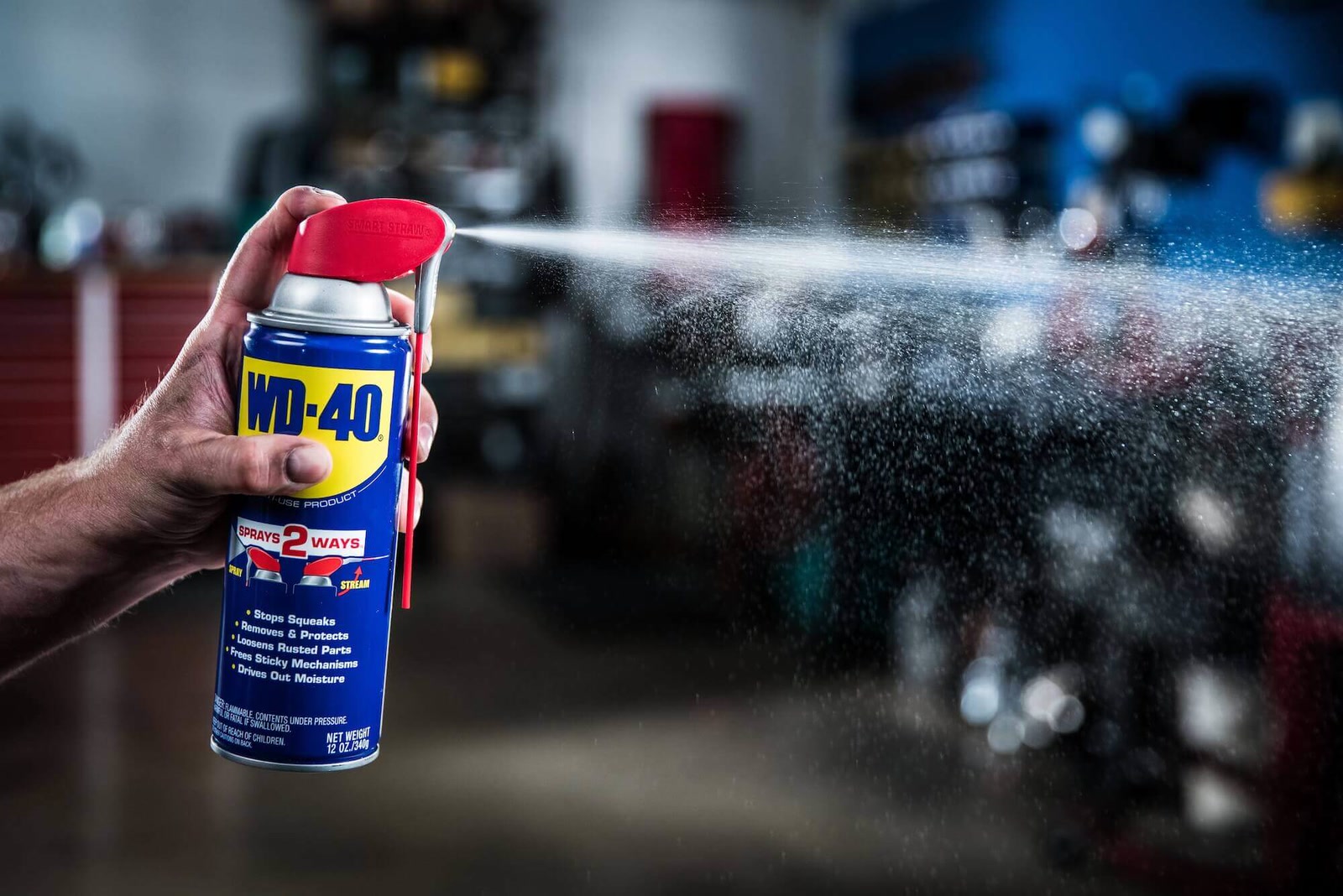
Priced: WD-40's blue-and-yellow can already carried a quality multiple, and Friday's 10.7 percent share-price jump paid in advance for a cleaner growth rate. New: fiscal third-quarter sales rose 24 percent to $195.1 million and operating income rose 47 percent, but management also said some fourth-quarter demand arrived early and cut its full-year gross-margin range.[1][4][5]
That makes this an unusually good quarter with an unusually demanding sequel. The genuine positive is operating leverage: broad volume growth traveled through a focused, asset-light brand and became profit faster than revenue. The unresolved part is whether distributors and retailers sold the product through, whether receivables turn into cash, and whether fiscal 2027 pricing can catch input costs after the inventory cushion runs out.
The Beat Was Real
This was not a one-region currency trick. Americas sales increased 29 percent, EIMEA sales increased 17 percent, and Asia-Pacific sales increased 24 percent. Constant-currency company sales still grew 20 percent. Maintenance products represented 97 percent of quarterly revenue and grew 26 percent, led by WD-40 Multi-Use Product and a 27 percent increase in WD-40 Specialist.[1][3]
The mix matters because it shows the strategy working in the part of the portfolio investors actually want. The company has been trying to concentrate resources on maintenance products, expand distribution, premiumize packaging, build Specialist, and accelerate e-commerce. In the quarter, the United States benefited from new distribution, online growth, and a large Home Depot promotion; EIMEA gained from higher volumes in direct and distributor markets; and China grew through online and industrial channels.[1][4]
Profit conversion was better still. Gross margin reached 56.6 percent, 40 basis points above the prior-year quarter, while adjusted EBITDA margin rose to 23 percent from 20 percent. The earnings deck attributes the gross-margin improvement chiefly to cheaper aerosol cans and fill fees plus favorable mix, partly offset by other input costs. This is the attractive version of WD-40's model: a globally familiar product, low capital intensity, and enough fixed operating structure for a strong volume quarter to create real leverage.[3]
Volume Did The Work — And Some Of It Moved Early
The cleanest way to read the revenue bridge is to ignore the headline percentage for a moment. The earnings deck shows that third-quarter volume added $32.1 million of year-over-year sales, foreign exchange added $7.2 million, and average selling price added essentially nothing. In other words, this was a volume event, not a price-led earnings maneuver.[3]
That is encouraging, but volume and end demand are not identical. Management said EIMEA customers built inventory ahead of anticipated supply constraints and price increases. China also benefited from advance buying before planned price increases. On the earnings call, management summarized the effect plainly: a portion of expected fourth-quarter demand shifted into the third quarter.[1][4]
The right conclusion is neither "the beat was fake" nor "24 percent is the new run rate." Distribution gains, e-commerce, Specialist growth, and the U.S. promotion created real demand. Advance buying amplified it. Investors now need to separate a higher underlying shelf velocity from timing that merely changed which quarter booked the sale.
That distinction is why the next print matters more than the size of this beat. If fourth-quarter sales slow but the two-quarter result lands near the upper half of management's annual range, the quarter was mostly a timing wrinkle inside a better year. If retailer and distributor inventories remain elevated while orders fade, the market will have capitalized a temporary channel fill as structural acceleration.
The Income Statement Converted Faster Than Cash
The strongest counterweight to the celebratory reading sits in working capital. For the first nine months of fiscal 2026, net cash from operations was $54.8 million, down from $58.0 million a year earlier, even though nine-month sales increased 12 percent. Trade and other receivables absorbed $29.1 million of cash, versus contributing $4.6 million in the prior-year period.[1][2]
One quarter does not make receivables a problem. A large late-quarter sales burst naturally sends invoices out before cash comes back, and the balance sheet still looked manageable. But the cash-flow lag gives investors a useful test. A high-quality channel fill should collect normally and be followed by genuine replenishment. A low-quality one leaves receivables elevated and makes the next order cycle look thin.
This is also why the new buyback should not distract from operating conversion. WD-40's board authorized a $100 million repurchase program effective September 1, 2026. The authorization signals balance-sheet confidence, but it has no expiration date and does not require immediate purchases. After a double-digit post-earnings jump, the evidence that matters is not the headline size of the authorization; it is whether management can fund repurchases, dividends, and growth from recurring cash without leaning on working-capital timing.[1][2]
Guidance Rose, But The Bridge Is Not Pure
Management raised and narrowed several full-year ranges. Constant-currency net sales are now expected at $652 million to $667 million, non-GAAP operating income at $107 million to $113 million, and non-GAAP diluted EPS at $6.05 to $6.35. Those are stronger endpoints than the prior guide.[1][3]
There are two catches. First, the company stopped actively marketing for a buyer for its Americas homecare and cleaning brands and reclassified those assets from held for sale to held for use. The updated guide therefore adds about $12 million of sales, $2.9 million of operating income, and $0.17 of EPS from businesses that had previously been excluded. Some of the guidance increase is accounting perimeter, not improved maintenance-product economics.[1][3]
Second, full-year gross-margin guidance moved down to 54.5–55.5 percent from 55.5–56.5 percent. Management expects higher specialty-chemical and base-oil costs to reach the income statement in the fourth quarter after older inventory protected Q3. Pricing and cost actions have already begun, but most of the benefit is expected in fiscal 2027.[3][4]
The bull case can absorb that bridge. WD-40 has pricing power, a focused maintenance portfolio, and evidence that Specialist, premium formats, geographic expansion, and digital commerce are growing faster than the company as a whole. The harder version of the bear case is not that one input-cost spike breaks the franchise. It is that investors paid a larger multiple for Q3 leverage just before margin pressure and demand phasing make Q4 look mechanically softer.
The Counterweight
It would be a mistake to reduce the quarter to pull-forward. Sales grew at double-digit rates in every trade bloc, constant-currency growth remained strong, and operating income materially outpaced revenue. The 2025 annual report also shows why the model can sustain a premium: about 80 percent of sales ran through direct markets, maintenance-product sales had compounded for years, and the company had already moved above its 55 percent gross-margin target before this quarter.[6]
The brand's narrowness is an advantage here. WD-40 does not need to forecast dozens of fashion cycles or continuously invent new categories. It needs to place a trusted maintenance product in more markets, sell more premium delivery formats, extend Specialist without diluting the core, and keep distribution economical. Q3 supplied evidence for each part of that mechanism.[1][3]
That is the strongest challenge to a cautious reading: perhaps the market is not extrapolating one promotion at all. Perhaps it is finally recognizing that an old consumer brand can still produce emerging-market distribution gains, e-commerce growth, and operating leverage. The next two quarters will tell the difference.
Falsifier
The thesis is falsified if the apparent pull-forward proves immaterial: fourth-quarter sell-through and replenishment hold up, receivables convert into operating cash, and fiscal 2027 gross margin returns above 55 percent without sacrificing maintenance-product volume. In that case, Q3 would look less like a peak quarter and more like the first clean demonstration of a higher earnings algorithm.
The thesis is confirmed if reported sales fall sharply after the advance buying, working capital stays heavy, or pricing protects margin only by interrupting the volume momentum. That would not destroy the franchise, but it would make Friday's rerating premature.
Watchlist
First, watch the fiscal year-end on August 31, 2026. The fourth-quarter revenue bridge should reveal how much demand moved into Q3, while year-end receivables and operating cash flow will show whether the large sales quarter collected cleanly.[1][2]
Second, watch the September 1, 2026 start of the new repurchase authorization. Purchases are discretionary, so capital deployed after the earnings jump will say more about management's valuation discipline than the $100 million headline alone.[1]
Third, watch the opening quarter of fiscal 2027, which begins September 1. That is when management expects pricing and cost savings to start offsetting the input-cost pressure entering Q4. The useful signal is the combination: gross margin recovering toward or above 55 percent while maintenance-product volume and distributor replenishment remain healthy.[3][4]
WD-40 earned the right to be treated as more than a sleepy household-products company. It did not earn a free extrapolation of its best quarter. After the rerating, the next proof is mundane and decisive: cans leaving shelves, invoices becoming cash, and price catching cost without stopping volume.
Sources
- WD-40 Company, "WD-40 Company Reports Third Quarter 2026 Financial Results" (July 9, 2026) — official release covering quarterly results, segment detail, guidance, cash flow, demand timing, and capital return.
- U.S. Securities and Exchange Commission, WD-40 Company Form 10-Q for the quarter ended May 31, 2026 (filed July 9, 2026) — financial statements, working capital, liquidity, and risk disclosures.
- WD-40 Company, Q3 FY26 Earnings Results presentation (July 9, 2026) — price-volume-currency bridge, trade-bloc results, margin drivers, strategy metrics, and guidance reconciliation.
- MarketBeat, "WD-40 Q3 2026 Earnings Report" (July 9, 2026) — earnings-call transcript covering advance buying, fourth-quarter demand phasing, input-cost pressure, and fiscal 2027 pricing.
- Kiplinger, "Meta Leads Again as Markets Look Forward to Earnings: Stock Market Today" (July 10, 2026) — post-earnings market reaction and closing share-price move.
- WD-40 Company, 2025 Annual Report — direct-versus-distributor mix, maintenance-product history, gross-margin recovery, and the long-term operating model.
- WD-40 Company, "Image Library" — official source page for the real Smart Straw in-use photograph used as the article image.