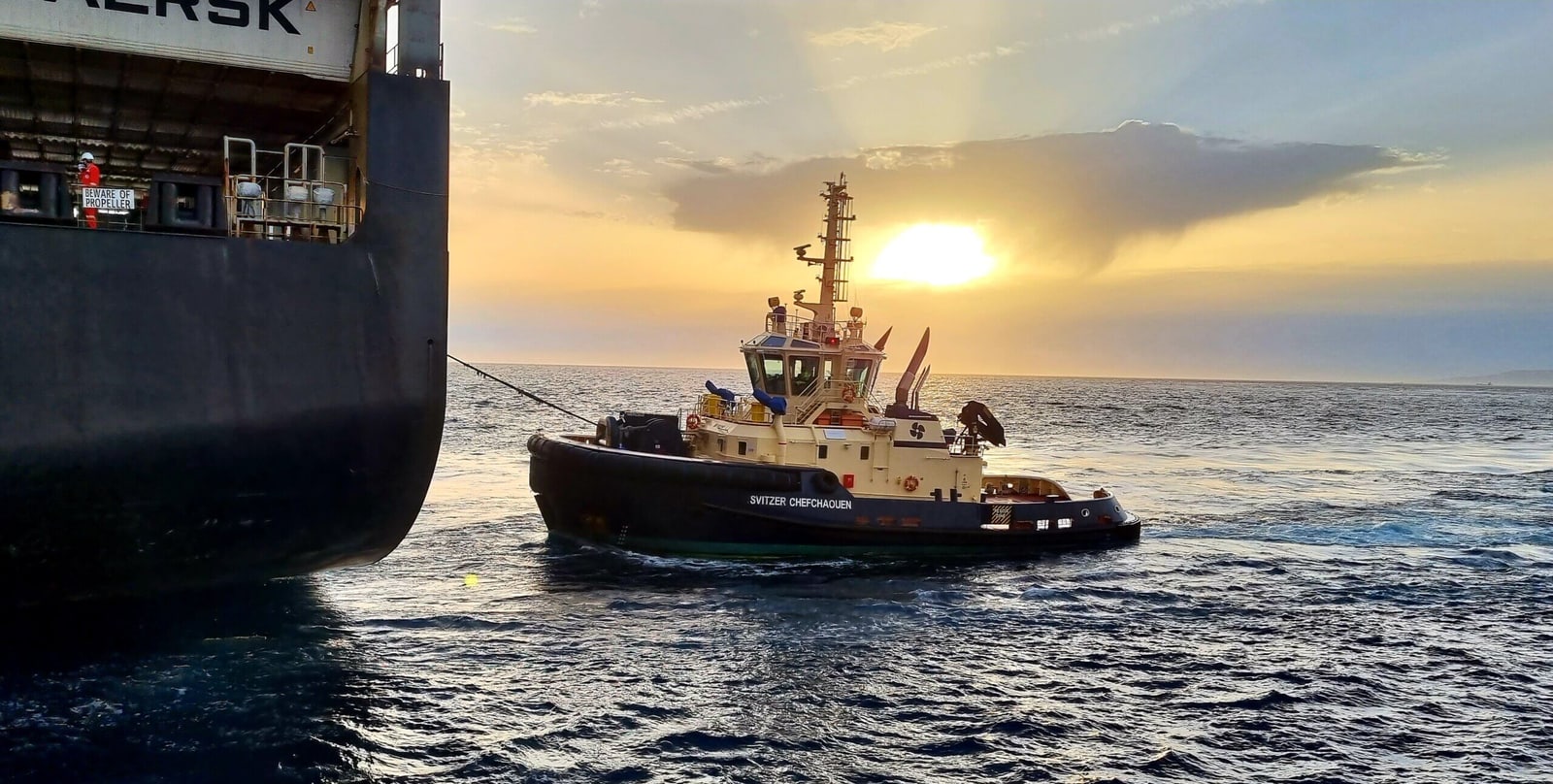
Valuing towage as dependable infrastructure makes sense when customers pay for a tug to be available. Svitzer's September order for six additional vessels puts more capital behind that promise; the return depends on whether the boats earn contracted day rates or compete for individual harbour jobs.[1][2]
Evidence cut-off: September 17, 2026. This is an analysis of business economics using current vessel announcements and explicitly dated financial evidence. Svitzer's shares left Nasdaq Copenhagen in May 2025.[7]
The meter runs differently at a terminal
Harbour towage typically pays per tug job, while much of the crew and vessel cost continues between jobs. Terminal contracts instead typically pay a daily rate for specified tugs to stay available, regardless of ship movements.[2]
A quiet day can therefore leave a harbour operator with unrecovered costs while fulfilling a terminal customer's purchase: readiness. For valuation, the key question is who pays for waiting. The same-looking boat can carry very different demand risk.
Growth can arrive without many more jobs
Svitzer's 2024 accounts provide a useful historical test. Harbour tug jobs increased by only about 0.25%, while harbour revenue rose about 7.7%. Those are calculations from the reported annual totals. Pricing and work mix, not job count alone, determined revenue.[3]
The group reported a 29.9% adjusted EBITDA margin, but an 8.4% adjusted return on invested capital. These measures have different denominators and adjustments; subtracting them would be meaningless. Their coexistence is informative: a business can retain a substantial share of revenue before depreciation, interest and tax while earning a much smaller percentage on all the capital committed to it.[3]
The report attributes lower capital spending to fewer growth projects. Stronger cash generation in such a year need not establish the fleet's permanent cash yield. New vessel purchases bring the investment cycle back into view.[3]
What the new boats actually buy
The September announcement schedules the first deliveries under the Cheoy Lee order from early 2028. Svitzer describes the programme as both renewal and growth, and says the design can perform a wider range of harbour and escort tasks. These are company claims about capability; the release does not disclose the order's purchase price or a return calculation.[1]
A replacement can preserve existing business; an additional tug can support expansion. Neither guarantees incremental earnings. My test is whether the vessel earns worthwhile work, avoids disruption or lowers running costs enough to justify its capital. Better specifications alone do not answer that question.
A contract is valuable before the first tow
Oman LNG offers a more concrete example of the commercial sequence. In January 2025, Svitzer announced a nine-year contract covering newbuild tugs at Qalhat, with responsibilities extending to firefighting, escort work and other marine support.[4] In January 2026, it reported that service had begun at the start of the year.[5]
Here, identified customer obligations preceded operations. The later mobilisation account describes coordination across technical, operational and safety teams. That is the work between an award announcement and an earning asset: equipment must arrive, people must be ready, and the customer must receive a functioning service.[5]
Neither announcement publishes the contract's day rate or project return. Its duration demonstrates a longer commercial horizon, not proof that the price is generous. It is evidence of how capacity gets attached to a customer, rather than enough information to value the contract.
The strongest counterweight: customers can invite competition
Local necessity does not guarantee an incumbent's pricing power. The Australian Competition and Consumer Commission's 2021 TasPorts case made the importance of access unusually tangible. A court-enforceable undertaking required access to tug berths for competitor Engage Marine on reasonable commercial terms after a consent finding concerning conduct likely to lessen competition.[6]
That historical case concerned TasPorts, not Svitzer. It illustrates a broader valuation caution: control of useful port infrastructure and the ability to exclude rivals are different propositions. Customer switching and access arrangements can change who captures the value of an essential service.
Even contracted revenue has boundaries. Svitzer's prospectus describes termination provisions and circumstances in which service failures or renegotiation can interrupt the expected receipts.[2]
The investment case fails if, once commissioned, new tugs neither protect nor add enough operating cash to cover their sustaining costs and capital charge, despite meeting service obligations. That would mean readiness has been supplied more cheaply than it can be profitably maintained.
What would settle the question
- At the next disclosed financial results: compare harbour job growth with revenue and operating costs, then examine capital spending. A higher tariff is valuable only to the extent that it outpaces the cost of delivering the service.
- At the next terminal award or renewal: look for duration, availability obligations, escalation terms and the vessels committed. Oman shows why an identified customer is stronger evidence than an orderbook alone.[4][5]
- At the Cheoy Lee delivery milestone, scheduled from early 2028: check where the vessels enter service and whether they replace existing boats or support additional contracts. That allocation determines which earnings claim the investment must meet.[1]
Sources
- Svitzer, “Svitzer signs contract with Cheoy Lee Shipyards for six additional 29-metre TRAnsverse tugs” (September 8, 2026) — order, intended capabilities and delivery schedule.
- Svitzer Group, Prospectus (March 22, 2024), printed pages 56–58 and 75 — harbour and terminal fee structures, fixed costs and contract limitations.
- Svitzer Group, Annual Report 2024, financial highlights and five-year summary — harbour activity, revenue, adjusted profitability and capital spending.
- Svitzer, “Svitzer signs terminal towage contract with Oman LNG” (January 29, 2025) — contract duration, dedicated vessels and scope of services.
- Svitzer, “From day one: safe, uninterrupted towage at Oman LNG” (January 22, 2026) — commencement and mobilisation of the Qalhat operation.
- Australian Competition and Consumer Commission, “TasPorts declared to have misused its market power” (May 5, 2021) — consent finding and undertaking concerning competitor access to tug berths.
- Svitzer, “Nasdaq Copenhagen A/S accepts delisting of Svitzer's shares” (May 21, 2025) — final trading date.
- Svitzer, Media Library, “Svitzer AMEA Harbour Towage” — official source of the documentary photograph used above.