A bond rally built on central-bank dollar purchases can be missing half the trade: the bank may withdraw the domestic cash it creates. Before pricing easier funding, look for the offsetting operation that keeps the foreign-exchange purchase from becoming monetary easing.[1]
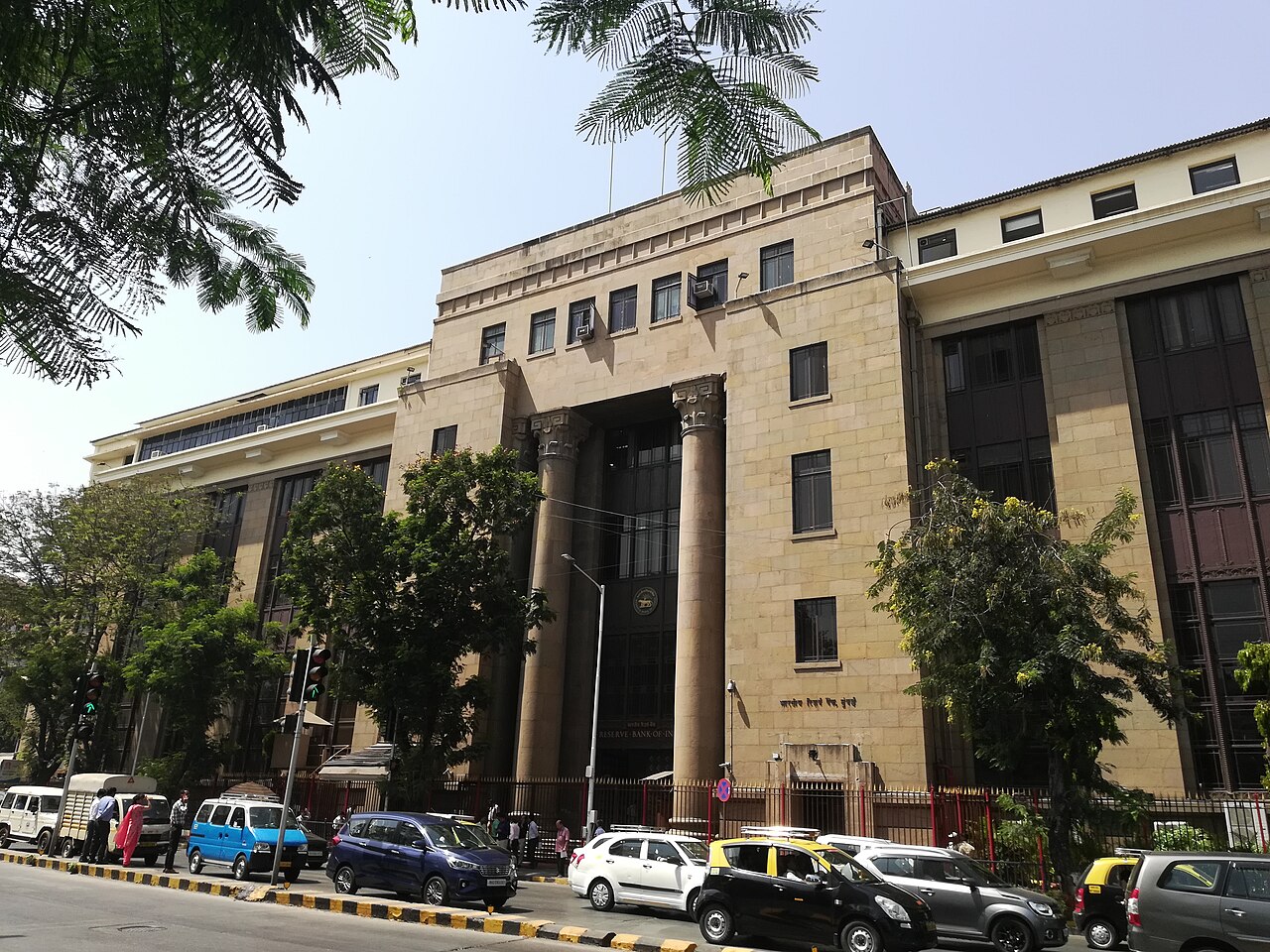
That operation is called sterilization. India’s Market Stabilisation Scheme illustrates it: the government borrowed and parked the proceeds at the Reserve Bank of India (RBI).[2]
Follow the payment, then the drain
Consider a deliberately simplified transaction. A commercial bank sells $1 billion from its own holdings to a central bank at an assumed ₹80 per dollar. The central bank credits the seller’s settlement account with ₹80 billion. Its foreign assets have increased; the commercial bank now holds additional rupee balances instead of dollars.
Those balances are bank reserves: money banks use to settle payments with one another. They are different from the central bank’s foreign-exchange reserves. The shared word conceals opposite sides of the transaction.
Now suppose the commercial bank buys newly issued sterilization securities for the same rupee amount. Payment removes the extra settlement balances, and the proceeds remain impounded at the central bank. The commercial bank ends up with securities instead of the dollars it originally sold. Its settlement cash returns to the starting level.
These are hypothetical amounts, not a report of an RBI trade or a current exchange-rate quote. They illustrate the liquidity offset described in the RBA’s account of sterilized intervention.[1] The foreign assets remain acquired even though the domestic cash injection has been reversed.
Borrowing that does not buy anything
India’s March 2004 launch agreement allowed Treasury bills and dated government securities to be issued beyond normal borrowing needs. Proceeds entered a separately identified MSS account at the RBI, reserved for redeeming or buying back securities issued under the scheme.[2]
Ordinary deficit financing raises money to spend, returning funds to the private sector. Parking the proceeds instead lets the government borrow without reversing the liquidity drain.
The agreement charged interest and discount costs through the budget rather than the impounded account.[2] Sterilization could therefore incur a carrying cost while financing no new public works. This describes the original design, not today’s RBI instrument mix.
The interest bill survives the cash offset
Extend the hypothetical transaction. Assume the sterilization securities cost 5% a year, while the acquired foreign assets earn 3%. Hold the exchange rate constant and ignore fees, compounding and changes in bond prices. The annual interest shortfall on the rupee-equivalent position is ₹1.6 billion: ₹80 billion multiplied by the difference between the rates.
That calculation combines the government and central bank for analytical purposes. In an MSS-style arrangement, the government pays the domestic interest while the central bank holds the foreign assets. The shortfall need not appear as a single expense line in either institution’s accounts.
The IMF’s study of intervention costs distinguishes accounting expenses from economic opportunity costs. Even when an operation creates no explicit interest-bearing liability, acquiring foreign assets can mean forgoing the return on domestic assets. Exchange-rate changes also affect the eventual result.[3]
A stronger rupee would reduce the domestic-currency value of the dollar assets in this example; a weaker rupee would increase it. The simple interest spread is consequently a conditional cash-carry calculation, not a forecast of the total gain or loss. Nor does a negative spread by itself establish that intervention was a mistake. Its policy benefits must be weighed separately.
An unchanged cash balance can still change behavior
Sterilization has a narrower meaning than economic neutrality. The RBA explains that an intervention can communicate the central bank’s intentions and influence currency trading. It also describes foreign-exchange swaps as another way to offset the domestic liquidity effect. Issuing government debt is one implementation, not the definition of the policy.[4]
The strongest counterweight concerns banks’ portfolios. A BIS working paper models sterilization bonds and business loans as imperfect substitutes. Under its assumptions, acquiring the bonds can affect the economics of lending, so sterilized intervention can still be expansionary and can increase financial-stability risks.[5] That is a model result, not a claim that every sterilized purchase causes a credit boom.
The practical inference is to distinguish the settlement-cash effect from the response of lenders, borrowers and currency traders. An unchanged reserve balance answers the first question. It cannot settle the others.
For a particular intervention episode, the claim that its cash injection was fully offset has a clear falsifier: after settlement, the drain is smaller than the injection and the residual remains after other liquidity movements are reconciled. A falling overnight rate alone is insufficient evidence; the balance-sheet flows must explain it.
What to watch at the next operation
- On the FX purchase’s settlement date: match the domestic cash injection with the offsetting operation. Compare actual flows rather than inferring purchases from the headline stock of foreign reserves.
- At the sterilization security’s maturity: check whether redemption is offset by replacement borrowing or another drain. Repayment without an offset returns settlement cash to the banking system.
- At the next budget and central-bank annual accounts: compare domestic financing costs with foreign-asset income and identify exchange-rate effects separately. In the original Indian scheme, the budget treatment of interest makes that distinction explicit.[2][3]
Sources
- Chris Becker and Michael Sinclair, “How the Reserve Bank Intervenes,” in RBA Research Discussion Paper 2004-06, September 2004 — section 3.1 explains settlement liquidity and sterilization.
- Government of India, Ministry of Finance, “Memorandum of Understanding for launching of Market Stabilisation Scheme — Press note,” March 25, 2004 — issuance, restricted proceeds and budget treatment of interest.
- Gustavo Adler and Rui C. Mano, “The Cost of Foreign Exchange Intervention: Concepts and Measurement,” IMF Working Paper 16/89, April 2016 — section II distinguishes accounting costs, opportunity costs and currency exposure.
- Reserve Bank of Australia, “The Exchange Rate and the Reserve Bank’s Role in the Foreign Exchange Market,” updated July 2020 — section 7 covers sterilization instruments and intervention signals.
- Pierre-Richard Agénor, Timothy Jackson and Luiz Awazu Pereira da Silva, “Foreign exchange intervention and financial stability,” BIS Working Paper 889, September 2020 — a model of bank portfolio effects and sterilization costs.
- Anurag Vijay 03, “Reserve Bank Of India — RBI Mumbai,” photograph taken February 26, 2020, Wikimedia Commons — image provenance and license.