SOMA securities lending is priced as a back-office footnote. The new risk is that Treasury scarcity is becoming easier to see in settlement data than in headline yields, which makes the Fed's quiet lending desk a cleaner warning light than most macro dashboards.
The mechanism is not stimulus. The New York Fed can lend Treasury and agency debt securities from the System Open Market Account to primary dealers on a temporary basis, with the stated purpose of promoting smooth clearing in Treasury and agency debt markets.[1] That means the facility is best read as a collateral release valve. It does not hand out balance-sheet capital, set a bullish view on duration, or tell investors that a bond is cheap. It helps a dealer borrow a specific security when the settlement chain needs that security more than the market can easily source it.
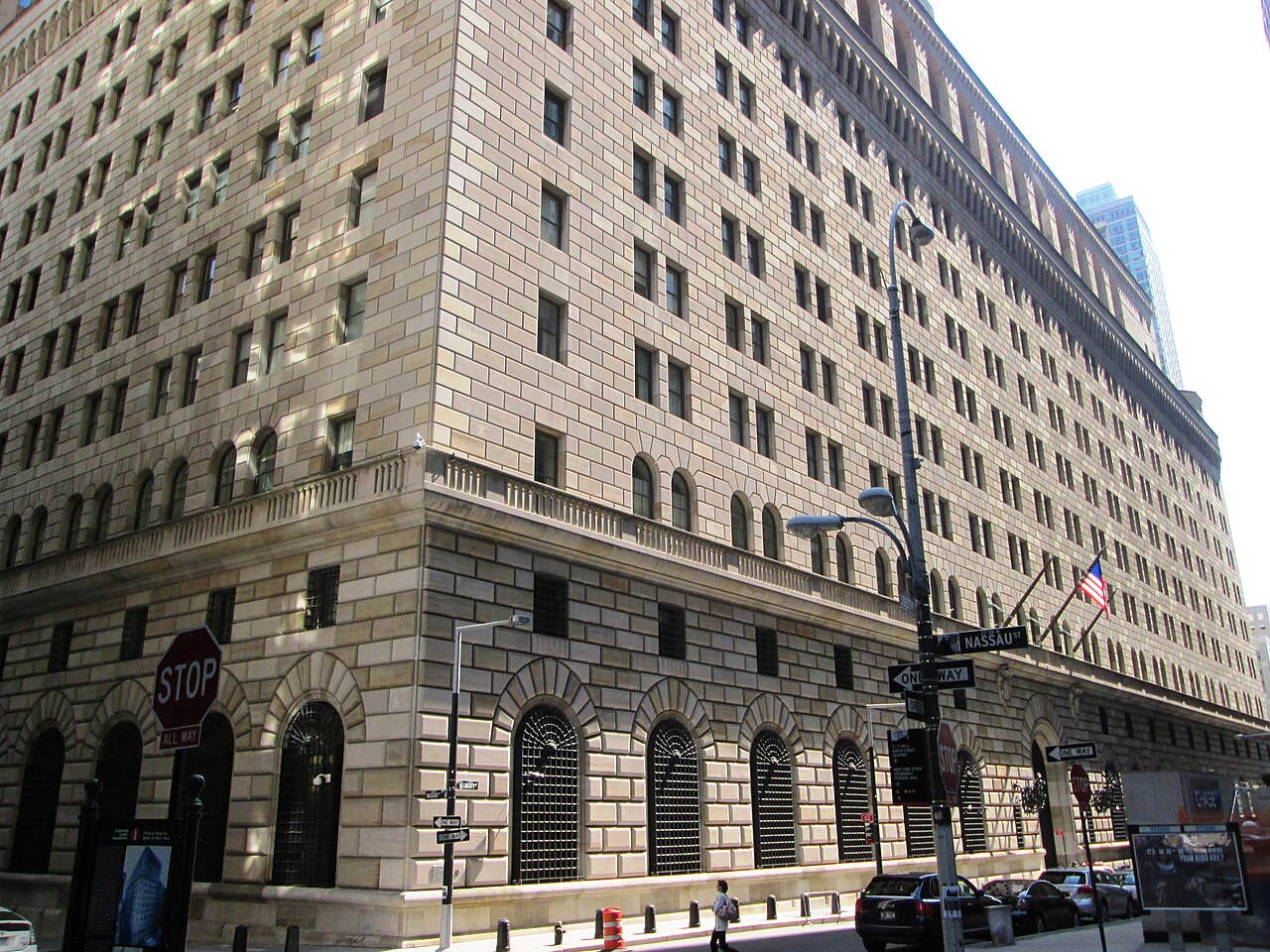
The plumbing
The program is narrower than the standing repo facility. Repo lends cash against collateral. SOMA securities lending lends securities against Treasury collateral. That distinction matters. In a repo stress, the market is short cash or balance sheet. In a settlement-fail stress, the market may be short a particular CUSIP, especially around specials, squeezes, delivery frictions, large position concentrations, or operational disruptions.
The New York Fed runs securities-lending auctions at noon ET each bank business day under normal circumstances.[2] Dealers bid a lending fee, not a repo rate. The FAQ says that fee can be read as the spread between the general collateral rate and the specials rate for the borrowed security.[2] In plain English: the more valuable a specific issue is in the lending market, the more dealers should be willing to pay to borrow it.
That is why this deserves a finance lens rather than a procedural shrug. A Treasury can be liquid in the macro sense and still be hard to deliver in the settlement sense. The market can quote tight bid-ask spreads in on-the-run notes while a specific off-the-run issue becomes special in repo. If those frictions stay local, securities lending is mundane. If they spread, fails can cascade because the buyer who did not receive a bond may have already pledged or sold it onward.[4]
Five anchors
- $30.974 billion: securities lent to dealers stood at this Wednesday level on June 17, 2026, down from $43.271 billion on May 20 but still large enough to show that the program is active plumbing, not a museum piece.[3]
- Daily noon auction: the operational cadence is every bank business day at 12:00 p.m. ET under normal circumstances, so this is not an improvised crisis tool.[2]
- 25% per issue and $5 billion per dealer: the FAQ caps a dealer at 25% of the theoretical supply available to borrow per issue and $5.0 billion total par in outstanding loans at any one time.[2]
- 102% collateral margin: eligible pledged collateral is direct obligations of the U.S. Treasury with at least two days to maturity, margined at 102% of the market value of the loaned amount.[2]
- 3.50%-3.75% policy corridor: the June 17, 2026 implementation note kept the funds target range there, with IORB at 3.65%, a 3.75% standing repo rate, and a 3.50% ON RRP offering rate.[5]
Those numbers frame the priced-versus-new gap. Priced is that the Fed has many tools around the Treasury market: administered rates, standing repo, ON RRP, reserve management purchases, and the SOMA portfolio. New is that specific-security scarcity can flare even when the policy corridor looks orderly. The securities-lending program is one of the few places where that scarcity leaves a daily operational footprint.
Why fails matter
DTCC defines Treasury fails as trades where securities are not delivered or received on time, and warns that a fail can create a cascading effect when the buyer has already pledged the same security in a subsequent transaction.[4] That is the core risk. A fail is not just a missed administrative checkbox. It can transmit through financing, collateral reuse, hedge maintenance, and dealer balance-sheet logistics.
The market has a penalty system for this reason. The Treasury Market Practices Group's fails-charge framework exists to make non-delivery costly rather than free to roll indefinitely.[6] Penalties help, but they are not the same as physical availability. If a bond is genuinely hard to source, a charge can change incentives but cannot manufacture settlement inventory. SOMA lending can, temporarily, because the Fed owns a large portfolio of Treasury securities and can lend a specific issue out of it.
This is where the annual SOMA report adds context. During 2025, the SOMA portfolio declined by $181.1 billion to $6.39 trillion, while reserve dynamics and near-zero ON RRP usage made money-market plumbing more dependent on the distribution of liquidity rather than sheer excess cushion.[7] The June 2026 implementation note then points the Desk toward Treasury bill purchases, and if needed short-coupon purchases, to maintain ample reserves.[5] My inference from those official sources is that 2026 is less about one obvious shortage and more about several thin buffers operating at once: reserve distribution, dealer capacity, repo margining, settlement discipline, and CUSIP-level availability.
The counterweight
The strongest pushback is that elevated securities lending does not automatically signal stress. It can show that the program is working as designed. A dealer borrows the bond, the settlement chain clears, the Fed earns a fee, and the market never needs to care. The daily auction format, voluntary participation, dealer caps, and 102% Treasury collateral margin all argue against treating every lending print as a crisis flare.[1][2]
There is another counterweight: fails data can be noisy. A single settlement date, auction cycle, index event, or operational issue can move the number without saying much about the Treasury market's structural health. The article's claim is therefore not "securities lending is high, sell risk assets." The claim is narrower: when lending, fails, specials, and repo pressure all move together, securities lending becomes a useful diagnostic because it points to collateral scarcity rather than a generic rate view.
Falsifier
The thesis is wrong if the next quarter shows benign plumbing: securities lent to dealers falls back toward low routine levels, DTCC Treasury fails stay contained, SOFR remains close to IORB, and there is no persistent specialness in important Treasury issues. In that branch, SOMA lending was doing exactly what a pressure valve should do, and the right investor response is to ignore it unless it wakes up again.[2][3][4][5]
The sharper warning would be the opposite pattern. If securities lending climbs while Treasury fails rise, specials become broader, and repo rates test the upper part of the corridor, then the issue is not simply "more Treasury supply." It is the market struggling to put the right security in the right place at the right time. That kind of stress can appear before duration investors agree on a macro narrative.
Watchlist
- Weekly WSDEALL prints: the next FRED updates will show whether June's securities-lending level was fading or re-accelerating.[3]
- DTCC Treasury fails dashboard: persistent multi-week elevation would matter more than any single daily spike.[4]
- New York Fed operation results: watch whether borrowing concentrates in specific issues, because CUSIP-level pressure is more informative than aggregate usage alone.[1][2]
- Fed implementation language: future notes should be read for changes in reserve-management purchases, standing repo terms, or operating emphasis around Treasury market functioning.[5]
The practical read is modest but useful. SOMA securities lending is not a trade recommendation and not a hidden easing program. It is the Fed lending scarce securities into the market so settlement can happen. In a Treasury market where issuance, clearing changes, repo risk management, and dealer balance-sheet limits all matter, that quiet valve deserves more attention than it gets.
Sources
- Federal Reserve Bank of New York, "Securities Lending" - program purpose, eligible counterparties, daily auction description, and public operation results.
- Federal Reserve Bank of New York, "FAQs: SOMA Securities Lending Program" - auction timing, bidding mechanics, dealer limits, collateral margin, and fails handling.
- Federal Reserve Bank of St. Louis FRED, "Securities Lent to Dealers: Wednesday Level (WSDEALL)" - latest weekly H.4.1 securities-lending series.
- DTCC, "Daily Total U.S. Treasury Trade Fails" - definition, data source, download availability, and settlement-fail consequences.
- Board of Governors of the Federal Reserve System, "Implementation Note issued June 17, 2026" - policy corridor, IORB, standing repo, ON RRP, and SOMA purchase directive.
- Treasury Market Practices Group, "Treasury Market Practices Group" - fails-charge and best-practice materials for Treasury, agency debt, and agency MBS markets.
- Federal Reserve Bank of New York, Annual Report on Open Market Operations during 2025 - SOMA portfolio, reserve dynamics, ON RRP decline, and balance-sheet context.
- Wikimedia Commons, "File:2013 Federal Reserve Bank of New York from west.jpg" - photograph of the New York Fed building at 33 Liberty Street by Beyond My Ken.