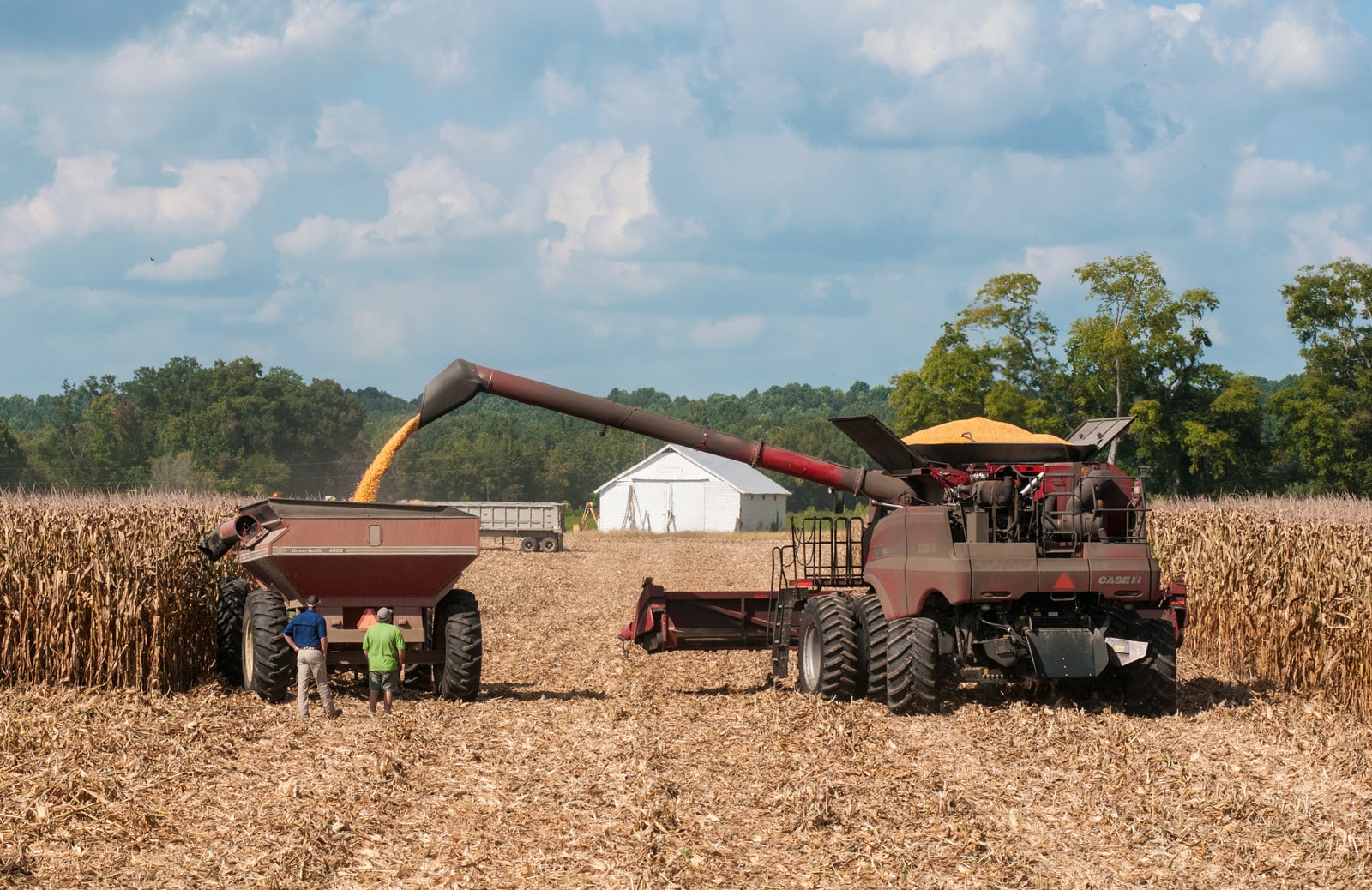
Pricing a rural bank as though its peak-season funding bill lasts all year can overstate its earnings problem. The Federal Reserve's seasonal-credit program helps bridge a recurring cash gap; the reassuring interpretation depends on whether that gap closes when customers collect their seasonal receipts.[1]
That is the distinction to carry into harvest. More borrowing can mean a bank is financing its community's productive calendar. It can also mean last season's loans never came home. The same balance-sheet headline accommodates both stories.
Program terms checked on October 12, 2026. The bank example below is hypothetical; the historical evidence is dated explicitly.
The funding squeeze has two sides
Consider a bank serving crop farmers. Before the crop is sold, customers need money for inputs and operating expenses. Some draw down savings; others draw on credit lines. Payments to suppliers outside the bank move cash away while the bank's loan book expands. After sales, receipts can replenish accounts and finance loan repayments. The timing varies with the crop, contracts and decisions about storing grain.
Agricultural concentration therefore links the bank's assets and liabilities. Its borrowers and depositors can be the same people, exposed to the same prices. Minneapolis Fed supervisors have described how weak farm margins can simultaneously raise credit needs and erode deposits.[2]
Imagine that, between the quiet season and the funding peak, the bank's outstanding loans increase by $12 million while deposits fall by $4 million. Hold equity and all other noncash assets and liabilities unchanged. The bank needs $16 million from its existing cash or new funding: the loan expansion plus the lost deposits.
These are net changes in the balance sheet, after customers have used their accounts. They are not separate assumptions that every newly created loan immediately drains cash. The arithmetic simply identifies the financing the bank must supply once those changes have occurred.
Nor is the resulting gap an entitlement to an equal Fed advance. It is the starting point for explaining the problem. The Reserve Bank determines the qualifying seasonal need and reduces it by a deductible that the institution must fund itself.[3]
A credit line built around a recurring calendar
Seasonal credit is designed for smaller depository institutions with identifiable, recurring funding swings. The published eligibility conditions include deposits below $500 million and satisfactory financial condition. The size test concerns deposits, not total assets. Farming is a common source of seasonality, alongside businesses such as tourism and construction.[3]
An eligible institution may qualify for support covering up to nine months of seasonal need in a calendar year. The Board explains the economic purpose plainly: dependable seasonal funding lets a bank carry fewer liquid assets during the rest of the year and make more funds available for local lending. Discount-window loans must be secured by collateral acceptable to the Reserve Bank.[1]
This is an allocation benefit. A bank otherwise keeping enough cash idle for its busiest period can use some of that capacity more productively. It still needs a credible repayment path and sufficient collateral. Borrowing adds a liability; it does not add bank capital or improve the customer's crop revenue.
The application process tries to establish that repayment rhythm. Minneapolis asks for historical monthly loan and deposit patterns, with adjustments for unusual deposits. A brief, exceptional inflow is not a sound baseline from which to manufacture a seasonal shortfall. The district then communicates approved monthly borrowing amounts.[4]
For the hypothetical bank, this means the explanation must survive a look at the full year. A familiar spring rise and autumn decline would support the seasonal interpretation. A steadily widening gap across successive seasons would require a different explanation, even if management kept calling it temporary.
Available funding still has a price
The seasonal rate floats with market rates and resets every two weeks, applying to outstanding seasonal loans. Institutions can draw incrementally and repay early without a penalty; they must reapply annually.[3]
The earnings benefit consequently depends on what the line replaces. It may avoid keeping excessive low-earning liquidity year-round or permit lending the bank would otherwise decline. It does not establish that Fed funding is always cheaper than deposits or other borrowing. A higher floating cost can absorb more of the income on loans whose yields adjust slowly. That is an implication of the funding structure, not a claim about today's rate spread.
There is real precedent for separating tighter liquidity from bad loans. In its December 2024 review, the Kansas City Fed reported that loan growth was outpacing deposit growth at agricultural banks and tightening liquidity, while agricultural-loan delinquencies remained low.[5] That observation does not describe current conditions or prove that the pressure was seasonal. It shows why a funding ratio alone cannot settle the credit-quality question.
The strongest objection arrives after the crop is sold
The counterweight is a weak harvest cash margin. A farmer can produce a saleable crop and still collect too little, after expenses, to clear the operating loan. The bank then carries the debt forward while the expected deposit recovery disappoints. Minneapolis supervisors explicitly recommend stress assumptions that combine carryover farm debt with declining large deposits.[2]
In that case, the facility may have funded the bank through a difficult interval, but it has not repaired the source of repayment. Adding another secured lender cannot make the crop more profitable. A calendar-based liquidity explanation becomes unconvincing when the cash never returns on the calendar.
The thesis is falsified for the example bank if its funding gap fails to shrink at the expected post-sale repayment dates, with planned loan growth accounted for, because operating debt rolls forward and deposits remain depleted. That would overturn the argument that peak borrowing exaggerates the bank's normal funding burden.
Three events make the distinction observable:
- At scheduled post-harvest loan repayments: compare actual collections and deposit balances with the bank's seasonal forecast. The relevant event is receipt of cash, which can follow the physical harvest by some time.
- At each seasonal-rate reset: recalculate the cost of outstanding advances against the income on the loans they support. Reliable access can preserve lending capacity while still compressing earnings.[3]
- Before the next annual application: compare the latest off-season funding position with earlier cycles and reassess available collateral. A recurring seasonal peak supports the original explanation; a rising off-season borrowing requirement challenges it.[1][4]
Sources
- Federal Reserve Board, “Discount Window Lending,” updated September 30, 2026 — seasonal credit's purpose, duration and collateral requirement.
- Federal Reserve Bank of Minneapolis, “Navigating Liquidity Issues Arising from Agricultural Lending,” 2018 — linked loan and deposit risks, carryover debt and stressed cash-flow assumptions.
- Federal Reserve Discount Window, “Seasonal Credit Program,” updated December 1, 2025 — eligibility, deductible, floating-rate resets, prepayment and annual reapplication.
- Federal Reserve Bank of Minneapolis, “Seasonal Lending Program and Application Form for Minneapolis (9th District)” — historical monthly data, unusual-deposit adjustments and monthly credit qualification.
- Cortney Cowley and Ty Kreitman, “Growth in farm debt eases but continues to pressure ag bank liquidity,” Federal Reserve Bank of Kansas City, December 5, 2024 — historical evidence of tighter liquidity alongside low agricultural-loan delinquency.
- USDA / Lance Cheung, “Harvest of maize in the United States,” September 20, 2013, Wikimedia Commons — Virginia corn-harvest photograph and provenance; public domain.