Pricing an export order as a bank-backed receivable can hide a working-capital bet: payment still depends on the documents. The next shipment can expose the gap in either direction—damaged goods may be paid for, while sound goods with noncompliant paperwork leave the seller waiting.[1][2]
A letter of credit earns its fee by replacing a buyer's promise with a bank's conditional undertaking. The condition is the hinge. For a manufacturer funding production before dispatch, the document presentation deserves a place in the cash forecast alongside the vessel's departure.
Sources checked on 11 October 2026. The transaction, borrowing rate and delay below are illustrative assumptions, not market quotes or a reported dispute.
The shipment behind the promise
Imagine an exporter selling machinery for $250,000, with $200,000 of production cash already spent. The buyer arranges an irrevocable documentary letter of credit, payable at sight and expressly subject to the International Chamber of Commerce's UCP 600 rules. Assume the banks remain able to pay and no legal restriction intervenes.
The credit requires a commercial invoice, an on-board bill of lading and an independent pre-shipment inspection certificate. The exporter checks that it can obtain each document in the required form before sending the machinery. That preliminary review matters: ICC guidance asks beneficiaries to verify the credit's shipping requirements, amounts and documentary conditions when it arrives.[2]
In the straightforward branch, the seller ships on time and presents complying documents. The issuing bank's payment obligation follows. The importer, meanwhile, must fund or reimburse its bank under their separate arrangements; the credit has not made the purchase free of financing needs.[1]
“At sight” still allows document examination. ICC's explanation of UCP 600 gives each relevant examining bank a maximum of five banking days following the day of presentation to determine compliance. That is neither a promise of instant cash nor a universal end-to-end settlement deadline.[4]
Branch one: damaged machinery, complying documents
Suppose the inspection was properly completed before loading, but seawater damages the machinery during the voyage. The required documents are authentic, accurate and compliant; none purports to certify the cargo's condition on arrival.
Under those assumptions, discovering the damage does not itself undo the bank's undertaking. Documentary credit practice separates the payment transaction from the underlying sale. The bank examines the stipulated evidence; it does not open the container or determine whether the machinery will run.[1][2]
The importer can therefore face a bank payment obligation while holding unusable equipment. Any recovery must follow the relevant sale, carriage or insurance arrangements. Who ultimately bears the damage depends on those arrangements, which this example deliberately leaves unspecified. A cargo claim and the credit payment can move on different timetables.
This branch assumes an ordinary damage dispute. Evidence of fraud can change the legal analysis: ICC guidance treats the fraud exception as a matter for courts, rather than a cargo-quality judgment assigned to the document examiner.[2]
The financial implication is uncomfortable but precise. A payment instrument can perform exactly as designed while the commercial transaction goes badly.
Branch two: sound machinery, a missed shipping deadline
Now keep the machinery intact but change the bill of lading: it records shipment after the credit's latest permitted shipping date. The bank identifies a genuine discrepancy and gives a valid, timely refusal notice. The buyer may be delighted with the equipment; the presentation still fails the agreed payment condition.[3]
This is more consequential than a cosmetic difference in wording. UCP 600 allows document data to differ where they do not conflict. Here, the transport date contradicts a substantive requirement. An accurate late-shipment document cannot be repaired by pretending the ship sailed earlier.[3]
Assume resolving the discrepancy delays collection by 30 days, and the exporter finances its production outlay at 10% annually. Simple interest on a 365-day basis adds approximately $1,644: production cash multiplied by the annual rate and the fraction of a year outstanding. This calculation excludes bank charges and assumes funding remains available.
The interest bill is only the visible cost. The production cash also remains unavailable for the next order. If the exporter has no spare borrowing capacity, a modest delay can force it to postpone another shipment even though this buyer ultimately pays. The scenario concerns liquidity before it concerns a permanent loss.
The buyer can help, but its agreement is not the last step
The strongest counterweight is a commercially sensible waiver. A buyer that wants the machinery may accept the late shipment. UCP 600 permits the issuing bank to seek the applicant's waiver, but the bank must also agree to accept it; seeking that waiver does not extend the examination period.[3]
ICC Opinion R820 illustrates a successful version of this process. Where the applicant waives a discrepancy and the issuing bank accepts the waiver and honours, a stated discrepancy fee may be deducted. The opinion also calls for the bank to identify the discrepancies to the presenter. Waiver can restore payment without making the original presentation compliant.[5]
The cash-delay thesis is falsified for this shipment if an accepted waiver preserves collection on the exporter's original funding timetable. A discrepancy by itself would then have overstated the liquidity problem. Conversely, the buyer's reassuring email is insufficient evidence that the bank has agreed to pay.
Three transaction events make the scenario testable:
- Before loading: compare the final credit with the shipping plan and the documents the carrier and inspector can actually issue. Resolve an impossible requirement before production cash leaves the business.[2]
- At presentation and any refusal notice: establish when each relevant bank received the documents, what discrepancy it identifies and how it will hold or return them. Keep the examination timetable separate from the anticipated cash-receipt date.[3][4]
- When the waiver decision arrives: confirm the issuing bank's acceptance, settlement timing and any stated fee, then update the cash forecast. The useful outcome is collected money in time for the next order.[5]
Sources
- International Trade Administration, Trade Finance Guide, “Letters of Credit” — payment undertaking, transaction sequence and separation from the sales contract.
- Dave Meynell, “11 Questions that will help you master documentary credits,” ICC Academy — beneficiary checks, documents versus goods and the fraud exception.
- Dan Taylor, “2007 Revision – Uniform Customs and Practice for Documentary Credits,” in The Complete UCP, ICC Digital Library — reproduced UCP 600 text, especially Articles 14–16 on examination, compliance, waiver and refusal.
- Dave Meynell, “Documentary credits: Rules, guidelines & terminology,” ICC Academy — sight payment and the banking-day examination period.
- ICC Banking Commission, Official Opinion R820 / TA795rev, 2012–2016 collection — accepted waivers, honour, discrepancy fees and notification.
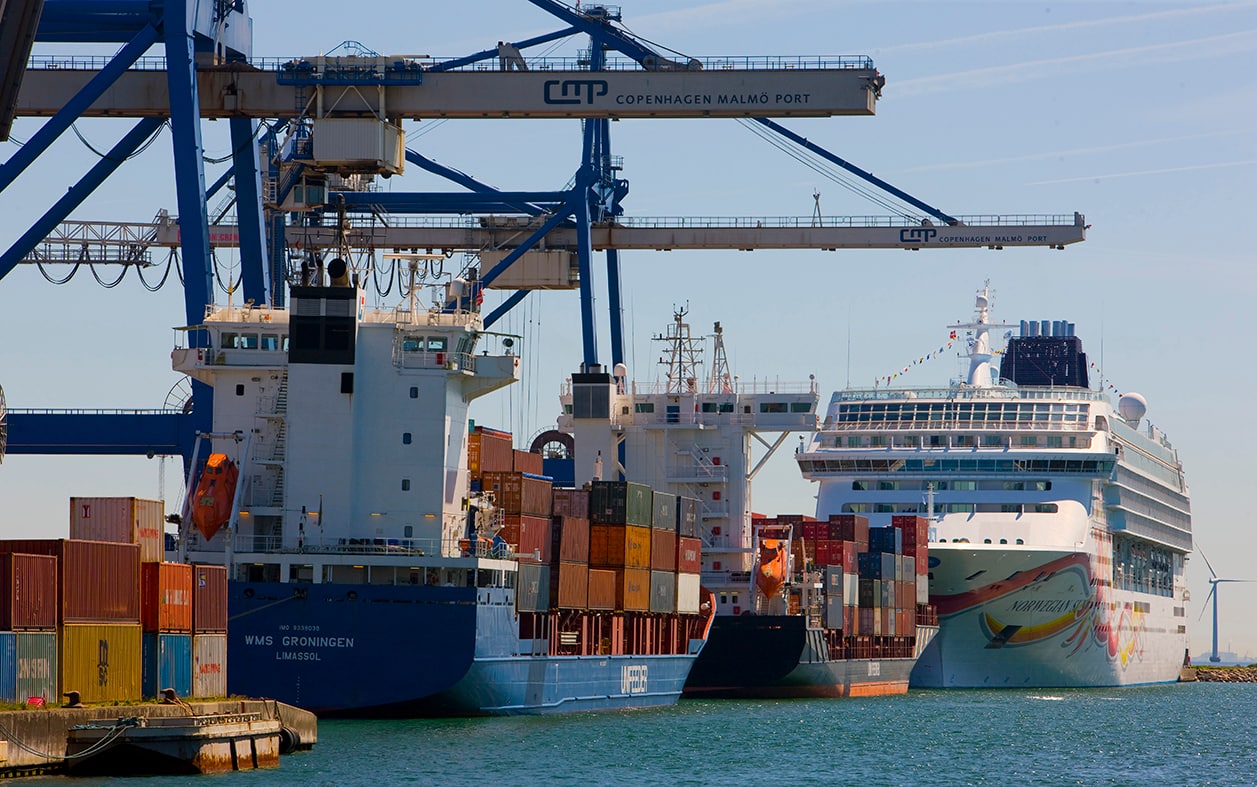
- Dennis Rosenfeldt, “Loading of container ship in Copenhagen,” 4 June 2011, Wikimedia Commons — photograph and provenance; CC BY-SA 3.0.