The cleanest mistake in aviation finance right now is to assume the scarcity trade is over just because manufacturers are talking about higher output again. The better frame is narrower. Priced is that aircraft lessors have already benefited from several years of delayed deliveries, tight secondary supply, and airline demand that kept recovering. New is that the bottleneck still has more life in it than a simple “ramp-up year” narrative suggests.[3][4][5]
As of 2026-04-04 UTC, the relevant sequence is still intact. IATA says delivery shortfalls now total at least 5,300 aircraft, the industry order backlog has surpassed 17,000 aircraft, average fleet age has risen to 15.1 years, and normalization of the mismatch between airline demand and production capacity is unlikely before 2031-2034.[4] Airbus did improve in 2025, delivering 793 commercial aircraft and guiding to around 870 in 2026, but it also ended 2025 with a commercial backlog of 8,754 aircraft and explicitly tied its ramp to ongoing engine constraints.[3] That is not a clean supply reset. It is still a rationing regime.
This is why aircraft lessors remain financially interesting even after a strong run. Airlines still need lift, replacement cycles are still being deferred, and late-delivery risk still turns near-term availability into a monetizable asset.
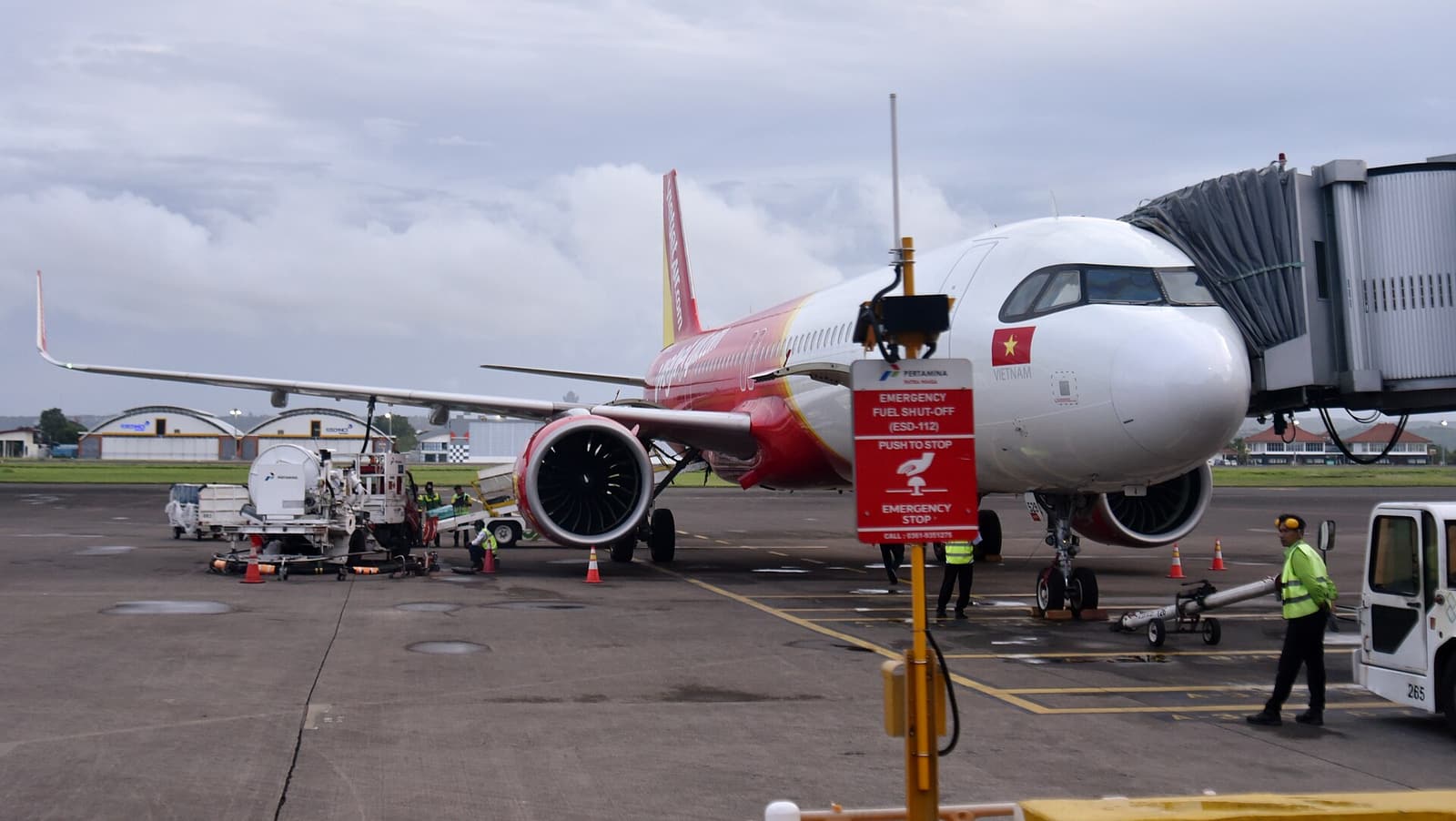
Image context: the cover uses a real apron photograph of an Airbus A321neo rather than an airline graphic because this article is about scarce physical equipment, delivery timing, and who controls deployable aircraft, not about traffic charts in isolation.[6]
Priced vs new
The priced consensus is easy to summarize. Lessors have already had their rerating: utilization stayed high, lease terms stayed long, and remarketing conditions improved as airlines competed for available aircraft.
The underappreciated part is what has not normalized yet.
Air Lease said 2025 rental revenue rose 8% to $2.7 billion, helped by growth in fleet net book value and an increase in portfolio lease yield.[2] As of December 31, 2025, it owned 490 aircraft, had 218 aircraft on order, carried a weighted-average fleet age of 4.9 years, a remaining lease term of 7.2 years, and $28.9 billion of total committed rentals across a customer base of 102 airlines.[2] AerCap's 2025 readout showed the same scarcity economics from a larger platform: it sold $3.9 billion of assets at an unlevered gain-on-sale margin of 27%, added 103 aircraft including options to its order book, and guided to $12.00-$13.00 of adjusted EPS for 2026 before any gains on sale.[1]
Those are not numbers from a market that has already slipped back into aircraft abundance.
Mechanism: why lessors still sit in the middle of the bottleneck
The causal chain is short.
First, airline demand is still running above a fully comfortable supply path. IATA's January 2026 data showed total revenue passenger kilometers up 3.8% year over year, total load factor at 82.0%, and international demand up 5.9% with an 82.5% international load factor; the same release pointed to a 5.2% increase in global seat capacity by March 2026.[5] Demand is not exploding, but it is firm enough that carriers still want additional lift, especially for efficient narrowbodies.
Second, manufacturers are recovering, not catching up. Airbus's 2026 guide of about 870 deliveries is better than 793 in 2025, but the backlog size and the company's comments about Pratt & Whitney engine shortages make clear that “higher output” is different from “enough output.”[3] IATA's broader supply-chain note is even clearer: the system is carrying a structural deficit from several years of missed deliveries, and airlines are feeling that through higher leasing costs and less scheduling flexibility.[4]
Third, lessors own the part of the market that can move fastest. They can extend existing placements, place young aircraft that airlines cannot get directly from OEMs on time, and sell assets into a market that still values immediate availability. That is why Air Lease can keep reporting rising portfolio lease yield and why AerCap can still book large gains on sale.[1][2]
The finance implication is straightforward. The scarcity premium does not need airline euphoria. It only needs deliveries to remain late enough that near-term aircraft supply stays more valuable than long-dated orderbook promises.
Six numeric anchors
- Industry supply deficit: delivery shortfalls of at least 5,300 aircraft.[4]
- Industry backlog: more than 17,000 aircraft, equal to nearly 12 years of current production capacity.[4]
- Fleet aging: average fleet age at 15.1 years, which keeps replacement demand alive.[4]
- OEM reality: Airbus delivered 793 commercial aircraft in 2025, guides to around 870 in 2026, and still carries a backlog of 8,754.[3]
- Large-lessor monetization: AerCap sold $3.9 billion of assets at a 27% unlevered gain-on-sale margin and added 103 aircraft including options to its order book in 2025.[1]
- Placement depth: Air Lease ended 2025 with 490 owned aircraft, 218 on order, and $28.9 billion of total committed rentals, with weighted-average remaining lease term at 7.2 years.[2]
Put together, these anchors describe a market where supply is improving, but usable near-term aircraft are still scarce enough for lessors to preserve bargaining power.
Scenario map
Base case: delayed normalization, scarcity premium holds
Airbus improves output and the industry keeps growing, but the production system still fails to erase the multi-year hole. In this branch, lessors keep extending aircraft at healthy terms, narrowbody placement remains firm, and sale gains cool only modestly because immediate availability still commands a premium.
Upside case: deliveries improve, but replacement demand absorbs them
This is the better bull case than “nothing changes.” Airbus hits or beats its ramp, engine availability improves, and traffic stays solid enough that additional deliveries are absorbed by fleet replacement rather than by genuine oversupply. In that branch, lease rates do not need to spike. They only need to stay disciplined while lessors turn a larger volume of placements and asset sales.
Downside case: demand softens before supply really normalizes
The dangerous branch for lessors is not a miraculous flood of aircraft. It is a demand wobble arriving first. If traffic weakens, fuel or geopolitics hit airline balance sheets, and carriers become less willing to take marginal capacity, then lessors can lose scarcity pricing from the demand side even while manufacturers are still underdelivering. That is the branch where remarketing gets slower, older aircraft values soften, and the equity story stops being about shortage and starts being about residual-risk management.
Strongest counterweight
The best counterargument is that the market already understands most of this. Airbus is ramping.[3] Airlines and investors know backlog is large.[4] Lessors have already had several years of favorable economics. If monthly deliveries improve steadily from here, the next move in the stocks may depend less on scarcity and more on capital allocation, funding cost, and how much good news is already embedded in book-value multiples.
That counterweight is real. The reason the theme still matters is that the actual delivery hole remains too large for one better production year to close.
Falsifier
This thesis becomes too bullish if the next few reporting windows show a three-part reset at the same time: OEM deliveries track convincingly toward annual targets, monthly air-traffic growth cools closer to capacity growth, and the major lessors stop showing lease-yield improvement, extension leverage, or unusually strong sale margins. If that combination appears, the scarcity premium is closing faster than this article assumes.[1][2][3][5]
Watchlist
- Airbus monthly orders-and-deliveries bulletins: the only question that matters is whether 2026 cadence begins to look like a real catch-up rather than a partial repair.[3]
- IATA monthly traffic releases: demand can remain healthy without needing boom conditions, but the lessor thesis weakens if load factors and RPK growth stop outrunning comfort.[5]
- AerCap quarterly results: watch whether gain-on-sale margins, orderbook additions, and 2026 EPS framing still imply a tight market.[1]
- Air Lease quarterly results: portfolio lease yield, placement commentary, and orderbook utilization will show whether the smaller high-quality platforms are still operating from strength.[2]
Takeaway
In 2026, aircraft lessors are still being paid for one basic advantage: they control available metal in a market that still does not have enough of it. The bullish case no longer depends on a dramatic shortage getting worse. It depends on a simpler condition: that supply repair stays slower than airline replacement and growth demand. Right now, that still looks like the live branch.
Sources
- AerCap Holdings N.V., "AerCap Holdings N.V. Reports Record Financial Results for the Full Year 2025" (February 6, 2026).
- Air Lease Corporation, "Air Lease Announces Fourth Quarter and Fiscal Year 2025 Results" (February 13, 2026).
- Airbus SE, "Airbus reports Full-Year (FY) 2025 results" (February 19, 2026).
- International Air Transport Association, "Airlines Battle Aerospace Supply Chain Challenges" (December 9, 2025).
- International Air Transport Association, "2026 Begins with 3.8% Air Passenger Demand Growth" (March 2, 2026).
- Wikimedia Commons, "File:VietJet Air Airbus A321neo VN-A529 Denpasar 2025 (01).jpg."