Lennar is no longer being judged on whether it can survive a high-rate housing market. The market already knows it can keep moving homes. With LEN.US closing at $86.54 on 2026-04-02, after first-quarter diluted EPS fell to $0.93 and to $0.88 excluding mark-to-market gains on technology investments, the stock is now being judged on a narrower question: can a volume-first, land-light builder rebuild margin before mortgage costs and buyer incentives eat the spring selling season again?[1][2] Priced is that Lennar will keep selling through affordability stress. New is whether the land-light model can do more than protect the balance sheet and actually defend the gross-margin floor while mortgage rates sit at 6.46% and January new-home supply stays heavy at 9.7 months.[2][5][7]
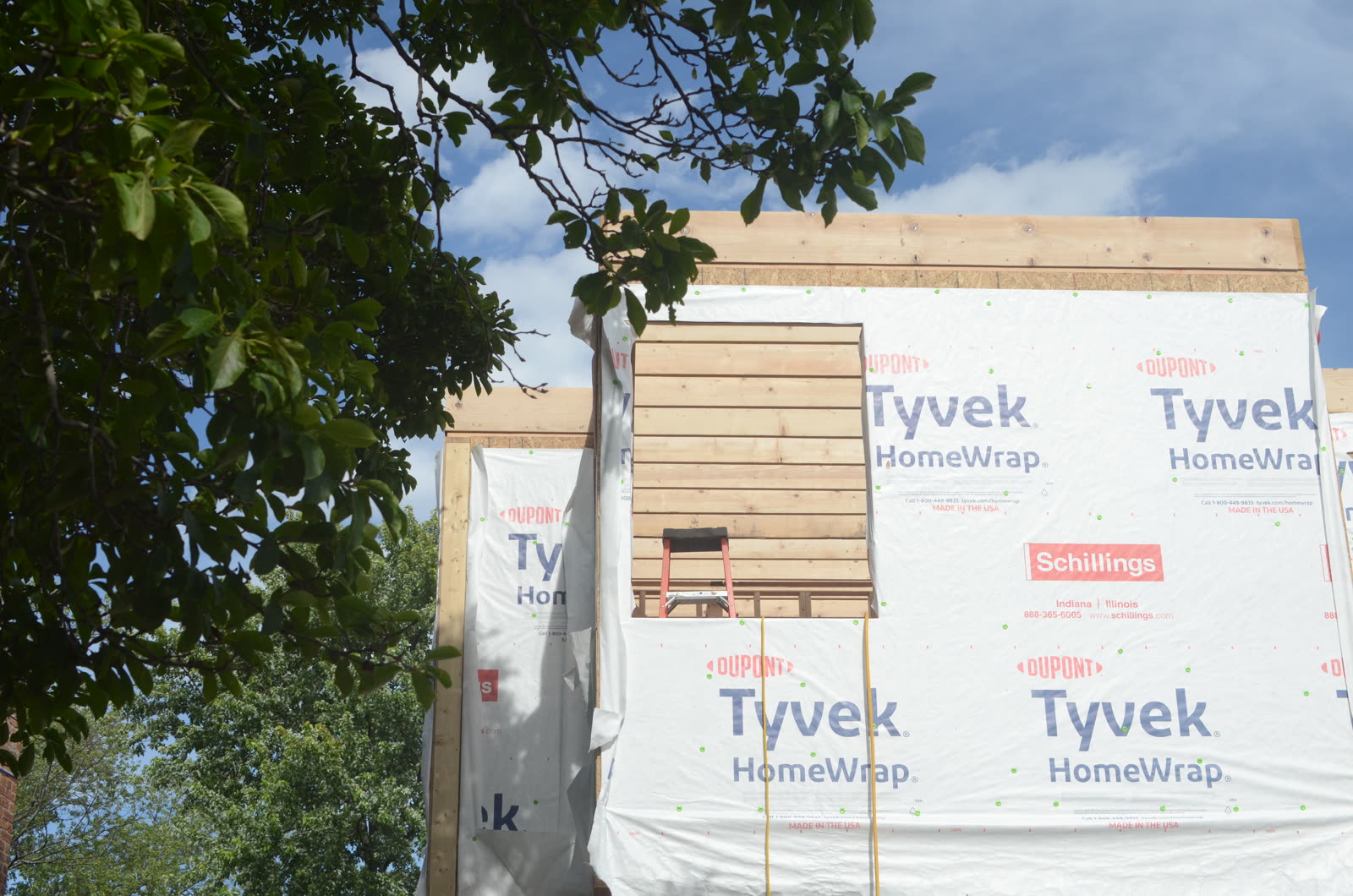
Image context: the cover uses a real house-under-construction photograph because this article is about production flow, site work, and inventory economics in an actual housing market, not about abstract housing finance symbolism.[8]
Priced vs new
The core of Lennar's operating playbook is already familiar. Management is willing to sacrifice some price and some margin in order to keep building, keep selling, and keep communities moving.[2][4] That operating choice has been consistent for years. The fresh issue after first-quarter FY2026 is whether the second half of that strategy still works as cleanly as management argues. Keeping volume alive is one achievement. Turning that volume into visibly improving margins while rates remain restrictive is the harder proof.
Why this quarter matters
1. Volume held up better than earnings
The quarter was not a collapse in demand. New orders still rose 1% year over year to 18,515 homes, and backlog ended the quarter at 15,588 homes worth $6.0 billion.[2] Deliveries fell 5% to 16,863 homes, and total revenues fell to $6.6 billion.[2] That is a weaker quarter than Lennar posted a year ago, but it is not a builder losing operating control. It is a builder still able to keep product moving, even while buyers remain rate-sensitive.
The problem is that earnings compressed much faster than activity. First-quarter homebuilding operating earnings fell to $373 million from $809 million a year earlier, and diluted EPS fell by more than half.[2] That gap matters because it shows how expensive the affordability bridge has become.
2. The affordability shock absorber is margin
Management effectively said the same thing in plain language. Lennar's average sales price fell to $374,000, reflecting roughly 14% incentives and additional base-price adjustments used to maintain volume.[2] Gross margin on home sales fell to 15.2%, while SG&A ran at 9.8% of home-sale revenues, leaving net margin on home sales at only 5.3%.[2]
This is where the macro backdrop starts to matter again. Freddie Mac's weekly survey put the average 30-year fixed-rate mortgage at 6.46% as of 2026-04-02, up from 6.38% the week before.[5] On the demand side, January new-home sales ran at a seasonally adjusted annual rate of 587,000, down 17.6% from December, while inventory for sale stood at 476,000 homes, equal to 9.7 months of supply.[7] Lennar can still use incentives as a shock absorber, but the more stubborn rates remain and the more supply lingers, the harder it becomes to say margin pressure is merely transitional.
3. Land-light only deserves the premium if turns stay fast
This is the real analytical hinge. Lennar's March 30 statement framed the land-light shift as a deliberate move since 2019 away from heavy on-balance-sheet land ownership and toward option platforms, land-bank partnerships, and just-in-time homesite delivery.[4] The proxy statement shows how far that transition has gone: by fiscal 2025 year-end, 98% of Lennar's land was controlled or optioned, an all-time high, and the company said construction cycle time had fallen 40% over the last three years.[3]
The first-quarter operating data do show that this structure is doing real work. Lennar operated across 1,678 active communities, improved cycle time to a record 122 days, and lifted inventory turn to 2.5x.[2] Those are not cosmetic statistics. They are the practical evidence that a builder can keep capital moving faster even when selling conditions are less friendly.
But the quarter also shows the boundary of the model. A land-light structure can reduce capital trapped in dirt and improve flexibility; it cannot eliminate the affordability problem. If the company must keep leaning on double-digit incentives just to maintain pace, then faster turns help, but they do not by themselves rebuild a better earnings profile.
Six numeric anchors
- $86.54 closing price for
LEN.USon 2026-04-02.[1] - First-quarter diluted EPS of $0.93, or $0.88 excluding technology-investment mark-to-market gains.[2]
- 18,515 new orders, 16,863 deliveries, and 15,588 homes in backlog worth $6.0 billion.[2]
- Average sales price of $374,000, incentives of about 14%, gross margin of 15.2%, and net margin on home sales of 5.3%.[2]
- 1,678 active communities, record cycle time of 122 days, and inventory turn of 2.5x.[2]
- By fiscal 2025 year-end, 98% of Lennar's land was controlled or optioned, while construction cycle time had been reduced 40% over three years.[3]
Strongest counterweight
The strongest pushback is that the quarter may already mark the low point of the margin story. Lennar still ended the quarter with $2.1 billion of homebuilding cash, no borrowings under its $3.1 billion revolver, and homebuilding debt to total capital of just 15.7%.[2] Management also guided second-quarter deliveries to 20,000 to 21,000 homes, gross margin to 15.5% to 16.0%, and SG&A to 8.9% to 9.1% of home-sale revenues.[2] If those numbers come through while rates merely stabilize rather than fall, then the market may decide the model is already doing exactly what it was built to do: accept near-term price pressure in exchange for faster turns, lighter land exposure, and cleaner medium-term recovery.
Falsifier
This cautious reading breaks if the next quarter shows that Lennar can hit the upper end of its 20,000 to 21,000 delivery guide, lift gross margin back toward 16%, and hold cycle time and inventory turns near current levels even while mortgage rates remain around the mid-6% range.[2][5] In that case, the land-light argument stops looking like balance-sheet defense and starts looking like genuine earnings leverage.
Watchlist
- 2026-04-08 Lennar annual meeting: management will have to explain how the just-in-time land model translates from a capital story into a margin-recovery story.[3]
- 2026-04-10 Freddie Mac PMMS release: if the 30-year mortgage rate retreats from 6.46%, the pressure to keep buying down rates and offering incentives could ease.[5]
- 2026-04-29 Census rescheduled February and March New Residential Construction release: this is the next clean read on whether starts, single-family authorizations, and completions are still keeping supply pressure alive.[6]
- 2026-05-05 Census rescheduled February and March New Residential Sales release: this is the next hard check on sales pace, inventory, and months' supply after January's weak 587,000 annualized sales rate and 9.7 months of supply.[7]
Takeaway
Lennar's first quarter did not disprove the volume-first homebuilder model. It showed its current cost. The company can still generate orders, keep communities active, and use a land-light structure to move capital faster than an older-style builder could.[2][3][4] What the market needs next is more specific. It needs evidence that faster turns and lighter land exposure can rebuild gross margin before high mortgage rates force yet another round of affordability relief. For Lennar in 2026, volume is still the operating tactic. Margin recovery is the real proof.
Sources
- Stooq, "LEN.US" daily price history (latest quoted line for 2026-04-02).
- Lennar Corporation, "Lennar Reports First Quarter 2026 Results" (March 12, 2026).
- Lennar Corporation, 2026 Proxy Statement (annual meeting notice and fiscal 2025 operating summary).
- Lennar Corporation, "Lennar: Statement on Land-Light Strategy" (March 30, 2026).
- Freddie Mac, Primary Mortgage Market Survey, weekly averages as of April 2, 2026.
- U.S. Census Bureau, Monthly New Residential Construction, January 2026 (with release reschedule notice for February and March 2026 reports).
- U.S. Census Bureau and HUD, Monthly New Residential Sales, January 2026 (with release reschedule notice for February and March 2026 reports).
- Wikimedia Commons, "File:A house under construction.jpg" by Goose Green Photography.