North American railcar lessors are easy to misread as a simple freight-volume trade. That lens is too blunt for 2026. Priced is that fleets remain full enough to look healthy on the surface. New is that the stronger earnings carry still sits one layer lower, inside renewal pricing, renewal term, and the amount of old leases that have not yet been reset to the current market.[1][3][4][6][7]
That distinction matters because utilization is a stock variable. It tells you how full the fleet is today. Lease-rate reset indicators are flow variables. They tell you what happens as expiring contracts roll into a new rate deck. In a railcar market where many fleets are still highly utilized, those resets can keep lifting lease revenue even if rail traffic itself only grows modestly.[1][4][5]
The company disclosures line up around that point. Trinity says its lease fleet utilization ended the second quarter of 2025 at 96.8%, but the more revealing number was its positive 18.3% Future Lease Rate Differential, a forward-looking measure of what expiring leases would earn if renewed at recent market rates.[1] GATX reported even tighter current conditions at year-end 2025, with Rail North America utilization at 99.0%, fourth-quarter LPI at 21.9%, average renewal term at 58 months, and renewal success at 91.4%.[4] Greenbrier's integrated model adds a different angle: its leasing fleet utilization reached 98.5% in fiscal second quarter 2026, while management simultaneously lifted leasing capital spending and said double-digit lease-fleet growth was expected for fiscal 2026.[3]
Read together, those numbers point to a narrower finance conclusion. The sector's quality is no longer best explained by asking whether railroads are busy in a generic sense. The better question is how much embedded repricing still remains in the fleet and whether management can keep converting that repricing into multi-year cash flow before new supply or weaker freight conditions compress the spread.
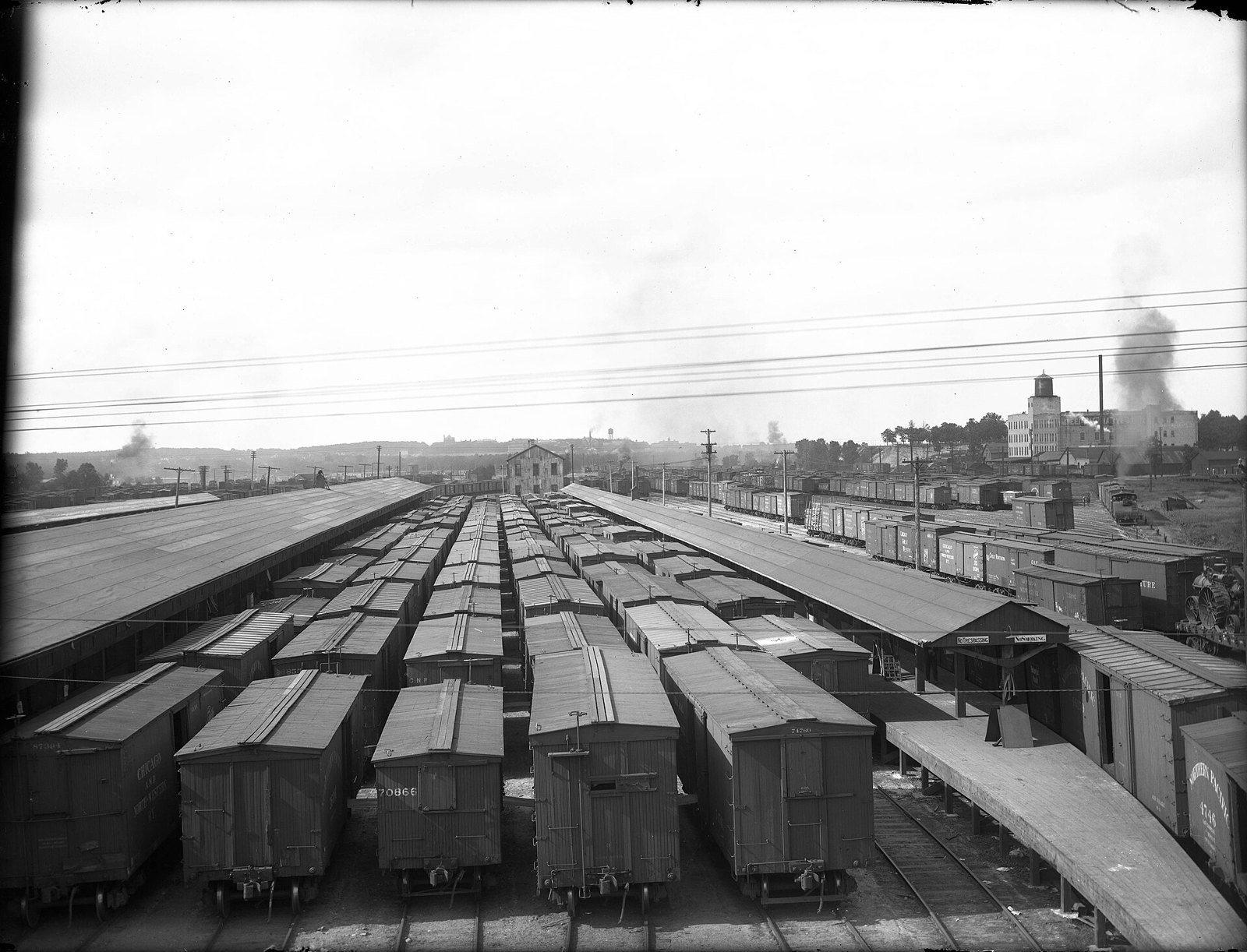
Image context: the cover uses a documentary freight-yard photograph rather than a logo board or stylized transport graphic. That is the right visual for this piece because the core finance question is not abstract demand for "transportation." It is the economics of specific cars moving through a real yard, then rolling onto the next lease at a different price.[8]
Why rate resets matter more than the headline utilization rate
Utilization still matters. A weak utilization number usually means idle cars, higher carrying cost, and less bargaining power. But once utilization is already high, the marginal change in value comes from what management can do on renewal. That is where the current setup still looks favorable.
Trinity's release is the cleanest expression of this logic because it separates occupancy from embedded repricing. In second quarter 2025, the Railcar Leasing and Services Group posted $302.4 million of revenue and $118.6 million of operating profit, with operating margin at 39.2%.[1] Those results did not come from a perfectly booming manufacturing backdrop. Trinity's rail-products deliveries were lower year over year, and total company revenue fell sharply. The leasing business still held up because higher lease rates and a positive FLRD kept doing the heavy lifting.[1] The article-worthy point is not that 96.8% utilization is good. It is that a fleet already sitting in the high nineties still has another 18.3% of forward repricing implied in the expiring lease stack.[1]
GATX gives the same lesson from a pure lessor's perspective. Its first-quarter 2025 result showed Rail North America utilization at 99.2%, LPI at 24.5%, and first-quarter investment volume around $300 million.[6] By fourth quarter 2025, utilization was still 99.0%, while LPI remained a still-strong 21.9% and renewal success rose to 91.4%.[4] That slight step-down in rate change is worth noticing, but it does not yet read like a broken market. It reads like normalization from extremely tight conditions into merely very good conditions. The company's March 2025 overview deck adds the structural context: GATX had about 21,500 railcars scheduled for renewal in 2025, following 19,400 in 2024, and the historical chart shows that management routinely changes renewal term to maximize value across the cycle.[7]
Greenbrier is not a pure read-through because manufacturing and syndication move through the same story. That is precisely why it is useful. In fiscal second quarter 2026, the company described a low-volume environment, cut manufacturing guidance, and still showed lease-fleet utilization at 98.5% with an owned fleet of 16,800 cars.[3] At the same time, it increased expected leasing and fleet-management capital spending to $300 million from $205 million, raised gross capital spending to $380 million, and said double-digit fleet growth was expected in fiscal 2026 to build recurring revenue.[3] That only makes sense if management still sees lease economics strong enough to justify putting more capital behind the fleet even while production timing slips.
Six numeric anchors
- Trinity's embedded reset signal: lease fleet utilization ended second quarter 2025 at 96.8%, while FLRD was +18.3%.[1]
- Trinity's earnings quality: the Railcar Leasing and Services Group generated $302.4 million of revenue and $118.6 million of operating profit in the quarter, a 39.2% operating margin.[1]
- GATX's starting point: first-quarter 2025 utilization was 99.2%, LPI was 24.5%, and investment volume was about $300 million.[6]
- GATX's year-end carry: fourth-quarter 2025 utilization was 99.0%, LPI was 21.9%, average renewal term was 58 months, and renewal success was 91.4%.[4]
- GATX's renewal inventory: the March 2025 company overview showed about 21,500 railcars scheduled for renewal in 2025, after 19,400 in 2024.[7]
- Greenbrier's capital choice: fiscal second quarter 2026 lease-fleet utilization was 98.5%, owned fleet was 16,800 cars, and leasing-and-fleet-management capex guidance moved to $300 million from $205 million.[3]
Those anchors all lean in the same direction. The sector's earnings power is still being shaped by lease repricing and duration more than by a one-quarter snapshot of freight activity.
Strongest counterweight
The strongest pushback is that this framework can overstate the durability of current lease spreads. Greenbrier's update already shows the first pressure point: production timing slipped, deliveries were cut, and fiscal 2026 revenue and margin guidance moved lower.[3] Trinity's second-quarter release also showed how quickly consolidated numbers can look softer once manufacturing deliveries fall.[1] If industrial activity cools or railcar supply loosens faster than expected, rate resets will not stay this rich forever.
That counterweight is real. It is why the thesis has to stay narrow. The argument is not that railcar lessors are immune to macro. The argument is that, at today's utilization levels, the next increment of value still comes more from repricing the existing fleet than from hoping for a dramatic freight-volume acceleration.
Falsifier
This view breaks if renewal-price indicators lose their power while earnings quality remains intact anyway. Concretely, if Trinity's FLRD falls toward low single digits, GATX's LPI compresses sharply, and Greenbrier keeps adding fleet without demonstrating better recurring lease economics, then the sector deserves to be read more as a spot-demand and asset-turn story than as a repricing carry story.[1][3][4][6]
Watchlist
- April 30, 2026: Trinity first-quarter 2026 results. The key check is whether FLRD stays decisively positive and whether net fleet investment continues to support lease income rather than dilute returns.[1][2]
- May 7, 2026: GATX first-quarter 2026 results. The right read points are LPI, renewal term, renewal success, and any early evidence that the Wells Fargo fleet integration changes remarketing opportunities or pricing power.[4][7]
- The AAR weekly rail-traffic releases for the weeks ending May 2 and May 9, 2026. These are not perfect predictors of lease pricing, but they are the quickest public read on whether commodity breadth is staying supportive enough for current renewal conditions to hold.[5]
Takeaway
Railcar lessors in 2026 should not be read as a generic freight beta. Utilization is already visible and therefore mostly priced. The live edge sits in the lease book: expiring contracts, renewal-rate spreads, renewal term, and the amount of repricing still left to flow through revenue. Trinity's FLRD, GATX's LPI and renewal success, and Greenbrier's willingness to keep funding fleet growth all point to the same conclusion: the sector's real carry still comes from resets, not from a dramatic new volume story.[1][3][4][6][7]
Sources
- Trinity Industries, "Trinity Industries, Inc. Announces Second Quarter 2025 Results" (July 31, 2025).
- Trinity Industries, "Trinity Industries, Inc. Announces Date for Earnings Release" (April 8, 2026).
- The Greenbrier Companies, "Greenbrier Reports Second Quarter Results" (April 7, 2026).
- GATX, "4Q25 Earnings Release Exhibit 99.1" (February 19, 2026).
- Association of American Railroads, "AAR Reports Weekly Rail Traffic for the Week Ending January 24, 2026" (January 28, 2026).
- GATX, "GATX Corporation Reports 2025 First-Quarter Results" (April 23, 2025).
- GATX, "2025 Company Overview" (March 26, 2025).
- Wikimedia Commons, "File:Railroad Tracks and Freight Trains in Midway - DPLA - 7f69058627e10e2a4cf3e4b599469d0d.jpg" — documentary freight-yard photograph.