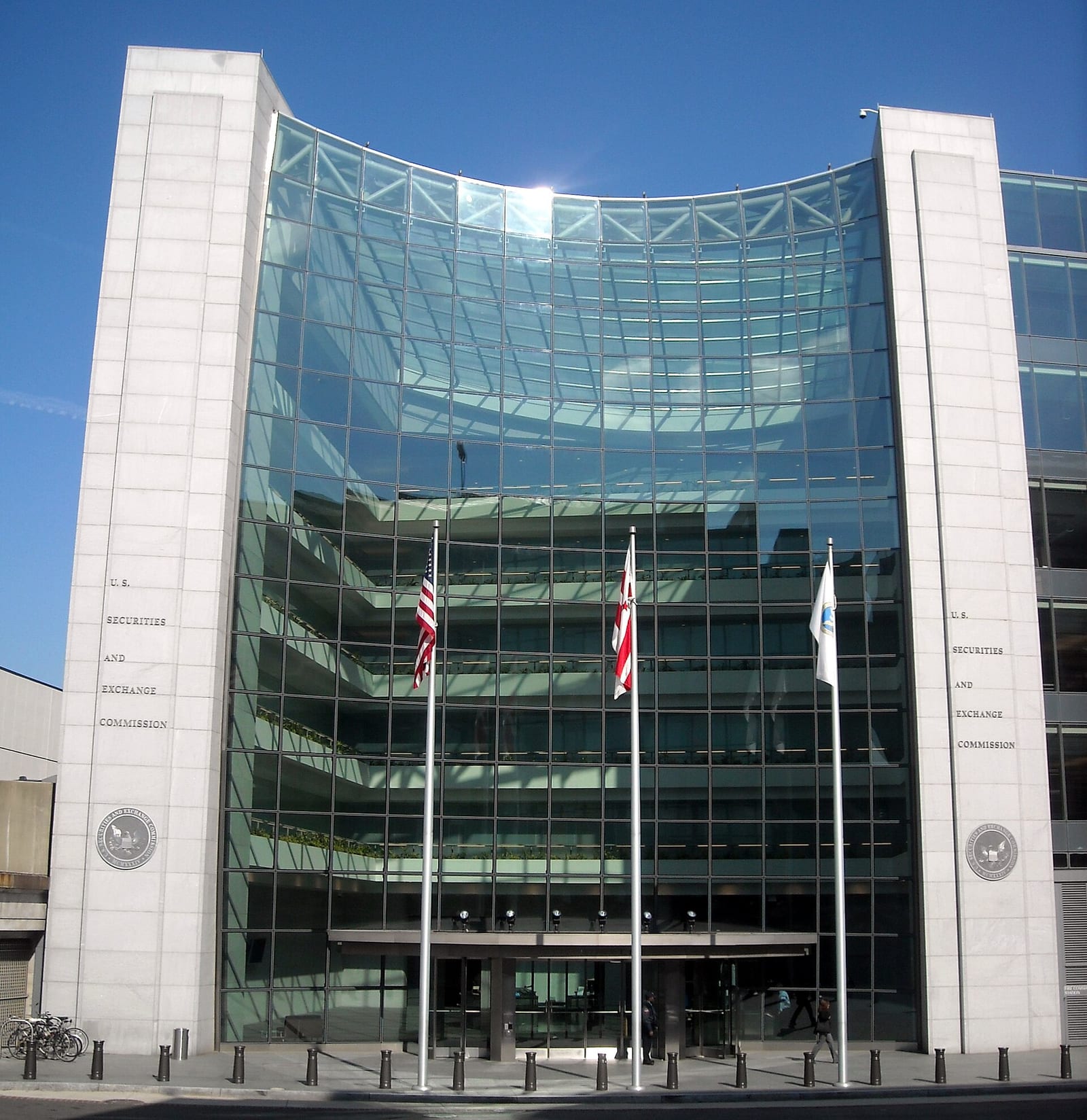
Priced: an institutional prime money market fund offers daily liquidity from a portfolio that reaches beyond government collateral into private short-term credit. New—or less obvious—is that the exit is no longer meant to be free when the crowd uses it at once. Once a fund's same-day net redemptions exceed 5% of net assets, crossing the line does not itself close the door, but affected redeemers can owe the portfolio's estimated cost of raising cash.[1][2][3]
That distinction matters more than the threshold itself. The SEC's rule does not turn the 5% line into a redemption gate. It changes who pays when short-term instruments have to be sold, or liquidity has to be rebuilt, under pressure. Separate authority still permits permanent suspension during an orderly liquidation under rule 22e-3 or a suspension authorized by SEC order; the fee trigger itself does neither.[1][2] The investment case is therefore not simply “prime yields more.” It is “prime yields more because it owns a different liquidity stack, and a stressed exit from that stack now has an explicit price.”[1][3]
A Fee, Not a Locked Door
The mandatory rule covers institutional prime and institutional tax-exempt money market funds. It does not automatically apply to government funds or retail funds. A separate discretionary-fee framework can reach non-government funds, but the mechanical trigger discussed here is narrower: a covered fund measures total net shareholder flows for the day, after its last net-asset-value calculation, and charges a fee if net redemptions exceed the threshold and estimated liquidity costs are not de minimis.[1][2]
Every share redeemed at a price computed that day is inside the charge. An investor who placed an order in the morning does not escape merely because later orders pushed the fund over the line. That same-day reach is deliberate. Under the old design, investors could watch a fund's weekly-liquid-asset ratio approach a public threshold and try to leave before a possible fee or gate. Under the current design, early and late redeemers on the trigger day face the same fee when one is due; crossing the trigger does not itself suspend those redemptions.[1]
This is anti-dilution plumbing. Without a fee, the first investors out can receive cash at a price that does not fully reflect bid-ask spreads, market impact, taxes, and transaction charges caused by their collective exit. The fund then leaves those costs—and a less liquid residual portfolio—with shareholders who stayed. The fee attempts to move that bill back to the redeeming cohort.[1][3]
How a Day's Outflow Becomes a Charge
The causal chain is short.
First, the fund calculates daily net redemptions, not gross withdrawals. Subscriptions arriving that day offset redemptions for purposes of the trigger. A board may choose a lower trigger if the portfolio or market conditions justify it.[1][2]
Second, once the threshold is crossed, the fund estimates what it would cost to sell a pro rata “vertical slice” of the portfolio sufficient to meet the net outflow. The estimate must be supported by data and include spreads, other transaction costs, and market impact. The fund need not literally sell every instrument in that proportion; the hypothetical slice is a method for pricing the liquidity removed by redeemers rather than rewarding whichever assets happened to be sold first.[1]
Third, the fund applies that estimate to all shares redeemed at a price computed on the trigger day. If the estimate is below the rule's de minimis line, no mandatory fee is required. If the fund cannot make a good-faith, data-supported estimate, a default fee applies instead.[1][2]
The result resembles neither a bank withdrawal penalty nor a floating-NAV loss shared by every holder. It is a conditional charge on that day's exiting investors. The remaining shareholders keep the money collected because they are the group otherwise exposed to dilution.
Five Numbers That Constrain the Read
- 5%: this is the rule's standard daily net-redemption trigger for a covered fund. A board can set a smaller trigger, and crossing either line still produces no mandatory charge when the estimated cost is de minimis.[1][2]
- 0.01%: if the estimated fee is below one basis point of shares redeemed, the cost is treated as de minimis and the mandatory fee need not be applied.[1][2]
- 1%: this is the default charge when a fund cannot estimate the vertical-slice cost in good faith with supporting data. It is a fallback, not the normal fee and not a forecast of likely loss.[1][2]
- 25% daily / 50% weekly: these are the reform package's higher minimum liquid-asset buffers where the respective tests apply. The buffers supply cash capacity; the fee decides who bears the marginal cost after a large exit.[1]
- $259.74 billion: as of July 15, 2026, ICI reported $247.98 billion in institutional prime funds and $11.76 billion in institutional tax-exempt funds. Those categories approximate the pool directly exposed to the mandatory mechanism, only about 3.3% of the industry's $7.893 trillion total.[4]
The fifth anchor is the useful scale correction. Mandatory fees do not sit beneath every dollar described as a money market fund. Most industry assets are in government or retail categories. A treasury team has to read the exact share class and prospectus, not infer the exit rule from the words “money market” on a cash dashboard.
The Strongest Counterweight: A Fee Does Not Create a Bid
The bullish reading is that the rule removes the first-mover advantage: if redeemers pay the liquidity cost they cause, staying no longer means subsidizing the fastest exit. A 2026 FEDS staff working paper uses the same economic frame—liquidity is underpriced when investors can redeem without paying the costs imposed on the vehicle—and identifies institutional prime funds as an exception because their fee scales with stressed outflows.[3]
But pricing liquidity is not the same as producing it. A fee cannot make a frozen commercial-paper market trade, persuade a dealer to warehouse certificates of deposit, or guarantee that a model can estimate market impact when quotes disappear. The SEC itself acknowledges that the 1% default can overshoot or undershoot actual cost because it does not vary with the portfolio, the size of the outflow, or current market conditions.[1]
There is also a behavioral risk. Moving from a weekly asset cliff to same-day flows makes it harder to outrun other investors within the day, but a sophisticated holder can still leave the day before an expected shock. If clients believe a fee is likely tomorrow, the threshold can shift pre-emption earlier rather than abolish it. Higher liquid-asset buffers and the removal of gates are the counterweights to that concern; the fee alone is not a complete run-proofing system.[1]
Falsifier
This reading is wrong if the next funding shock shows repeated fee days across covered funds while redemptions accelerate rather than settle. The clearest failure pattern would be several institutional prime funds crossing the trigger on consecutive days, relying on the default charge because tradable costs cannot be estimated, and continuing to lose assets to government funds before each day's cutoff. That would mean the rule transferred some losses but did not materially weaken the incentive to run.
The confirming pattern is less dramatic: an isolated trigger day, a data-supported fee near the actual cost of liquidation, stable daily liquid assets afterward, and flows that normalize rather than cascade. Success is not “no investor pays.” Success is that the investor demanding stressed liquidity pays enough to leave the remaining portfolio whole.
Dated Watchlist
- July 23 — ICI's next weekly asset release: watch institutional prime and institutional tax-exempt assets against the July 15 baselines. The category data are a flow alarm, not proof that any individual fund crossed a daily trigger.[4]
- July 28–29 — the FOMC meeting: a surprise in the policy path can move the relative yield of government and prime funds and test short-term credit spreads. The signal is a widening prime-government yield advantage arriving alongside prime outflows, not the rate decision by itself.[4][6]
- July 31 through August 7 — month-end and the Form N-MFP filing window: funds report July's business-day flows and any mandatory or discretionary fee, including its date, type, and amount. The fifth-business-day deadline makes these filings the best public audit of whether a large category move actually became a fund-level fee event.[1][5]
Prime money funds remain daily-liquidity instruments in ordinary operation. The better mental model is that crossing the 5% line changes the price of the day's exit rather than itself suspending availability; separate liquidation and SEC-order powers remain outside that mechanism.[1][2] For cash managers, the incremental yield should therefore be compared with a state-dependent exit cost—not with an imaginary guarantee that every dollar of “cash” behaves alike.
Sources
- U.S. Securities and Exchange Commission, Money Market Fund Reforms; Form PF Reporting Requirements for Large Liquidity Fund Advisers (final rule, July 2023) — scope, same-day trigger, vertical-slice calculation, liquidity buffers, reporting, and the Commission's benefit-and-risk analysis.
- Electronic Code of Federal Regulations, “17 CFR § 270.2a-7 — Money market funds” — current codified text for mandatory liquidity-fee triggers, calculation, default, and de minimis exception.
- Kenechukwu Anadu, Patrick McCabe, JP Perez-Sangimino, and Nathan Swem, A Framework for Understanding the Vulnerabilities of New Money-Like Products. Federal Reserve Finance and Economics Discussion Series 2026-002 — liquidity-transformation mechanism and the role of dynamic fees in institutional prime funds.
- Investment Company Institute, “Money Market Fund Assets” (July 16, 2026 release) — July 15 assets and weekly changes by government, prime, tax-exempt, retail, and institutional category.
- U.S. Securities and Exchange Commission, “Form N-MFP Data Sets” — monthly public filings, fifth-business-day deadline, and downloadable fund-level reporting data.
- Board of Governors of the Federal Reserve System, “Meeting calendars and information” — July 28–29, 2026 FOMC meeting schedule.
- AgnosticPreachersKid, “U.S. Securities and Exchange Commission headquarters” — Wikimedia Commons source page for the real 2009 photograph used as the lead image.