PBMs are already priced as scaled health-care toll booths. The new question is narrower: whether specialty-pharmacy spread and purchasing economics can keep carrying earnings after clients, regulators, and Medicare Part D redesign have all learned where the margin lives.[1][2][3][4][5]
The investable story is not that pharmacy benefit managers are disappearing. They sit too deeply inside formularies, claims adjudication, retail networks, home delivery, specialty dispensing, rebate negotiation, prior authorization, and employer-plan design for that. The story is that the cleanest growth line is no longer the same as the cleanest profit line. Drug mix, specialty volume, and brand inflation can lift revenue while operating income grows slowly, falls, or migrates from pharmacy-benefit services into specialty and care services.[2][3]
Six Anchors
- $7.3 billion: FTC staff estimated Big Three PBM-affiliated pharmacies generated more than this amount of dispensing revenue above estimated acquisition cost for analyzed specialty generic drugs from 2017 to 2022.[1]
- 51 drugs and 882 NDCs: the FTC's second interim report covered that specialty-generic sample, not just one anecdotal product.[1]
- $190.4 billion: CVS Health Services 2025 revenue, up 9.7%, while adjusted operating income fell 1.3% to $7.15 billion.[3]
- 2.5%: Evernorth's first-quarter 2026 pre-tax margin, with Pharmacy Benefit Services income down 28% year over year and Specialty and Care Services income up 20%.[2]
- More than $150.5 billion: UnitedHealth's 2026 revenue outlook for Optum Rx, with operating earnings above $6.25 billion and adjusted scripts above 1.52 billion.[4]
- $2,100: the 2026 Medicare Part D out-of-pocket threshold, part of a redesigned benefit that changes who absorbs high-cost-drug liability.[5]
The Mechanism
A PBM earns power from aggregation. It brings millions of covered lives to manufacturers, pharmacies, and plan sponsors, then turns that position into formulary placement, network terms, claims fees, administrative fees, purchasing economics, rebates, and specialty-pharmacy capture. The best version is a scale flywheel: more claims create better data, better data supports tighter benefit design, tighter design supports stronger manufacturer and pharmacy negotiations, and stronger negotiations help win the next employer, union, government, or health-plan client.
That scale still exists. Cigna reported 121.0 million pharmacy customers at March 31, 2026, and Evernorth generated $58.4 billion of first-quarter adjusted revenue.[2] UnitedHealth guided Optum Rx to more than 1.52 billion adjusted scripts in 2026.[4] CVS processed roughly 1.90 billion pharmacy claims on a 30-day equivalent basis in Health Services during 2025.[3] This is not a niche intermediary fighting for relevance. It is a large operating layer inside U.S. drug spending.
The problem is that scale does not answer the margin question by itself. CVS Health Services revenue rose 9.7% in 2025, but adjusted operating income declined 1.3% as client price improvements and health-care-delivery pressure offset drug mix and purchasing economics.[3] Cigna's first-quarter 2026 Evernorth revenue rose 9%, but the Pharmacy Benefit Services subsegment saw pre-tax income fall 28%, while Specialty and Care Services carried the profit growth.[2] UnitedHealth still expects Optum Rx to produce more than $6.25 billion of 2026 operating earnings, but on more than $150.5 billion of revenue that points to a roughly 4.2% margin.[4]
In other words, PBM revenue can be enormous and still deserve a modest multiple if the incremental dollar is increasingly contested.
Why Specialty Is The Margin Tell
Specialty pharmacy is where the PBM debate stops being theoretical. The FTC's January 2025 report focused on specialty generics used for serious conditions and found large markups at affiliated pharmacies, plus a separate estimated $1.4 billion of spread-pricing income on the analyzed drugs over the study period.[1] It also said the top 10 specialty generic drugs generated $6.2 billion of dispensing revenue above estimated acquisition cost, or 85% of the analyzed total.[1]
Investors should read that in two directions. First, it explains why vertically integrated PBMs want specialty capture. These are complex drugs with high prices, concentrated fulfillment, clinical programs, and more room for service claims than a generic maintenance prescription at a neighborhood counter. A specialty pharmacy can be defended as adherence infrastructure, patient navigation, cold-chain handling, benefit coordination, and clinical support. Those functions are real.
Second, the same numbers make the profit pool visible. Once the margin is named, it becomes a target for plan sponsors, regulators, independent pharmacies, state attorneys general, and federal agencies. The FTC report is not an earnings model, and companies dispute parts of the regulatory framing. But as a finance signal, it matters because it turns PBM opacity into a measurable debate about acquisition cost, reimbursement, steering, affiliated pharmacies, and spread.
That is why Cigna's first-quarter split is so useful. Pharmacy Benefit Services revenue rose 11%, but pre-tax income fell 28%, while Specialty and Care Services revenue rose 6% and pre-tax income rose 20%.[2] The company attributed the specialty income gain partly to organic growth and generic and biosimilar adoption that lowers costs for clients and patients.[2] That is the bull case in cleaner language: specialty scale can produce savings that are shareable, defensible, and less dependent on controversial spread.
The bear case is that the industry is being pushed from opaque spread toward explicit service economics. That may still be profitable, but it is less likely to surprise on margin.
The Client Pricing Squeeze
The most important counterparty is not the regulator. It is the buyer.
Large employers and health plans have more consultants, more claims data, and more pressure from employees who see out-of-pocket drug costs directly. That makes contract renewals harder. CVS explicitly pointed to continued pharmacy client price improvements as a drag on 2025 Health Services income.[3] Cigna cited lower contributions from large client relationships in its first-quarter Pharmacy Benefit Services profit decline.[2] Those are finance phrases for the same idea: scale customers are demanding a bigger share of the economics.
This is the core "priced vs new" gap. Priced is that PBMs still process huge volume and sit inside difficult-to-replace systems. New is that sophisticated buyers are treating the PBM contract like a procurement exercise, not a black box. They can ask for pass-through rebates, tighter audit rights, transparent administrative fees, spread-pricing limits, biosimilar conversion targets, and specialty-pharmacy performance metrics.
The result is not necessarily lower revenue. In fact, revenue may keep growing because brand inflation and specialty mix inflate the gross dollars running through the system. The result is pressure on the take rate. A PBM can show a bigger top line and a weaker profit conversion at the same time.
Part D Redesign Adds Another Moving Part
Medicare Part D is not the whole PBM market, but it changes the operating backdrop. CMS says the 2026 Part D design includes an updated out-of-pocket threshold of $2,100, negotiated prices for the first selected drugs under the Medicare Drug Price Negotiation Program, and continuing implementation of the redesigned liability structure.[5] That matters because high-cost drugs do not just affect patients; they decide how plans, manufacturers, Medicare, and intermediaries share risk.
For PBM parents, the redesign creates both opportunity and friction. On one side, plans need sophisticated formulary management, pharmacy networks, specialty coordination, and actuarial support when liability moves around. That favors scale. On the other side, a lower and clearer patient out-of-pocket ceiling reduces the old fog around who pays what, and negotiated prices on selected drugs can compress parts of the old gross-to-net machinery.[5]
The right finance read is conditional. Part D redesign does not kill PBM economics. It makes the economic contract more explicit. The more explicit the contract, the more earnings quality depends on services that buyers can verify.
Counterweight
The strongest bullish counterweight is operational entrenchment. PBMs are not easy to rip out. A large employer that changes PBMs risks disruption across formulary design, member communications, pharmacy networks, specialty authorizations, accumulated deductibles, clinical programs, mail order, data feeds, and rebate reconciliation. That switching friction has value.
There is also a legitimate savings argument. The industry can point to biosimilar adoption, generic substitution, utilization management, prior authorization, specialty adherence programs, and negotiated discounts as ways PBMs lower total drug costs relative to unmanaged list-price exposure. Cigna's specialty commentary around generic and biosimilar adoption is a cleaner version of this defense because it ties margin to cost reduction rather than to opacity.[2]
But entrenchment is not the same as upside. A utility can be indispensable and still face regulated returns. The more PBM margins are understood, audited, and rebid, the more the market should value them like durable but contested infrastructure rather than like a hidden compounding engine.
Falsifier
The thesis breaks if specialty and biosimilar scale proves able to expand profit while client pricing pressure fades. The concrete version: Evernorth's Pharmacy Benefit Services income stops falling while Specialty and Care Services keeps compounding, CVS Health Services returns to operating-income growth without relying only on drug inflation, and Optum Rx converts more than 1.52 billion adjusted scripts into a rising margin rather than only a larger revenue base.[2][3][4]
Under that branch, the market would be too skeptical. PBMs would have shifted from opaque spread to transparent, service-led savings without losing the economics.
Watchlist
- Cigna's next Evernorth split: Pharmacy Benefit Services margin versus Specialty and Care Services growth will show whether the profit pool is migrating or simply compressing.[2]
- CVS Health Services income: revenue growth without operating-income recovery would confirm that client price improvements are still taking the spread.[3]
- Optum Rx 2026 guide conversion: the key line is not only revenue above $150.5 billion, but whether operating earnings above $6.25 billion imply margin expansion as scripts grow.[4]
- FTC and Part D follow-through: specialty-generic scrutiny and the 2026 Medicare drug-benefit mechanics should be tracked as margin-visibility events, not just policy noise.[1][5]
PBMs still have the rails. What is less clear is whether they still own the surprise. In 2026, the better trade is not "drug spending goes up, PBMs win." It is whether specialty scale, biosimilars, and claims infrastructure can produce margins that survive once the spread is visible.[1][2][3][4][5]
Sources
- Federal Trade Commission, Specialty Generic Drugs: A Growing Profit Center for Vertically Integrated Pharmacy Benefit Managers (January 2025) - specialty-generic markup findings, sample scope, dispensing revenue above NADAC, spread-pricing estimate, and Big Three PBM context.
- The Cigna Group, "The Cigna Group Reports Strong First Quarter 2026 Results, Raises 2026 Outlook" (April 30, 2026) - Evernorth revenue, Pharmacy Benefit Services and Specialty and Care Services income, margins, pharmacy-customer count, and 2026 outlook.
- CVS Health, "CVS Health Corporation Reports Fourth Quarter and Full-Year 2025 Results" (February 12, 2026) - Health Services revenue, adjusted operating income, pharmacy claims processed, client pricing pressure, and retail pharmacy segment context.
- UnitedHealth Group, "UnitedHealth Group Reports 2025 Results and Issues 2026 Outlook" (2026) - Optum Rx 2026 revenue, operating earnings, margin, and adjusted-script outlook.
- CMS, "2026 Medicare Advantage and Part D Rate Announcement" - Part D redesign references, updated out-of-pocket threshold, selected-drug negotiated prices, and 2026 policy context.
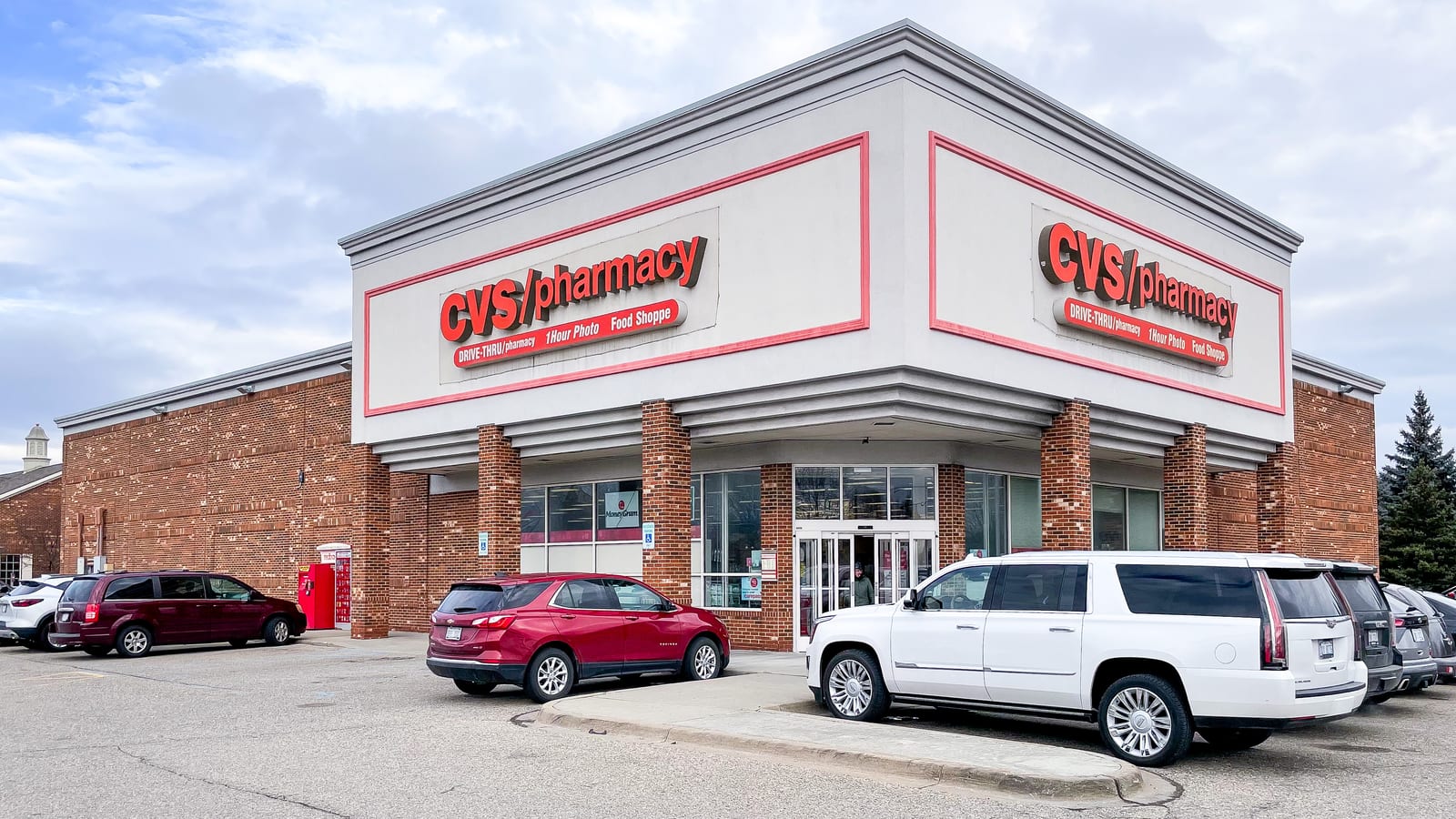
- Wikimedia Commons, "File:CVS Pharmacy - Storefront (50836368758).jpg" - ajay_suresh photograph of a CVS Pharmacy storefront, December 24, 2020.