As of 2026-03-29 UTC, Micron's FY2026 Q2 result leaves only one easy debate behind: HBM scarcity is already real in reported numbers. The harder debate is whether Micron can keep record margins high enough, for long enough, to pay for a capex plan that went from about $20 billion to above $25 billion in one quarter and is set to step higher again in FY2027.[1][2][3]
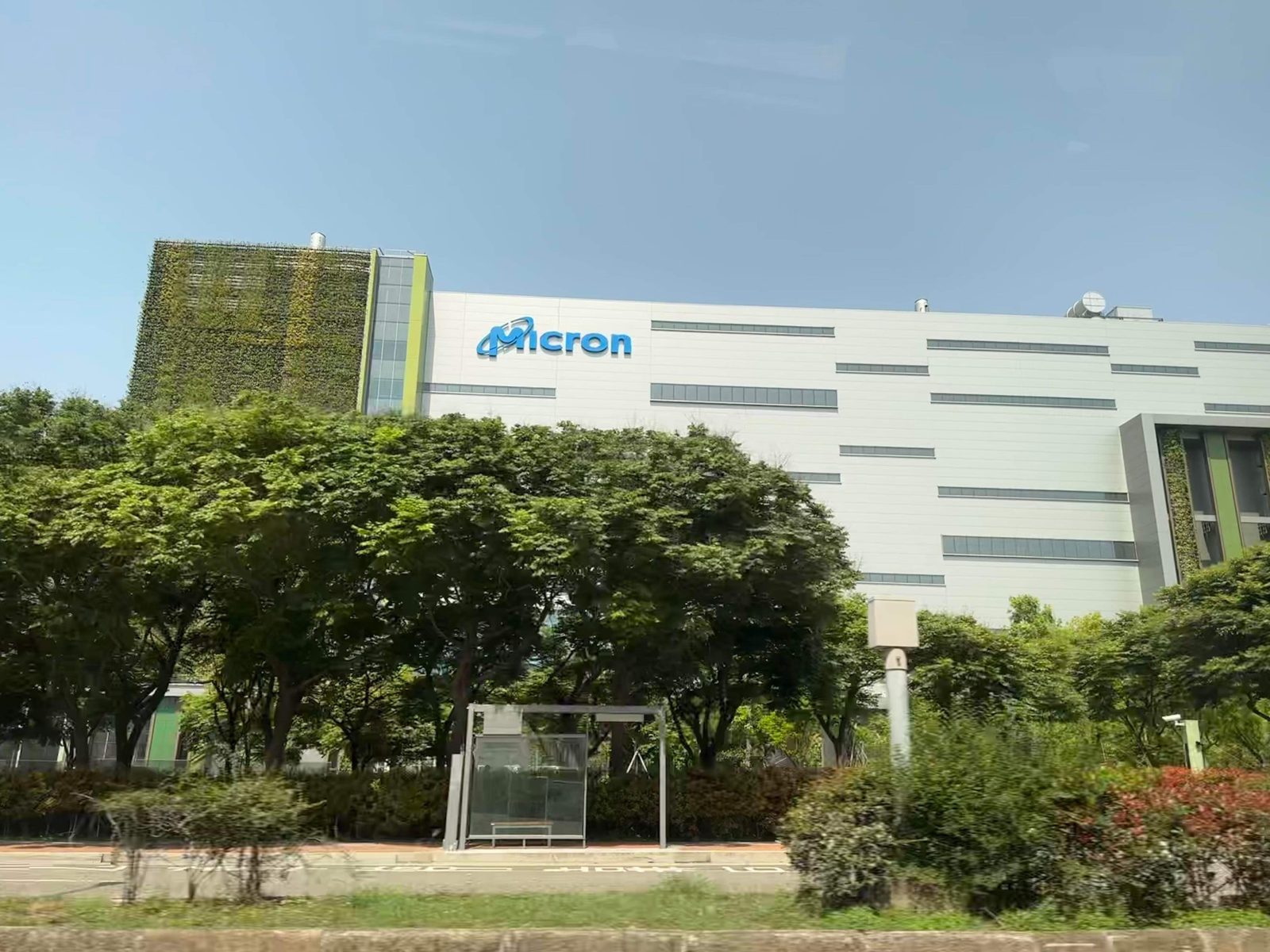
The market no longer needs proof that AI memory demand exists. Micron already entered FY2026 saying its calendar-2026 HBM supply was sold out and that tight supply-demand conditions should persist beyond calendar 2026.[2][3] Q2 then converted that narrative into a financial statement: $23.86 billion of revenue, 74.9% non-GAAP gross margin, $11.90 billion of operating cash flow, and $6.9 billion of adjusted free cash flow, with Q3 guided to $33.5 billion of revenue and roughly 81% gross margin.[1][2] The cover photograph of Micron's Taichung fab is a useful reminder that this story now runs through physical capacity as much as through pricing.[6]
Priced vs new
Priced: Micron is no longer being valued as a generic memory-cycle rebound. The numbers already show an AI-era supply squeeze with exceptional pricing power, especially in DRAM and HBM.[1][2][3]
New: the next valuation test is duration. Investors now have to decide whether today's margin window can stay wide enough to absorb a much heavier buildout: fiscal-2026 capex above $25 billion, about $7 billion in Q3 alone, and construction-related capex set to rise by more than $10 billion year over year in FY2027.[2][3]
Mechanism: why this quarter changed the argument
1. The financial base is already doing the work
Micron's Q2 did not depend on one narrow product line rescuing the quarter. DRAM revenue reached $18.768 billion, or 79% of total revenue, up 74% sequentially; NAND added $4.997 billion, or 21%, up 82% sequentially.[2] DRAM ASPs rose in the mid-60s percentage range quarter over quarter, while NAND ASPs rose in the high-70s percentage range.[2] Those are not early-cycle stabilization numbers. They are scarcity numbers.
The business-unit mix makes the same point. Cloud Memory revenue hit $7.749 billion, and Core Data Center reached $5.687 billion.[2] Together those two lines made up more than half of company revenue in the quarter, which tells you the AI-data-center channel is already dictating the earnings shape rather than sitting in an optional upside bucket.[2]
2. The margin step was so large that it changed what counts as risk
Micron's non-GAAP gross margin moved from 56.8% in FY2026 Q1 to 74.9% in Q2, with Q3 guided to approximately 81%.[2][3] Revenue went from $13.643 billion in Q1 to $23.860 billion in Q2, and management is guiding another step up to $33.5 billion ± $750 million in Q3.[2][3] Once margins move that far, the question is no longer whether pricing is improving. The question becomes how much of that improvement is structural, how much is simply the current point in a tight-supply window, and how fast new cleanroom space eventually leans against it.
3. Capex has become the real boundary condition
This is the part the bulls cannot wave away with one more HBM headline. In December, Micron raised its FY2026 capex plan to approximately $20 billion, mainly to support HBM and 1-gamma DRAM supply.[3] By March, that figure had already moved to above $25 billion.[2] Management said the increase is driven mostly by cleanroom-facility spending, with Tongluo and U.S. fab construction doing most of the work, and then made the more important disclosure: FY2027 capex will step up meaningfully again, with construction-related spend increasing by over $10 billion year over year.[2]
That is why the debate shifted. If Micron were only riding a short squeeze in memory pricing, the rational response would be to harvest the margin windfall. Instead, Micron is spending like management believes the supply shortage will persist through and beyond calendar 2026, and that AI memory remains capacity-constrained even after the current cycle's record quarter.[2][3]
4. Roadmap execution is reducing the future-product discount
One reason investors can tolerate this spending is that Micron is no longer asking them to underwrite only a promise. Management says HBM4 volume shipments for NVIDIA Vera Rubin began in the first quarter of calendar 2026, with HBM4E volume expected in calendar 2027.[2][5] The Q1 presentation had already argued that calendar-2026 HBM supply was sold out and that the HBM market could reach $100 billion by 2028, two years earlier than Micron's prior view.[3] Put differently: the product roadmap is now close enough to revenue that the company can spend aggressively without sounding purely speculative.
Six numeric anchors
- Q2 revenue: $23.860 billion, up 75% quarter over quarter and 196% year over year.[1][2]
- Q2 non-GAAP gross margin / Q3 guide: 74.9% in Q2, approximately 81% guided for Q3.[2]
- Q2 technology mix: DRAM $18.768 billion (79% of revenue); NAND $4.997 billion (21%).[2]
- Q2 cash engine: $11.903 billion of operating cash flow, $5.004 billion of net capex, and $6.9 billion of adjusted free cash flow.[1][2]
- Liquidity: $16.653 billion of cash, marketable investments, and restricted cash at quarter end; $20.2 billion of total liquidity.[2][4]
- Capex reset: FY2026 capex raised from approximately $20 billion in Q1 to above $25 billion in Q2, with FY2027 construction-related capex expected to rise by more than $10 billion year over year.[2][3]
Read together, those anchors say the easy valuation case has already happened. Micron is no longer asking the market to imagine recovery. It is reporting a record-margin AI memory boom and simultaneously asking investors to finance the next wave of fabs.
Strongest counterweight
The strongest pushback is that the spending surge is exactly what a rational leader should do when demand is both contractual and supply-constrained. Micron says both DRAM and NAND bit demand in calendar 2026 will be constrained by supply, and that tight conditions should persist beyond 2026.[2][3] If that view is right, then today's capex is not a late-cycle mistake. It is the admission price for staying relevant in HBM, advanced DRAM, and data-center NAND at the point when memory becomes a strategic system bottleneck.[2][5]
That counterweight is serious because Micron still finished Q2 with $6.9 billion of adjusted free cash flow and guided Q3 capex at roughly $7 billion while expecting significantly higher free cash flow on stronger operating cash flow.[2] A business that can spend that hard and still compound cash is not behaving like a fragile commodity name.
Falsifier
This cautious framing is wrong if Micron shows over the next several quarters that capex can keep stepping higher while gross margin stays around the 70%+ zone, free cash flow continues to outrun construction spend, and HBM4 / HBM4E ramps keep revenue mix moving toward higher-value data-center products.[2][5] In that outcome, the spending wave is not a threat to the cycle. It is the mechanism by which Micron extends it.
Watchlist
- Micron FY2026 Q3 report: does revenue actually reach the $33.5 billion ± $750 million guide, and does gross margin hold near 81%?[2]
- Capex cadence: Q3 capex is projected at about $7 billion; watch whether FY2026 exits much higher than "above $25 billion" or stabilizes near that level.[2]
- HBM roadmap: track HBM4 shipments and whether HBM4E stays on schedule for calendar 2027.[2][5]
- Business-unit mix: if Cloud Memory and Core Data Center keep taking share of the revenue base, the margin regime has a better chance of lasting.[2]
Takeaway
Micron's Q2 did not merely confirm that AI demand is real. It proved that AI memory scarcity is already flowing through pricing, mix, and cash generation at a scale large enough to redraw the valuation debate.[1][2] The next risk has moved. It is no longer "will HBM matter?" It is whether Micron can build fast enough to serve that market without financing away the extraordinary margin window that made investors believe in the story in the first place.
Sources
- Micron Technology, "Micron Technology, Inc. Reports Results for the Second Quarter of Fiscal 2026" (March 18, 2026).
- Micron Technology, Financial results FQ2 2026 presentation (March 18, 2026).
- Micron Technology, Financial results FQ1 2026 presentation (December 17, 2025).
- Micron Technology, Form 10-Q for the quarter ended February 26, 2026.
- Micron Technology, "Micron Begins HBM4 Volume Production, Ships Industry-Leading Samples of Low-Power SOCAMM Products Designed for NVIDIA Grace Blackwell and Vera Rubin Platforms" (March 17, 2026).
- Wikimedia Commons, "File:Micron Fab in Taichung, Taiwan.jpeg" (documentary photograph used for the cover image).