Lithium is no longer priced as a dead battery-metal trade, but it is not yet priced as a clean shortage either. Priced is the obvious rebound: producer earnings are suddenly levered again to higher carbonate and spodumene benchmarks. New is whether that price signal converts into disciplined inventory drawdowns rather than a fast restart of every mothballed or slowed tonne.[1][2][3]
The temptation is to treat the move as a simple EV-demand story. That is too neat. The better read is a three-clock setup: battery demand is still expanding, producer P&Ls are catching the price move with a lag, and mine restarts can refill the market before investors get paid for a true deficit. Lithium can be a good trade in 2026, but only if the recovery stays cash-positive after the supply chain finishes restocking.
Six Anchors
- $20/kg LCE: Albemarle's Q1 2026 observed lithium market price case, double its FY 2025 average case of about $10/kg LCE.[1]
- $891 million and $551 million: Albemarle's Q1 2026 Energy Storage net sales and adjusted EBITDA, up 70% and 196% year over year.[1]
- 232.4 kt and US$1,867/t: Pilbara Minerals' March-quarter spodumene concentrate production and estimated realised SC5.2 sales price, with pricing up 61% from the December quarter.[2]
- 23 million EVs and 28% share: the IEA 2026 forecast for global electric car sales and share of total car sales, as reported by Down To Earth.[3]
- 290,000 tons and 263,000 tons: USGS estimates for 2025 world lithium production and consumption, up 31% and 20% respectively.[4]
- Over half LFP share: IEA-linked battery-market reporting says lithium iron phosphate accounted for over half of EV batteries globally in 2025.[7]
Base Case: Higher Prices, But Not Yet Scarcity
The base case is that lithium has moved from liquidation to repair. Albemarle's Q1 is the cleanest public proof. Energy Storage net sales rose to $891 million, helped by higher pricing and volumes, while segment adjusted EBITDA rose to $551 million.[1] Management's scenario table shows why the equity sensitivity is so violent: at about $10/kg LCE, Energy Storage adjusted EBITDA is modeled at $0.7 billion to $0.8 billion for 2026; at about $20/kg LCE, it jumps to $2.1 billion to $2.3 billion; at about $30/kg LCE, it reaches $3.9 billion to $4.1 billion.[1]
That is the bull case in one table. The same assets, with broadly flat market pricing flowing through the contract book, produce very different cash outcomes. This is why lithium equities can rerate before the physical market looks tight in every published dataset.
But the base case should stay disciplined. USGS estimates that world lithium production, excluding withheld U.S. production, rose 31% in 2025 to about 290,000 tons, while global consumption rose 20% to about 263,000 tons.[4] USGS also notes that low prices led some producers to reduce output or postpone projects, while capacity expansions still took place across Argentina, Brazil, Canada, Chile, China, Mali, the United States, and Zimbabwe.[4] In other words, the market repaired because prices were low enough to force behavior. A rebound can undo that discipline.
Upside Case: Demand Broadens Before Supply Reopens
The upside case is not simply "more EVs." It is better demand breadth. IEA expects global electric car sales to reach 23 million in 2026, or 28% of total car sales, despite a weak first-quarter headline caused mainly by lower China and U.S. sales after policy changes.[3] The regional detail matters: Europe sold 4.2 million EVs in 2025, up more than 30%, and the report estimates that one in every three cars sold in Europe will be electric in 2026.[3] India and Africa still start from much smaller bases, but their growth shows why the demand story is no longer only a China-and-U.S. toggle.[3]
That mix helps lithium because it reduces dependence on one policy cycle. If China, Europe, emerging Asia, and Latin America all pull on batteries at different times, producers can run into firmer contract books even if the U.S. remains a weaker swing market.
Battery chemistry strengthens the same argument with a twist. IEA-linked battery-market reporting says LFP accounted for over half of EV batteries and more than 90% of battery energy storage systems globally in 2025.[7] LFP reduces exposure to nickel and cobalt, but it does not remove lithium from the battery bill. For lithium, wider LFP adoption can be a demand stabilizer: cheaper battery packs can support EV affordability, especially in China and emerging markets, while lithium remains part of the cell chemistry.
Pilbara's quarter shows what upside can look like at mine level. March-quarter production reached 232.4 kt, sales were 195.7 kt, estimated realised SC5.2 pricing was US$1,867/t, and unit FOB cost fell to A$520/t.[2] That combination matters because it turns price recovery into margin, not just revenue. If producers can raise throughput while holding unit costs down, the equity market can look through the memory of the 2023-2025 price collapse.
Downside Case: The Restart Solves The Trade
The downside case is that the rebound fixes itself. Pilbara says its Ngungaju restart is underway and on schedule for July 2026, while P2000 and Colina studies continue.[2] Albemarle expects Energy Storage production volumes to increase year over year, even though sales volumes are expected to be roughly flat after 2025 inventory drawdowns.[1] USGS lists a broad map of brine, mineral, and clay lithium sources under development or exploration across the Americas, Europe, Africa, Asia, and Australia.[4]
That is not a bearish fact by itself. Supply growth is necessary if EV and stationary storage demand keep compounding. The risk is timing. If higher prices pull too much idled, delayed, or studied capacity back into the market before end demand has absorbed the inventory overhang, then 2026 becomes a restocking rally rather than a structural shortage.
IEA's critical-minerals work frames the tension well. Lithium demand grew rapidly in recent years, yet the agency still describes near-term markets as well supplied while expecting fast demand growth to push lithium toward deficit in the 2030s.[6] That is a useful distinction for investors: a commodity can be strategically scarce later and still tactically vulnerable now.
The other downside is that cheap battery chemistry changes the profit pool. LFP can expand the EV market, but it also reflects intense cost competition. If automakers and battery makers capture most of the affordability benefit while miners rush supply back, lithium producers can see volume growth without a durable price floor.
Counterweight
The strongest bullish counterweight is that the supply chain is not frictionless. Mines do not restart like software subscriptions. Recovery rates, reagent costs, shipping, financing, permitting, customer qualification, and concentrate quality all slow the response. Pilbara's own details show the operating work behind the headline: lithium recovery around 75%, heavy mining equipment fuel monitoring, and a restart schedule that still has to land.[2]
The strategic layer is also real. USGS says lithium supply security has become a priority for technology companies in Asia, Europe, and North America, with strategic alliances and joint ventures continuing to form.[4] IEA warns that critical-minerals supply shocks can raise global average battery pack prices sharply and that concentration remains a vulnerability even when a market appears well supplied.[6] Those are not short-term earnings lines, but they help explain why buyers may prefer contracted supply over pure spot exposure.
Falsifier
The thesis breaks if the Q1 price repair turns into supply complacency before end demand confirms. The concrete falsifier is this: Albemarle's observed $20/kg LCE scenario fails to hold in later 2026 results, Pilbara's realised price compresses back toward marginal-cost economics after the Ngungaju restart, and EV sales strength remains concentrated outside enough large markets to absorb the extra concentrate.[1][2][3]
In that branch, the market would have paid for a deficit that did not arrive. Producer EBITDA would still improve from the trough, but the multiple would be capped because the supply response would own the next dollar of price.
Watchlist
- Albemarle's next price scenario table: if the observed market case stays near $20/kg LCE or moves higher, the earnings bridge remains alive; if it slides back toward the FY 2025 average case, Q1 was probably inventory timing plus relief.[1]
- Pilbara realised price versus unit FOB cost: the spread between US$1,867/t pricing and A$520/t unit cost is the cash-flow test, especially as Ngungaju restarts.[2]
- Regional EV data: Europe needs to keep its 2025 momentum, and smaller markets such as India and Africa need to keep broadening the demand base rather than leaving lithium dependent on only China and the United States.[3]
- Project discipline: if postponed projects restart faster than demand absorbs inventory, the rebound becomes self-defeating; if financing stays selective, the 2030s deficit narrative can pull forward.[4][6]
The investable point is narrow. Lithium's recovery is real enough to show up in producer EBITDA, realised spodumene pricing, and renewed project clocks. It is not yet clean enough to treat every producer as a shortage asset. The gate is inventory conversion: demand must pull material through the chain faster than higher prices reopen supply. Until that happens, lithium is a cash-flow rebound with a supply-response timer attached.[1][2][3][4][6]
Sources
- Albemarle, "Albemarle Reports First Quarter 2026 Results" (May 2026) - Energy Storage net sales, adjusted EBITDA, lithium price scenario table, production and sales-volume assumptions, and 2026 capital-expenditure outlook.
- Pilbara Minerals, March Quarter FY26 Activities Presentation (April 2026) - Pilgangoora production, realised spodumene pricing, unit cost, revenue, cash balance, recovery, sales, and Ngungaju restart timing.
- Down To Earth, "Electric vehicle sales projected to reach 23 million globally in 2026: IEA report" (May 25, 2026) - IEA Global EV Outlook 2026 sales forecast, 2025 EV sales, Europe, India, Africa, first-quarter slowdown, and charging-point context.
- U.S. Geological Survey, Lithium: Mineral Commodity Summaries 2026 - 2025 production, consumption, prices, battery end-use share, import reliance, project geography, reserves, and resources.
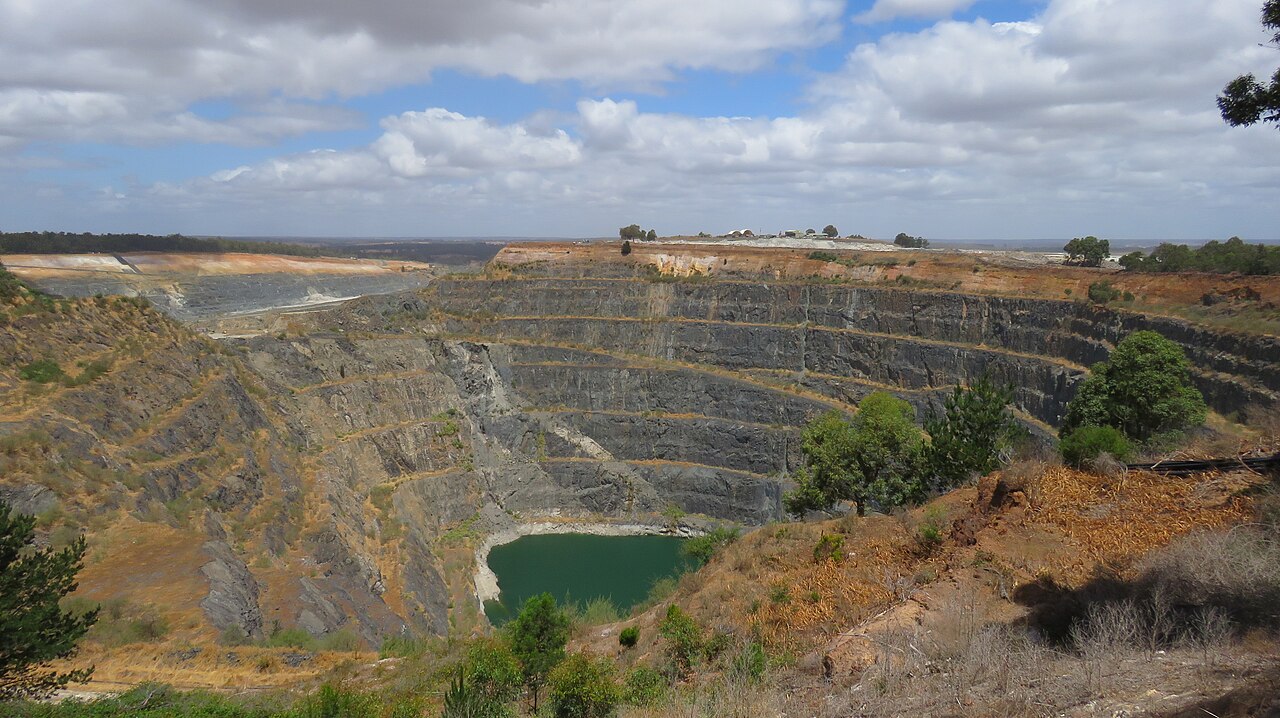
- Wikimedia Commons, "Open pit of the Greenbushes mine, January 2023 07.jpg" - photograph by Calistemon, used as the article image.
- International Energy Agency, Global Critical Minerals Outlook 2025 PDF - lithium demand growth, price collapse context, near-term supply balance, 2030s deficit risk, and supply-shock battery cost sensitivity.
- TradeArabia News Service, "Global battery market surges alongside supply challenges: IEA" (February 16, 2026) - lithium-ion battery deployment, EV and storage demand share, LFP cost and market-share signals, and China-centered battery supply-chain concentration.