Priced: foodservice distributors already get credit for a restaurant industry that is still large, still nominally growing, and still hard for independent operators to serve without outside logistics. New: the equity spread is not simply "people keep eating out." It is whether Sysco, US Foods, and Performance Food Group can turn that demand into profitable independent-restaurant cases, fuller delivery stops, and gross profit that outruns warehouse, driver, fuel, and credit costs.[1][2][3]
That is the useful distinction. A distributor can report higher sales because product inflation lifted the invoice. It can also report stronger cases with weak economics if new business arrives as small drops, far-flung stops, or low-margin national-chain volume. The bull case is not restaurant traffic by itself. It is delivery density.
The Mechanism
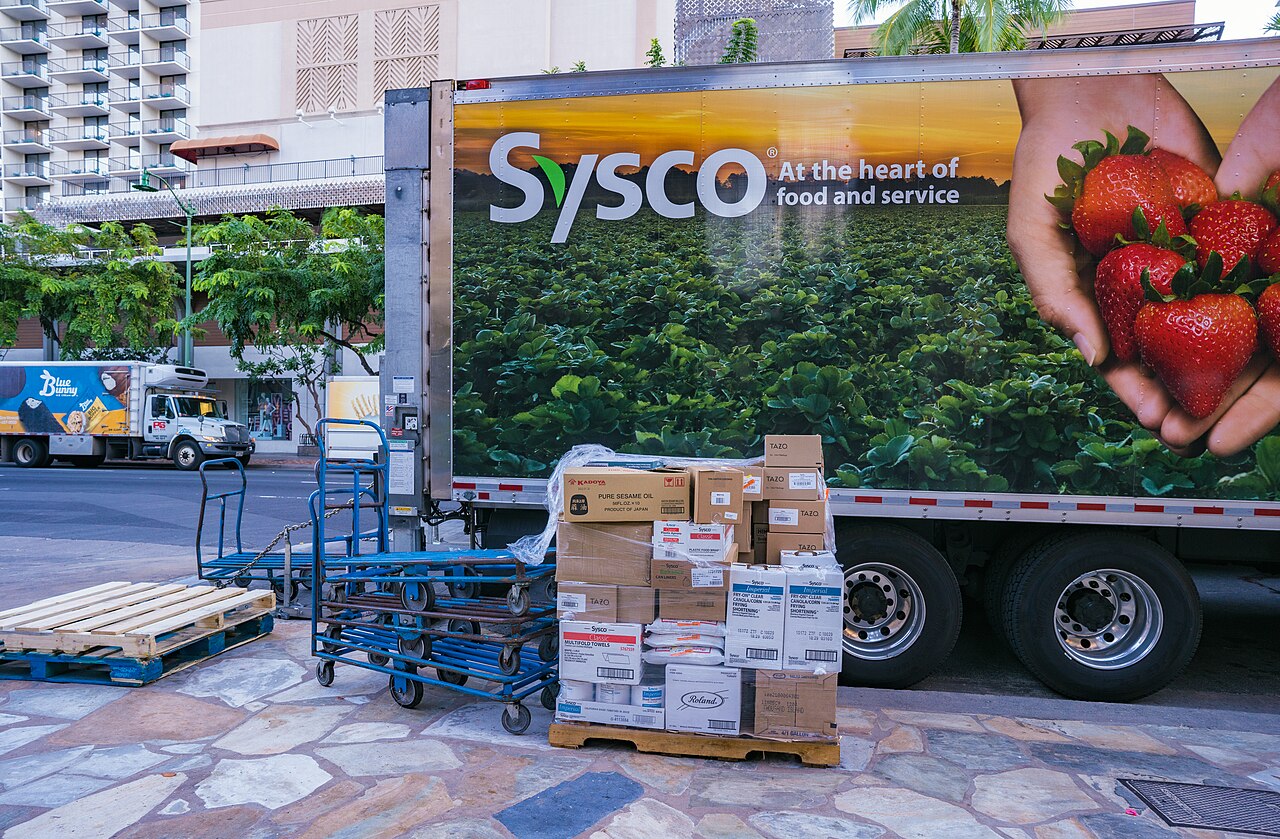
A broadline foodservice distributor is a margin-and-routing business disguised as a sales line. It buys food and supplies, warehouses them, manages substitutions, extends service and sometimes credit, sends sales teams into local markets, and dispatches trucks to restaurants that cannot efficiently run that procurement stack alone.
The best revenue is not just any case. It is a case that fits an existing route, raises the drop size at a stop, uses working capital predictably, and carries a gross profit per case high enough to pay for the labor behind it. Independent restaurants are therefore valuable, but not magical. They can need more sales attention and have less purchasing scale than national chains, which gives distributors room to earn service margin. They can also be choppy customers with smaller tickets, labor-heavy substitutions, and local credit risk.
That is why the 2026 setup needs a split screen. The National Restaurant Association projected $1.55 trillion of U.S. restaurant and foodservice sales for 2026, with inflation-adjusted growth of 1.3% and employment of 15.8 million people.[4] The Census Bureau's May 2026 advance retail report said food services and drinking places sales were up 2.7% from May 2025.[5] BLS reported food away from home prices up 3.5% over the year in May, with full-service meals up 3.8% and limited-service meals up 3.3%.[6]
Those are three different signals. The industry is big. Nominal sales are still positive. But pricing is doing a meaningful part of the work. Distributors need volume, mix, and operating leverage, not only inflation-indexed invoices.
The Company Readout
Sysco's latest quarter shows the cleanest version of the issue. In fiscal third-quarter 2026, sales rose 4.7%, U.S. Foodservice volume rose 2.3%, and U.S. local volume rose 3.3%. Gross profit increased 6.5% to $3.8 billion, but operating income fell 9.1% and adjusted operating income slipped 0.6%.[1] That is not a demand failure. It is a warning that gross-profit growth still has to survive the cost structure.
US Foods offered a more encouraging independent-customer signal. In first-quarter fiscal 2026, net sales rose 2.8% to $9.6 billion, total case volume rose 1.4%, and independent restaurant case volume rose 4.6%. Adjusted EBITDA rose 6.2% to $413 million.[2] The important line is the gap between total cases and independent restaurant cases. If independent growth stays ahead of total case growth, US Foods can argue that it is winning the customers where service, assortment, and sales coverage matter most.
Performance Food Group is the reminder that mix can overwhelm the headline. In fiscal third-quarter 2026, net sales rose 6.4% to $16.3 billion and product cost inflation was about 4.5%. Foodservice adjusted EBITDA rose only 2.2% to $281.0 million, while Convenience adjusted EBITDA jumped 34.1% to $100.2 million.[3] The business grew, but the earnings bridge was not a pure restaurant-distribution story. Segment mix, inflation, and operating conversion all mattered.
Why Independent Cases Matter
The independent restaurant case is the scarce unit in this trade. National accounts can be large and stable, but the buyer often has more bargaining power and the order is more standardized. Independents are fragmented. They need more help on assortment, purchasing, substitutions, delivery timing, and menu changes. That is where a distributor's local sales force and route network can defend margin.
But the independent case is only attractive if it compounds route density. A new restaurant on a dense route can improve the truck. A new restaurant at the edge of a service area can eat the margin in time, miles, and failed delivery windows. A larger drop can make labor hours more productive. A smaller, more frequent drop can make reported case growth look better than the cash it creates.
That is the hidden reason to watch local and independent case growth beside gross profit and operating income. Sysco's 3.3% U.S. local volume growth, US Foods' 4.6% independent restaurant case growth, and PFG's inflation-and-mix commentary all point to the same question: are distributors adding the kind of customers that make the network denser, or simply chasing sales?[1][2][3]
The Counterweight
The best counterargument is scale. Foodservice distribution is operationally brutal for small competitors. Purchasing breadth, food safety systems, cold-chain capacity, fleet utilization, sales coverage, digital ordering, and vendor rebates all favor the largest players. If independent restaurants are still open, still ordering, and still under cost pressure, outsourcing procurement and delivery becomes more valuable rather than less.
Operator pressure can therefore help the distributors even when restaurant margins are tight. The NRA's 2026 outlook flagged persistent cost pressure and uneven traffic as profitability issues for operators.[4] A restaurant fighting labor, insurance, food, and traffic volatility may lean harder on suppliers that can simplify purchasing and reduce stockouts.
The bearish counterweight is that the same pressure can reduce order quality. A restaurant protecting cash can trade down, shrink inventory, delay purchases, or fail. If that behavior lowers drop size or raises service friction, the distributor may carry the cost before it earns the benefit. Food-away inflation of 3.5% also means part of the reported industry growth is price rather than more meals or more cases.[6]
Falsifier
The thesis fails if the next several reporting windows show that restaurant demand is translating cleanly into operating leverage. Specifically, local and independent restaurant case growth would need to stay above total case growth, gross profit per case would need to rise without higher service friction, and adjusted operating income or adjusted EBITDA would need to grow at least as convincingly as gross profit.[1][2][3]
The negative falsifier is just as clear. If food services sales remain positive but independent case growth stalls, drop economics weaken, and operating income trails gross-profit growth for several quarters, then the market was too generous in treating restaurant traffic as distributor cash flow.
Watchlist
First, watch Sysco's next fiscal 2026 report for U.S. local volume, gross profit, and adjusted operating income. The key test is whether the local-volume improvement becomes operating leverage rather than only gross-profit dollars.[1]
Second, watch US Foods' next fiscal 2026 report for independent restaurant case growth versus total case growth. If independent cases keep outpacing the company average while adjusted EBITDA margin holds, the thesis gets stronger.[2]
Third, watch PFG's Foodservice segment separately from Convenience. The company can create value in more than one segment, but investors should not mistake Convenience-driven EBITDA for proof that restaurant delivery economics have improved.[3]
Fourth, watch the monthly Census and BLS prints together through the summer. Food services sales without the food-away inflation line can overstate real demand. Inflation without case data can understate distributor pricing power. The spread between the two is where the story lives.[5][6]
The sector is not a simple bet that restaurants are back. It is a logistics spread on which restaurants order, how much each stop absorbs, and whether the largest distributors can make every added case cheaper to deliver than the last one.
Sources
- Sysco, "Sysco Reports Third Quarter Fiscal Year 2026 Results" (April 28, 2026) - sales, U.S. Foodservice volume, local volume, gross profit, operating income, and adjusted operating income.
- US Foods, "US Foods Reports First Quarter Fiscal Year 2026 Earnings" (May 7, 2026) - net sales, total and independent restaurant case volume, gross profit, adjusted EBITDA, EPS, and repurchases.
- Performance Food Group, "Performance Food Group Company Reports Third-Quarter and First-Nine Months Fiscal 2026 Results" (May 2026) - net sales, product-cost inflation, segment net sales, case mix, and adjusted EBITDA by segment.
- National Restaurant Association, "State of the Restaurant Industry 2026" (February 11, 2026) - projected 2026 restaurant and foodservice sales, real growth, employment, and operator pressure themes.
- U.S. Census Bureau, "Advance Monthly Sales for Retail and Food Services, May 2026" (June 17, 2026) - May 2026 retail and food services sales and food services/drinking places year-over-year change.
- U.S. Bureau of Labor Statistics, "Consumer Price Index" May 2026 table - food away from home, full-service, and limited-service price changes.
- Wikimedia Commons, "File:Sysco Food Service Truck - Pallet Delivery (49539528381).jpg" - source page for the real Sysco delivery-truck photograph used as the article image.