A rise in bank reserves can tempt investors to price in easier monetary conditions. Federal Reserve check float exposes a missing step in that reasoning: the increase may come from crediting a payment before collecting it, with an automatic reversal waiting when settlement catches up.[1][2]
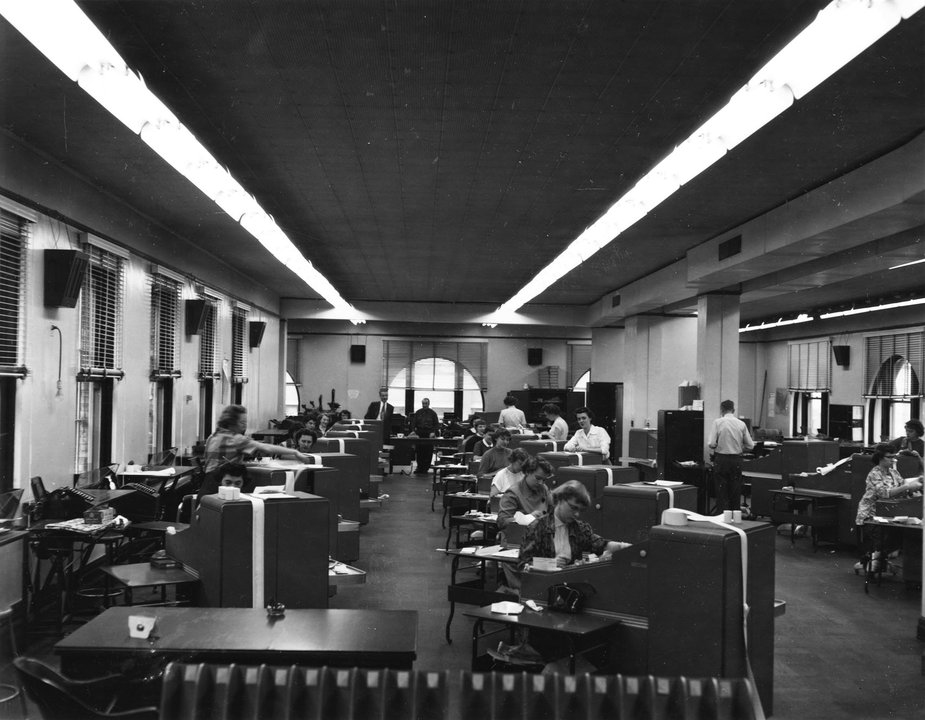
A credit arrives before its counterpart
Banks hold balances at the Federal Reserve to settle payments. When a check passes through the Fed's collection service, the receiving bank gets credit according to a schedule. Collection from the paying bank can run on a different clock. If the scheduled credit arrives first, reserve balances temporarily increase.[2]
Consider a hypothetical $10 million check drawn on Bank A and deposited at Bank B. Assume it is valid, is ultimately paid, and nothing else changes. The Fed credits Bank B's reserve account while collection from Bank A is delayed. Bank B has an additional $10 million available for settlement; Bank A's reserve account has yet to lose the corresponding amount. Across the banking system, reserves are temporarily $10 million higher.
When collection completes, the Fed debits Bank A. The extra reserves disappear, leaving the transfer from A to B that the original payment required. This example illustrates the timing mechanism in the Fed's explanation of float; it is not a reported transaction.[2]
The accounting keeps track of the unfinished work. The Fed's Financial Accounting Manual distinguishes items still in collection from credits deferred to a later date. The difference between those accounts measures the net credit supplied through the collection process. It also covers items beyond paper checks, so the reported float line should not automatically be treated as a count of checks stuck in transit.[1]
The temporary balance is useful: Bank B can use it to meet an outgoing payment. But the arrangement has not increased the check writer's wealth or guaranteed a lasting expansion of reserves. Its duration depends on when the missing debit arrives.
When the planes stopped
The mechanism became unusually important after the September 11, 2001 attacks. With aircraft grounded, the Reserve Banks could not deliver some checks to paying banks. They nevertheless continued crediting depositing banks' accounts. The Board's annual report records daily check float peaking at $47.4 billion on September 13, against a normal level below $1 billion.[3]
That was an operational decision with a substantial financial consequence. Honoring the credit schedule kept a transportation breakdown from simply withholding funds from banks expecting payment. The central bank carried the timing gap while collection was interrupted.
This support operated alongside discount-window lending, open-market operations and other emergency measures. The annual report describes several interventions; assigning the whole reserve increase to float would erase those distinct channels.[3]
Nor did abundant aggregate reserves guarantee that every bank could obtain funds when needed. James McAndrews and Simon Potter's New York Fed study explains how damage to communications prevented some institutions from sending Fedwire payments. Banks expecting those receipts then faced their own shortfalls, and impaired connections made it harder to redistribute balances. Their analysis credits Fed liquidity injections with helping restore payment coordination.[4]
That is the strongest qualification to dismissing float as an accounting curiosity. The credit could help a bank make a payment at the moment the system needed continuity. Its eventual reversal does not make the intervening liquidity worthless.
The column can change the story
Even a correctly identified float figure can mislead if its observation period is lost. The H.4.1 release published on September 13 reported $22.929 billion of float for Wednesday, September 12, alongside a $4.281 billion average for the week ending that day.[6]
Those figures answer different questions. The Wednesday observation captures a point in the disruption; the weekly average blends it with earlier days. Neither is the September 13 daily peak cited in the annual report. Comparing a daily peak with a weekly average as though both describe the same interval exaggerates the apparent disagreement between sources.[3][6]
The lesson for reading a reserve release is concrete: retain the date and the column heading when extracting the number. Then separate the contribution of clearing from changes in lending, securities holdings and other factors. A larger total alone cannot identify the transaction that produced it.
Faster images, the same accounting question
Electronic check processing has changed the physical vulnerability illustrated by grounded aircraft. Federal Reserve History traces how Check 21, enacted in 2003, helped remove the need to transport original checks. By 2010, the Fed was receiving 98.4% of checks electronically.[5]
That makes the paper-transport episode an explanation of a mechanism, rather than a forecast of its next occurrence. The accounting question survives: when did the receiving institution get credit, and when was the paying institution charged? The current accounting manual still identifies processing differences, adjustments and electronic-payment items within the relevant accounts.[1]
For any particular reserve jump, the claim that it is temporary clearing credit has a clear falsifier. If float returns to its earlier level while reserves remain elevated because securities purchases or loans replace it, the continuing increase cannot be explained by the original clearing delay. That would require a separate account of the Fed's operations. Conversely, reserves falling as the delayed debits arrive would fit the temporary-float explanation, provided other factors were unchanged.
Three events would help distinguish those outcomes:
- The next Thursday H.4.1 release: compare float and reserve balances using the same observation basis, then reconcile the other supplying and absorbing factors. The Board normally publishes this release each Thursday, with holiday adjustments.[6][7]
- Completion of the disrupted clearing cycle: look for the delayed debits to reduce the temporary credit. Restored processing should resolve the timing gap; a continuing balance needs an explanation.[1][2]
- The next announced liquidity operation or policy decision: establish whether lending or securities transactions are replacing the clearing credit. That is the evidence needed before extending a short-lived settlement effect into a view about lasting monetary support.[3][4]
Sources
- Board of Governors of the Federal Reserve System, Financial Accounting Manual for Federal Reserve Banks, Chapter 1, sections 3.30 and 11.40 — collection items, deferred credits and float.
- Board of Governors of the Federal Reserve System, archived H.4.1 Table 1 explanatory guide — the “Float” entry explains scheduled credit and delayed collection.
- Board of Governors of the Federal Reserve System, 88th Annual Report, 2001, printed page 175 — emergency payment support and the September 13 check-float peak.
- James J. McAndrews and Simon M. Potter, “Liquidity Effects of the Events of September 11, 2001,” Federal Reserve Bank of New York, Economic Policy Review, November 2002 — disrupted payments and the distribution of liquidity.
- Federal Reserve History, “Check Payments,” September 28, 2023 — electronic check imaging, Check 21 and the share received electronically in 2010.
- Board of Governors of the Federal Reserve System, H.4.1 release, September 13, 2001 — Wednesday levels and weekly averages for the period ending September 12.
- Board of Governors of the Federal Reserve System, H.4.1 release dates — regular publication schedule and holiday timing.
- Federal Reserve Bank of Kansas City, “Omaha Branch history” — archival gallery photograph captioned “Omaha Branch check sorting circa 1960.”