ETF liquidity is priced by investors as if it were a single promise: click, trade, done. The new risk is that the promise actually has two markets inside it. Most investors trade ETF shares on an exchange, but the pressure-release valve sits in the primary market, where authorized participants can create or redeem large blocks against baskets of underlying securities.[1][2]
That distinction matters more as ETFs have become the default wrapper for equities, bonds, commodities, options strategies, and active portfolios. At year-end 2024, U.S. ETFs had passed $10 trillion in total net assets, with 3,637 ETFs in the market, according to ICI's 2025 Fact Book.[2] Scale did not break the structure. It made the structure systemically useful. An ETF can trade all day like a stock while still holding a portfolio that may trade less cleanly, especially in credit, international equities, smaller-cap stocks, or thin commodity-linked instruments.
The Mechanism
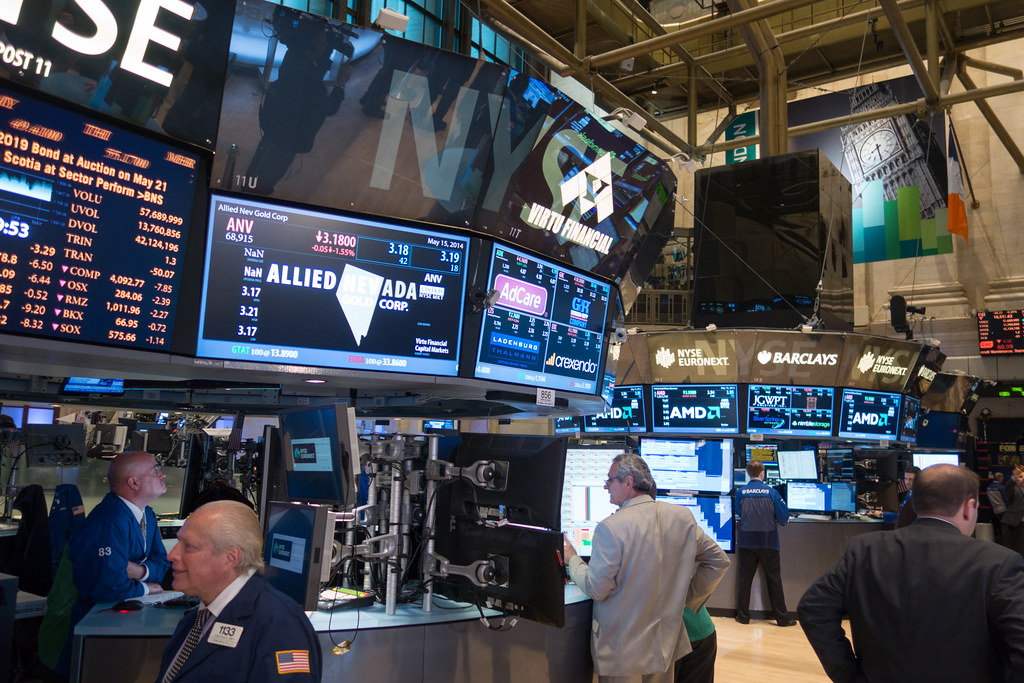
An ETF has a visible market and a plumbing market. The visible market is the exchange screen. Investors buy and sell shares throughout the trading day at market prices, using ordinary brokerage orders. That secondary-market liquidity is what makes ETFs feel simple. A fund can have a tight bid-ask spread, high displayed volume, and instant execution for a typical order.
The plumbing market is creation and redemption. SEC Rule 6c-11 defines an authorized participant as a clearing-agency member or participant with a written agreement that allows it to place purchase and redemption orders for creation units. It defines a creation unit as a specified number of ETF shares issued or redeemed in exchange for a basket and any cash balancing amount.[1] In plain English: a retail investor cannot usually hand the fund a portfolio and ask for cash or securities back. An authorized participant can transact directly with the ETF in large blocks.
This is why ETF liquidity cannot be read from share volume alone. State Street's ETF education material notes that creation and redemption usually happen in the primary market between the sponsor and authorized participants, and that large units are commonly 50,000 shares.[3] ICI's ETF FAQ makes the same two-market point: ETF shares trade intraday on exchanges, while an authorized participant can create or redeem shares in creation-unit increments using a basket of securities, cash, or both.[4] The exchange quote is only one layer of the instrument.
The arbitrage works because premiums and discounts create an incentive. If ETF shares trade rich to the value of the basket, an authorized participant can deliver the basket, receive ETF shares, and sell those shares. If ETF shares trade cheap, the AP can buy ETF shares, redeem them, and receive the basket. The process is not charity. It is a profit-seeking mechanism that tends to pull ETF prices toward underlying value when financing, hedging, balance sheet, and execution costs are manageable.[1][3][4]
Six Anchors
- $10 trillion-plus: U.S. ETF total net assets surpassed this level at year-end 2024.[2]
- 3,637 ETFs: the number of U.S. ETFs at year-end 2024, up from 80 in 2000.[2]
- 50,000 shares: a common creation/redemption unit size in issuer education material, though actual units vary by fund.[3]
- Daily portfolio disclosure: Rule 6c-11 requires covered ETFs to disclose portfolio holdings each business day before trading begins.[1]
- 245% and 67%: Bank of Canada staff found that March 2020 on-exchange trading volume rose by 245% for municipal-bond FI-ETFs and 67% for corporate-bond FI-ETFs versus February, even as fixed-income ETF discounts widened.[5]
- Top-five concentration: the FCA's fixed-income ETF research found primary-market participation was highly concentrated, especially in fixed income, even while it found evidence that other liquidity providers could step in during stress.[6]
Those anchors frame the "priced versus new" gap. Priced is the investor belief that ETFs are easy to trade. New is the recognition that ease comes from a chain: market makers quote ETF shares, APs manage creations and redemptions, issuers publish baskets, custodians deliver securities, and the underlying market has to provide executable prices. When that chain is cheap, ETFs look almost frictionless. When it is expensive, discounts and wider spreads are the cost of immediacy becoming visible.
Why Discounts Are Not Always Failure
The naive read of an ETF discount is that the ETF is broken. Sometimes it is better read as the ETF telling the truth faster than the underlying market. During stress, a bond ETF may trade at a discount to end-of-day NAV because the ETF share price is executable while some underlying bond marks are stale, matrix-priced, or not immediately tradable at the reported level. The Bank of England's market-based finance review makes this point directly: in stressed conditions, ETF bid-ask spreads and NAV discounts may offer a better indicator of actual trading costs and actionable prices for fixed-income securities than reported underlying quotes.[8]
That is not a free pass. A persistent discount can still hurt sellers and signal impaired arbitrage. But it changes the diagnosis. If the ETF is trading below NAV because the AP channel has stopped functioning, that is a structural problem. If it is trading below NAV because the NAV itself is slow to catch up with the true cost of selling the bonds, the ETF is doing price discovery. The same screen symptom can mean two different things.
The Bank of Canada staff note on fixed-income ETFs is useful because it separates trading activity from arbitrage capacity. It found that fixed-income ETF discounts in March 2020 were significant, persistent, and widespread, while secondary-market ETF volume still rose sharply. The note attributes the discounts partly to reduced AP activity, higher inventory-carrying costs, and stale bond prices affecting NAVs.[5] That is the ETF lesson in one sentence. The ETF wrapper does not create balance sheet from nothing. It routes pressure toward the firms willing and able to intermediate it.
The Strong Case For ETFs
The bull case is not that ETFs remove liquidity risk. It is that they allocate it more transparently. Mutual funds generally transact once per day at NAV. ETFs let investors trade intraday, observe premiums and discounts, and decide whether immediacy is worth the spread. For broad equity ETFs, this can be a very efficient structure: underlying stocks trade continuously, baskets are transparent, and arbitrage costs are usually small.
Even in fixed income, the structure can help. Bond markets are still dealer-mediated and fragmented. An ETF can become a meeting place for risk when the underlying bonds are slow to trade. The Bank of England notes that additional liquidity in ETF secondary markets can make ETF pricing a useful signal during stress.[8] The FCA's research also cuts against the most alarmist version of the story: while primary-market activity is concentrated, its initial stress-event analysis found some evidence that alternative liquidity providers step in during disruptions and did not identify other participation features that raised financial-stability concerns.[6]
That counterweight matters. A concentrated AP ecosystem is a risk, but concentration alone is not proof of fragility. If APs, market makers, and other liquidity providers can substitute for one another, the system can absorb strain. If they all face the same balance-sheet constraint at the same time, the release valve narrows.
Where The Wrapper Cannot Help
The hard boundary is the underlying market. A high-yield bond ETF cannot make every high-yield bond trade like a mega-cap stock. An emerging-market ETF cannot erase local-market holidays, capital controls, settlement delays, or foreign-exchange frictions. Rule 6c-11 itself recognizes timing frictions by permitting delays in some foreign-investment redemptions where local-market holidays or extended settlement cycles make prompt delivery unfeasible.[1]
The ETF can improve the wrapper, not repeal the asset. Daily holdings disclosure, basket files, creation units, and market-maker competition make arbitrage more practical. They do not guarantee that the basket can be liquidated at yesterday's NAV. In a calm tape, the distinction is academic. In a stress tape, it becomes the whole trade.
For investors, this means "ETF liquidity" has to be sized by the harder of two questions. First, can I trade the ETF shares at a reasonable spread for my order size? Second, can the underlying basket support the AP arbitrage if the flow is one-way? The first question is visible in the quote. The second is hidden in the constituents, market hours, credit quality, settlement cycle, and AP balance-sheet appetite.
Counterweight
The strongest pushback is that this makes ordinary ETF investing sound more fragile than it usually is. For broad, plain-vanilla equity ETFs, the mechanism has worked extraordinarily well. Scale, transparency, competition among market makers, and deep underlying markets keep premiums and discounts small most of the time. Investors should not treat every ETF as a crisis instrument.
The better conclusion is narrower. ETF liquidity is robust when the arbitrage chain is robust. It is not magic. The wrapper is strongest when the underlying assets are liquid, baskets are clean, APs are active, spreads are tight, and trading hours overlap. It is weakest when investors demand instant liquidity from assets that cannot be sold instantly without price concessions.
Falsifier
The thesis fails if the next broad stress episode shows ETF spreads and discounts normalizing quickly while AP participation broadens, creation/redemption activity remains orderly, and underlying-market liquidity does not deteriorate. Under that branch, the ETF release valve has become deeper and more redundant than the concentration evidence suggests.
The opposite falsifier is more damaging. If APs step back, market makers widen quotes, ETF discounts persist after underlying markets reopen, and creations or redemptions become operationally difficult, then the wrapper will have revealed a thinner release valve than investors priced. The warning signal is not one bad print. It is a repeated inability to convert secondary-market pressure into primary-market arbitrage.
Watchlist
- Each business day before trading begins: covered ETFs' basket and holdings files are the first operational check on whether arbitrage has usable information.[1]
- The next broad credit-stress session: short-lived discounts in bond ETFs may be price discovery; persistent discounts after underlying markets reopen are more concerning.[5][8]
- Quarterly fund-reporting cycles: AP, market-maker, and liquidity-provider disclosures deserve more scrutiny in fixed-income and international ETFs because the underlying-market handoff is harder.[6]
- ICI monthly ETF releases and the annual Fact Book update: industry flow data show whether asset growth is concentrating in wrappers whose underlying liquidity is less straightforward.[2]
The practical read is simple. ETFs deserve their popularity because the two-market design is elegant: secondary trading gives investors access, and primary creation/redemption keeps the wrapper tied to the basket. But the AP is a release valve, not a guarantee. When the underlying market is clean, the ETF feels like instant liquidity. When the underlying market is stressed, the ETF may still trade, but the price starts charging for the exit.[1][3][4][8]
Sources
- Legal Information Institute, "17 CFR § 270.6c-11 - Exchange-traded funds" - Rule 6c-11 definitions, creation units, authorized participants, daily disclosure, baskets, and foreign-investment redemption timing.
- Investment Company Institute, 2025 Investment Company Fact Book - U.S. ETF assets, number of ETFs, historical growth, investor use, and industry context.
- State Street Global Advisors, "How ETFs Are Created and Redeemed" - primary-market creation/redemption mechanics and common unit-size explanation.
- Investment Company Institute, "ETF Basics and Structure: FAQs" - intraday exchange trading, authorized participants, creation baskets, redemption baskets, and creation-unit mechanics.
- Bank of Canada, "Concentration in the market of authorized participants of US fixed-income exchange-traded funds" (Staff Analytical Note 2020-27) - AP concentration, March 2020 discounts, stale bond prices, and secondary-market volume behavior.
- Financial Conduct Authority, "ETF primary market participation and liquidity resilience during stress events" (August 7, 2019) - authorized-participant concentration and stress-event findings for fixed-income ETFs.
- Wikimedia Commons, "File:Trading Floor at the New York Stock Exchange.jpg" - Scott Beale photograph of the NYSE trading floor, used as the article's real photographic image source.
- Bank of England, Assessing the resilience of market-based finance (2021) - ETF secondary-market liquidity, fixed-income ETF discounts, and price-discovery interpretation during stress.