Already priced: a covered-call writer receives a premium and agrees to sell shares at the strike if assigned. Less visible: the option's expiration date is not the only clock. On the trading day before a stock goes ex-dividend, a call holder can exercise an American-style equity option early, and an in-the-money call with little time value may bring the writer's share sale forward.[1][2][3]
Take one hypothetical standard call. The stock is $100, the strike is $90, the call trades at $10.40, and an ordinary $0.75-a-share cash dividend goes ex the next morning. The call contains $10 of intrinsic value and $0.40 of time value. Across the contract's usual 100 shares, the holder is looking at $40 of remaining time value and a $75 dividend. That $35 gap is an early-exercise signal—not a guaranteed profit and not a promise that this particular writer will be assigned.[1][2][5]
Evidence cut-off: September 13, 2026 at 07:38 UTC. All prices, dates and positions in the scenario are hypothetical. The arithmetic ignores commissions, taxes, financing, bid-ask spreads and contract adjustments unless stated. This is a mechanics explainer, not a recommendation to trade options or individualized investment or tax advice. Options involve risk, and brokerage procedures can differ.
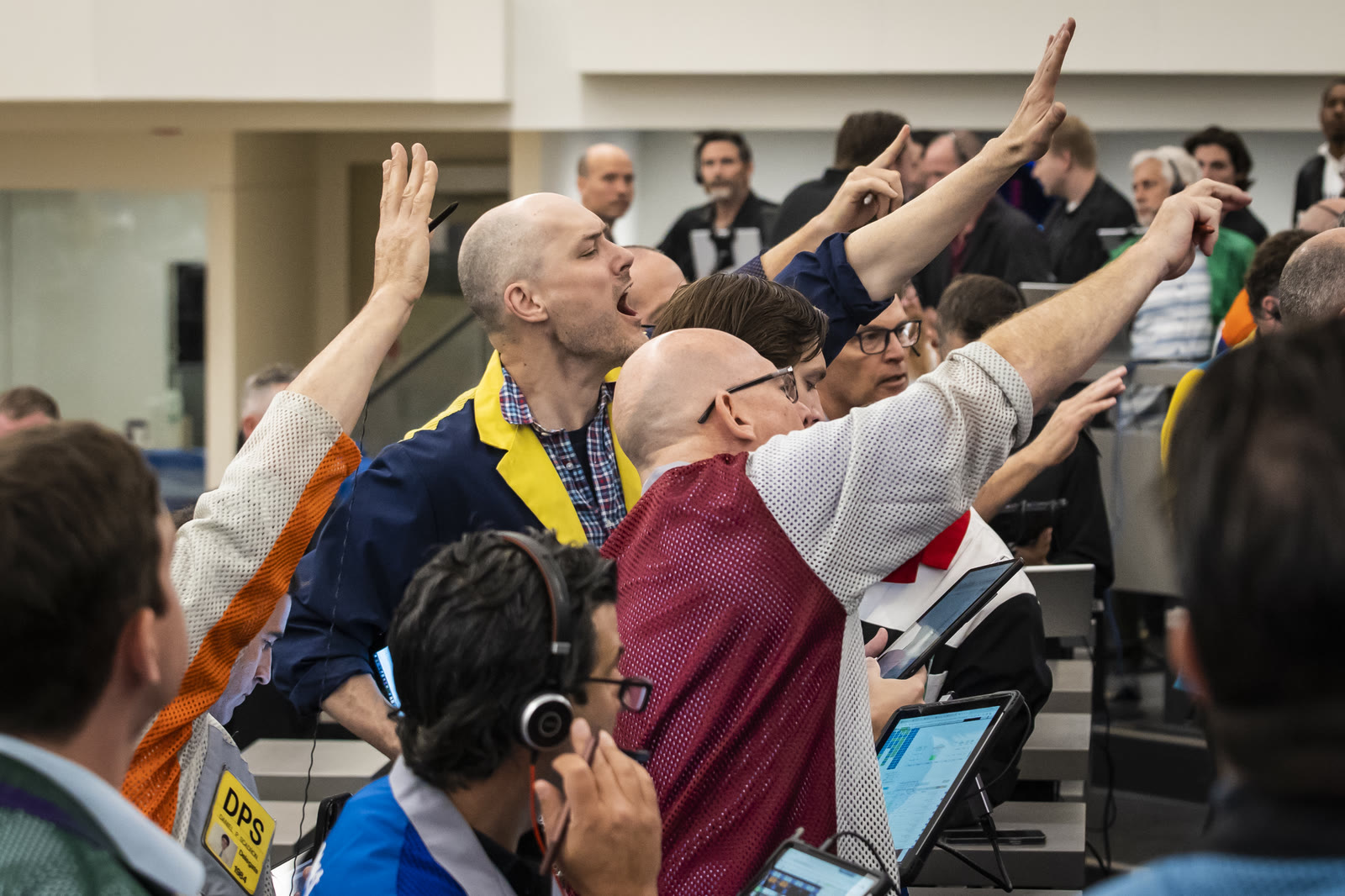
Image context: the cover is a real photograph of traders on Cboe's Chicago floor on its first day of activity in the new venue in 2022. It supplies documentary context for the listed-options market; it does not show, and cannot verify, any exercise or assignment described in the hypothetical.[8]
The ex-date can ring before expiration
A covered call joins two positions: long shares and a short call on those shares. The stock covers the delivery obligation, but it does not give the writer control over when the option holder exercises. U.S. equity options are generally American-style, so the holder may exercise on a business day before expiration. A standard contract ordinarily represents 100 shares, while splits, mergers and other corporate actions can produce adjusted contracts with a different deliverable.[1][3][5]
Ordinary cash dividends usually do not produce a matching adjustment to the stock option. Until exercise, the call holder has a contractual right to buy shares—not the shareholder's right to receive their dividend. OCC's disclosure says a call holder becomes entitled to the dividend by exercising before the ex-dividend date, even if the assigned writer does not learn of the assignment until after the stock has gone ex.[1]
That is the second clock. The expiration date tells the holder how long the option right can survive. The ex-date tells the holder when the next dividend right leaves the shares. Investor.gov explains the practical boundary: buying the stock before its ex-date generally earns the next dividend; buying on or after does not. Special dividends and stock distributions can follow different timetables, so the declared ex-date matters more than a remembered rule of thumb.[7]
Base branch: $75 outruns $40
In the base case, intrinsic value is the stock price less the strike: $100 minus $90, or $10 per share. Time value is what remains after intrinsic value is removed from the call's $10.40 premium: $0.40 per share. Multiplying by 100 turns that sliver into $40 for the contract.[1][6]
The upcoming dividend is $0.75 per share, or $75 on the same share count. Cboe describes the practical exercise signal directly: when an in-the-money call approaches the ex-date and the dividend exceeds its remaining time value, the holder is likely to have an economic incentive to exercise early. In this simplified case, the dividend exceeds time value by $35.[2]
If the holder exercises before the applicable broker cutoff, the holder gives up the call, pays the $9,000 aggregate strike price and acquires 100 shares. OCC currently specifies T+1 stock delivery for standard equity-option exercise. Because the exercise occurred before the ex-date, the holder is entitled to the $75 dividend.[1][5][6]
For the covered writer who is assigned, the mirror image applies: 100 owned shares are delivered for $9,000. The writer keeps the premium received when the call was sold, but no longer owns the shares carrying the next dividend. Assignment does not confiscate an extra $1,000 merely because the stock is at $100; the obligation to sell at $90 was already embedded in the short call. What changes early is the timing of that capped sale and the identity of the shareholder entitled to the distribution.[1][4]
The $35 gap is a warning light, not an arbitrage
The base-case comparison deliberately leaves out frictions. A long holder who wants the shares can often compare three paths: hold the call across the ex-date, exercise it, or sell the call and buy the stock. The Options Industry Council notes that early exercise forfeits time value and that selling the option can be more profitable than exercising when an executable market price preserves that value.[6]
In the hypothetical, selling the call for $10.40 and buying the stock for $100 creates the same long-share position at a net $89.60 per share before costs—$0.40 less than paying the $90 strike through exercise. That route retains the quoted time value. But the quote may not be executable at the displayed level; a deep in-the-money call can have a wide spread, and commissions, financing, taxes, account permissions or a broker's cutoff can change the comparison. The dividend-versus-time-value test therefore identifies elevated exercise incentive relative to simply holding the call. It does not prove that exercise dominates every possible transaction.[2][6]
Nor does an attractive exercise setup identify which short customer will be assigned. A holder is not permanently paired with the person who originally sold the contract. FINRA describes OCC as allocating exercise notices among clearing members with short positions in the same series; the receiving firm then uses its disclosed allocation method to select a customer. One writer may be assigned while another with the identical short call is not.[4][6]
This uncertainty cuts both ways. The writer cannot assume assignment merely because the dividend exceeds time value, and cannot assume safety because no alert arrived before the ex-date. OCC warns that notification can come after the relevant dividend boundary. A plan that depends on keeping the shares—or on receiving the dividend—must be set before that uncertainty resolves.[1][4]
Counter-branch: time value keeps the option alive
Change one quote and the setup weakens. Keep the stock at $100, the strike at $90 and the dividend at $0.75, but let the call trade at $10.95. Intrinsic value remains $10; time value rises to $0.95 per share, or $95 per standard contract. Exercising to pursue a $75 dividend would now surrender more quoted time value than the distribution, even before the cost of paying the strike early. The simple dividend screen no longer favors exercise.[1][2][6]
This is the strongest counterweight to the base case. More time to expiry, more volatility, a stock price nearer the strike or a smaller dividend can preserve enough optionality to make early exercise unattractive. The stock can also move before instructions are due. A static calculation made from yesterday's close is not a live assignment estimate.
There is another boundary: this article concerns an ordinary, physically settled, American-style equity call. Some index options are European-style and cash-settled, so they cannot be exercised on an arbitrary pre-expiration ex-date and do not deliver the same stock position. An adjusted equity contract may no longer represent 100 ordinary shares. The label “call option” is not enough; style and deliverable are load-bearing facts.[3][5][6]
What would falsify the setup
The early-assignment thesis fails for a real position if the contract specifications show that the option cannot be exercised before expiration. It also loses its economic support if, at the actual decision point, the call's executable time value remains above the dividend after relevant funding, spread, fee and tax effects. An approaching ex-date alone is not a forecast of assignment.
Even when the incentive survives, assignment remains probabilistic at the customer level because the holder chooses whether to exercise and clearing and brokerage procedures determine which short account receives the notice.[4][6] “Likely” is the correct boundary; “automatic” is not.
Four checks before the stock goes ex
- Confirm the contract: verify exercise style, settlement method, multiplier and current deliverable. Do not assume every option is American-style or every contract still covers 100 ordinary shares.[1][5][6]
- Confirm the corporate action: use the issuer's declaration and the market's published ex-date, dividend amount and any special-distribution terms. The record date alone is not a sufficient shortcut.[1][7]
- Rebuild the comparison: immediately before the ex-date, subtract intrinsic value from an executable option quote and compare the remainder with the dividend. Include financing, fees, spreads and tax constraints that the clean example omits.[2][6]
- Decide before the broker's cutoff: if retaining the shares or avoiding that night's short-option exposure is essential, learn the firm's closing and exercise procedures before the deadline. A later assignment notice cannot be reversed with a closing trade.[1][4][6]
The durable lesson is not that dividends make covered calls defective. It is that the premium sells control over the exit clock as well as upside above the strike. Expiration is printed in the contract name; the ex-date is the quieter deadline that can make the obligation arrive first.
Sources
- The Options Clearing Corporation, Characteristics and Risks of Standardized Options (June 2024) — option value, American-style exercise, ordinary cash dividends, assignment timing and covered-call risk.
- Cboe, “Don't Get Stuck Paying the Dividend on Your Short Trade” (April 15, 2024) — the dividend-versus-time-value early-exercise signal and its risk boundary.
- FINRA, “Options” — American- and European-style definitions, covered-call obligations, time value and ex-dividend assignment risk.
- FINRA, “Trading Options: Understanding Assignment” (December 14, 2020) — exercise allocation, customer assignment uncertainty and delivery obligations.
- The Options Clearing Corporation, “Equity Options Product Specifications” — standard 100-share contracts, physical delivery, American-style exercise and T+1 settlement.
- The Options Industry Council, “Options Exercise” FAQ — broker cutoffs, exercise versus closing, forfeited time value and assignment uncertainty.
- Investor.gov, “Ex-Dividend Dates: When Are You Entitled to Stock and Cash Dividends” — dividend entitlement and special-distribution timing boundaries.
- David Roeder, “A Chicago financial powerhouse turns 50” (Chicago Sun-Times, April 25, 2023) — source page for Ashlee Rezin's June 6, 2022 Cboe trading-floor photograph.