An energy hedge priced only by its quoted rate misses the cost of keeping it open. Europe's 2022 crisis exposed the gap: some firms could reduce their immediate collateral bill by moving a hedge into a bilateral bank contract, while the bank financed the exchange position behind it.[1]
This is a retrospective on the 2022 disruption, using research published in 2022–2024. The market shares below describe that period, not today's trading mix.
The bill arrives before the electricity is sold
Picture a generator that has sold power futures against electricity it expects to produce. A rising power price makes that short futures position lose value, even as the future output becomes more valuable. The physical business and the hedge can offset economically without paying cash on the same day. A plant cannot send tomorrow's electricity to satisfy today's collateral request.
Clearing makes that timing mismatch explicit. A central counterparty stands between the trading sides and manages the risk of a participant failing. Initial margin provides a buffer against potential losses; marking positions to market brings changing gains and losses into the settlement process. CME's explanation of its own system illustrates the principle: margin requirements respond to volatility, and positions are marked repeatedly rather than allowing losses to accumulate unchecked. Its procedures should not be mistaken for the precise rules of every European energy market.[2]
The distinction matters because a larger initial-margin requirement can demand additional resources even without an enlarged trade. A firm's price hedge may be unchanged while the cost of maintaining it rises.[2]
BIS researchers found that changes in initial margins during Europe's energy turmoil were associated with material reductions in open interest—the stock of outstanding futures contracts. They also documented the pressure behind official liquidity facilities in some jurisdictions.[3] That is evidence of a financing constraint affecting participation. It does not tell us that every departing exchange position represented an abandoned hedge.
A bank can sell breathing room
The ECB described an arrangement called a liquidity swap, or exchange of futures for swaps. The energy firm replaces its futures position with a bilateral commodity swap with a bank. In the arrangement described, the client posts no initial margin and pays variation margin only after a contractual threshold is reached. The bank assumes the futures position and posts its required margins to the clearing house, charging the client a fee.[1]
The immediate relief is real. So is the bank's funding obligation. For the company, the useful comparison is therefore the cost and conditions of the whole package: the hedge, the financing fee, the collateral threshold and the availability of the bank's commitment. A cheaper-looking collateral schedule alone cannot establish a cheaper or more resilient hedge.
This is also why the word “over-the-counter” needs care. It describes how a derivative is arranged, not automatically how it is cleared. An OTC contract can still pass through a central counterparty. The relevant distinction here is whether a bank and its client retain a bilateral exposure, and on what terms.
The numbers show movement, with limits
ESMA's EU Derivatives Markets 2023 report supplies a useful boundary. Across its commodity-derivatives dataset, the exchange-traded share of outstanding notional fell from 49% to 39% between the fourth quarters of 2020 and 2022. OTC consequently represented 61% at the end of that period. But only 9% of OTC commodity notional was centrally cleared.[4]
These are broad commodity shares, not a count of energy firms buying liquidity swaps. Notional measures contractual scale, not collateral or expected losses. ESMA cautiously links part of the OTC growth to higher clearing costs.[4]
The contemporaneous ECB evidence was narrower still: through October 2022, the overall shift towards non-cleared OTC trading was limited, although some energy traders increased their use of bilateral swaps.[1] Taken together, the reports support a migration mechanism, not a claim that European energy hedging deserted exchanges wholesale.
ESMA's separate natural-gas study, published in May 2023, identified concentrated trading and clearing relationships alongside fragmented data. It flagged migration towards OTC trading because visibility was weaker and collateral arrangements more individually negotiated.[5] My reading is that lower exchange activity becomes a question to investigate: was risk closed, transferred, or maintained through a contract outsiders can see less clearly?
When lower collateral really is an improvement
The strongest counterweight is that financing a sound hedge can be an efficient banking service. A bank with reliable funding may bridge the gap between collateral payments and operating receipts. Bespoke terms can keep a useful hedge alive. Bilateral trading is not, by itself, proof of recklessness.
Nor does the lesson require keeping every collateral demand high. Better liquidity preparation can make the same protection less disruptive. The Financial Stability Board's December 2024 recommendations emphasise contingency funding, severe but plausible stress tests, accessible liquid assets and operational capacity to deliver collateral when required.[6]
My working diagnosis is that a falling collateral bill after a contract switch should prompt a search for the financing exposure that replaced it. A falsifier for that diagnosis would be unchanged hedge coverage alongside lower total stressed liquidity needs, with no increase in unsecured counterparty exposure or dependence on contingent bank funding. That would indicate a genuine improvement in the combined arrangement.
The practical test is whether the firm can keep its hedge through stress. A comfortable collateral balance on the reporting date answers only part of that question.
What to watch at the next disclosure
- At an energy company's next results release: reconcile collateral movements with hedge coverage, committed borrowing capacity and bilateral exposures. Identify whether cash was released because contracts matured, prices changed or the funding arrangement changed.
- At the next ESMA derivatives-market report: compare exchange-traded shares with OTC clearing shares, checking the measurement period and population before drawing a migration trend.[4]
- At the next clearing-house margin revision or treasury stress-test update: look for evidence that collateral can be delivered on time, including when other cash demands rise simultaneously. That is the preparedness problem the FSB recommendations address.[6]
Sources
- European Central Bank, “Financial stability risks from energy derivatives markets,” Financial Stability Review, November 2022 — section 3 on liquidity swaps and the limits of observed migration.
- CME Group, “Understanding Margin Changes” — volatility, initial margin and marking positions to market; used for the clearing mechanism, not European venue-specific rules.
- Fernando Avalos, Wenqian Huang and Kevin Tracol, “Margins and liquidity in European energy markets in 2022,” BIS Bulletin 77, September 13, 2023 — margin pressure, open interest and liquidity support.
- European Securities and Markets Authority, EU Derivatives Markets 2023, December 6, 2023 — commodity-derivatives section, pages 26–27; shares refer to outstanding notional.
- European Securities and Markets Authority, “ESMA finds high degree of concentration in natural gas derivatives markets,” May 12, 2023 — concentration, transparency and OTC collateral terms.
- Financial Stability Board, Liquidity Preparedness for Margin and Collateral Calls: Final report, December 10, 2024 — funding plans, stress testing and collateral readiness.
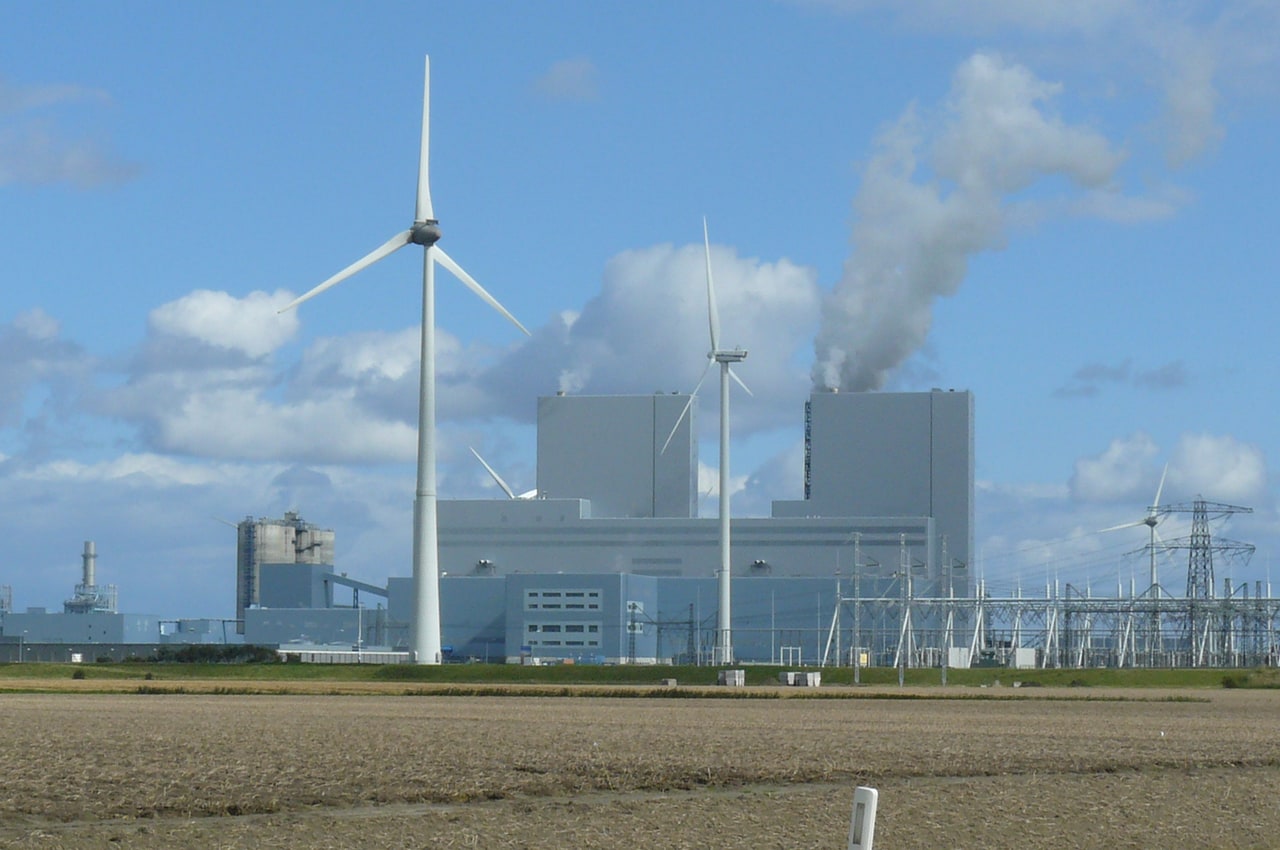
- Zandcee, “Eemshavencentrale RWE 2017 01.jpg,” August 13, 2017, Wikimedia Commons — original photograph and CC BY-SA 4.0 attribution.