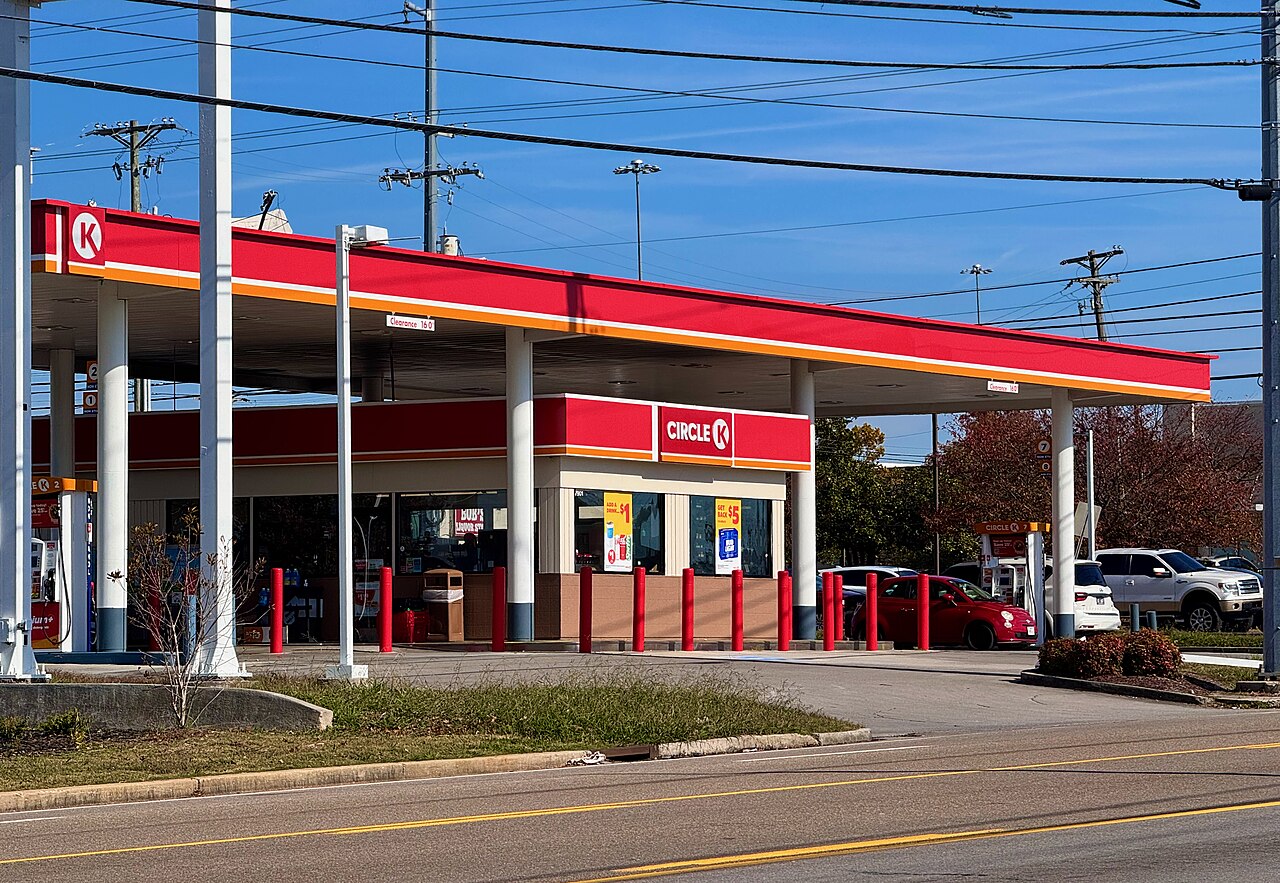
Priced: convenience-store equities have already been paid for a fuel-margin tape that stayed better than old models expected. New: the next rerating depends less on whether cents per gallon can spike again and more on whether the store can turn pump traffic into foodservice, beverages, nicotine alternatives, private-label goods, and loyalty data when fuel margins cool.[1][2][3][4]
The mechanism is simple but easy to misread. Fuel still creates the trip. NACS says U.S. convenience stores generated $817.5 billion of total 2025 sales, with fuel representing 65.0% of sales dollars but only 38.8% of gross profit dollars.[4] The store is therefore not a small attachment to the pump. It is the margin engine that decides whether a high-frequency fuel network deserves a retailer multiple or only a volatile commodity-distribution multiple.
The Mechanism
Fuel margin is the attention-getter because the numbers move quickly. Murphy USA's first quarter shows the upside version: total fuel contribution reached 35.0 cents per gallon, up from 25.4 cents a year earlier, while total retail gallons increased 2.1% even though same-store gallons slipped 0.8%.[2] Couche-Tard showed the same pattern at larger scale. In its U.S. network, fourth-quarter fiscal 2026 road-transportation fuel gross margin reached 52.44 cents per gallon, up 9.17 cents from the prior-year quarter, and management tied the strength to commodity volatility and an integrated fuel supply chain.[3]
Those are not trivial deltas. A few cents per gallon can move a quarter when the network sells billions of gallons. But fuel margin is also the part of the model least deserving of permanent capitalized credit. It can benefit from volatility, supply-chain advantage, local pricing discipline, RINs, and timing. It can also mean-revert when wholesale prices stabilize, competitors chase volume, or consumers become more price-sensitive.
Inside sales are slower but more durable. Casey's fourth-quarter fiscal 2026 result is the clean example: inside same-store sales rose 5.5%, inside margin reached 42.4%, and total inside gross profit increased to $643.4 million.[1] That is the part of the model that can compound without requiring a favorable fuel tape. Foodservice, prepared drinks, pizza, bakery, packaged beverages, and loyalty offers turn a fuel stop into a basket, and basket quality matters more than pump gallons once the customer is already on the property.
The industry data points in the same direction. NACS reported $341.2 billion of U.S. foodservice and merchandise sales in 2025, the 23rd consecutive year of inside-sales growth. Foodservice accounted for 28.5% of in-store sales but 38.9% of in-store gross profit dollars.[4] That mix is why the best operators talk less like fuel retailers and more like route-density food retailers with a gasoline traffic funnel.
Scenario 1: Fuel Normalizes, Inside Carries
This is the base case. Fuel cents per gallon fade from unusually strong quarters, but they do not collapse. Same-store fuel gallons are flat to modestly down, which is close to Casey's own fiscal 2027 guide of negative 1% to positive 1% same-store fuel gallons.[1] The equity case then moves to inside execution: Casey's guide for fiscal 2027 calls for 2% to 5% inside same-store sales growth with inside margin above 42%.[1]
In that branch, the market should pay up for operators that prove three things at once. First, foodservice traffic keeps growing without turning every promotion into a margin giveaway. Second, the fuel loyalty file becomes a real inside-store acquisition channel rather than a discount program. Third, new units and acquisitions add route density without diluting store-level economics. The multiple holds because fuel is no longer required to be heroic.
Scenario 2: The Fuel Tailwind Stays Longer
The bull case is not that fuel disappears from the story. It is that fuel remains a profit pool while inside growth keeps layering on top. Couche-Tard's fourth quarter is the cleanest evidence for this branch: adjusted EBITDA rose 30.9% from the prior-year quarter, helped by higher fuel gross margin, organic convenience growth, and acquisitions.[3] Murphy's Q1 also fits: net income more than doubled to $136.3 million while merchandise contribution rose 7.3% to $210.2 million.[2]
If that combination persists, the sector earns a better argument than "defensive retail." It becomes a spread business with two engines: fuel supply and pricing discipline on one side, prepared food and merchandise conversion on the other. The important point is sequencing. Fuel can fund store remodels, digital offers, kitchen investment, and buybacks, but the terminal value still rests on whether inside gross profit grows after the fuel tailwind stops doing the heavy lifting.
Scenario 3: The Basket Does Not Absorb The Reset
The bear case starts when fuel margins normalize faster than inside profit can grow. The headline comp may still look acceptable, but the quality weakens: more discounts, less foodservice mix, weaker conversion, labor inflation, shrink, or nicotine volume pressure. Murphy's Q1 showed strong merchandise contribution, but it also shows the vulnerability of a fuel-led quarter: same-store gallons were down even as total gallons rose.[2] If growth requires more stores while mature-store traffic softens, the model becomes more capital-intensive and less obviously premium.
The second warning sign is if foodservice growth becomes expensive. A convenience store can sell better coffee, pizza, or prepared food, but kitchens need labor discipline, waste control, delivery rhythm, and local relevance. The c-store bull case breaks if the inside offer becomes just another restaurant-margin problem layered onto a fuel forecourt.
The Counterweight
The strongest counterargument is that the market may be too skeptical of fuel margin durability. Industry structure has changed. Large chains have better pricing systems, more supply optionality, larger loyalty files, and better real-estate data than the fragmented operators they keep displacing. Couche-Tard specifically called out the advantage of an integrated fuel supply chain, and Murphy's first quarter showed fuel supply and RINs contribution adding materially to total fuel economics.[2][3]
That counterweight matters. Fuel is not a pure accident. Scale changes procurement, pricing response, and local competitive posture. The mistake would be treating every fuel-margin dollar as a low-quality one-off.
Still, the durable finance question is inside the store. Fuel can create volatility-adjusted opportunity; inside gross profit proves whether the network has a compounding retail asset. A forecourt with weak baskets is a margin cycle. A forecourt with rising foodservice and merchandise profit is a traffic platform.
Falsifier
The thesis fails if elevated fuel margins prove structurally durable enough that inside sales no longer decide the multiple. If Casey's, Murphy, and Couche-Tard keep expanding EBITDA through 2026 primarily from fuel cents per gallon, with flat-to-down same-store fuel volumes and only modest inside-sales growth, then the market's fuel skepticism was too conservative. In that case, the fuel supply chain itself deserves more terminal-value credit.
The thesis is confirmed if fuel margins step down while the best operators still hold inside margins, grow foodservice gross profit, and keep traffic tied to loyalty instead of price-only fuel behavior. That would show the rerating belongs to retail execution, not to a temporary fuel spread.
Watchlist
First, watch Casey's fiscal Q1 2027 report for the quarter ending July 31, 2026. The clean proof is inside same-store sales tracking within the 2% to 5% guide while inside margin remains above 42%, even if fuel gallons stay near flat.[1]
Second, watch Murphy USA's Q2 and Q3 2026 releases for the split between total fuel contribution cents per gallon, same-store gallons, and merchandise contribution. A fuel-led beat with weak baskets is lower quality than a smaller beat with stronger merchandise conversion.[2]
Third, watch Couche-Tard's fiscal Q1 2027 margin bridge. If U.S. fuel margin normalizes from the 52.44-cent fourth-quarter level while U.S. merchandise and service margin remains in the mid-30s, the retail thesis improves.[3]
Fourth, watch NACS's next State of the Industry readout for whether foodservice keeps gaining gross-profit share. The industry already has enough fuel volume to matter; the investable spread is whether more of each stop becomes an inside-store transaction.[4]
Convenience stores still look better than most discretionary retail because the visit is frequent, local, and often necessary. The stricter 2026 view is that fuel margins bought time. Inside sales now have to earn the multiple.
Sources
- Casey's General Stores, "Casey's Announces Fourth Quarter and Fiscal Year Results" (June 9, 2026) - fiscal 2026 results, Q4 inside same-store sales, inside margin, fiscal 2027 guide, store-opening plan, and capital return.
- Murphy USA, "Murphy USA Inc. Reports First Quarter 2026 Results" (April 29, 2026) - Q1 fuel contribution, retail gallons, same-store gallons, merchandise contribution, net income, and shareholder returns.
- Alimentation Couche-Tard, "Alimentation Couche-Tard Announces Its Results for Its Fourth Quarter and Fiscal Year 2026" (June 22, 2026) - Q4 revenue, merchandise and service gross margin, U.S. fuel margin, EBITDA bridge, and acquisition effects.
- NACS, "U.S. Convenience In-Store Sales Top $340 Billion" (April 15, 2026) - 2025 U.S. convenience-store sales, foodservice mix, fuel sales, gallons, and gross-profit share.
- Wikimedia Commons, "File:A Circle K convenience store and gas station in Knoxville, Tennessee.jpg" - source page for the Harrison Keely photograph used as the article image.